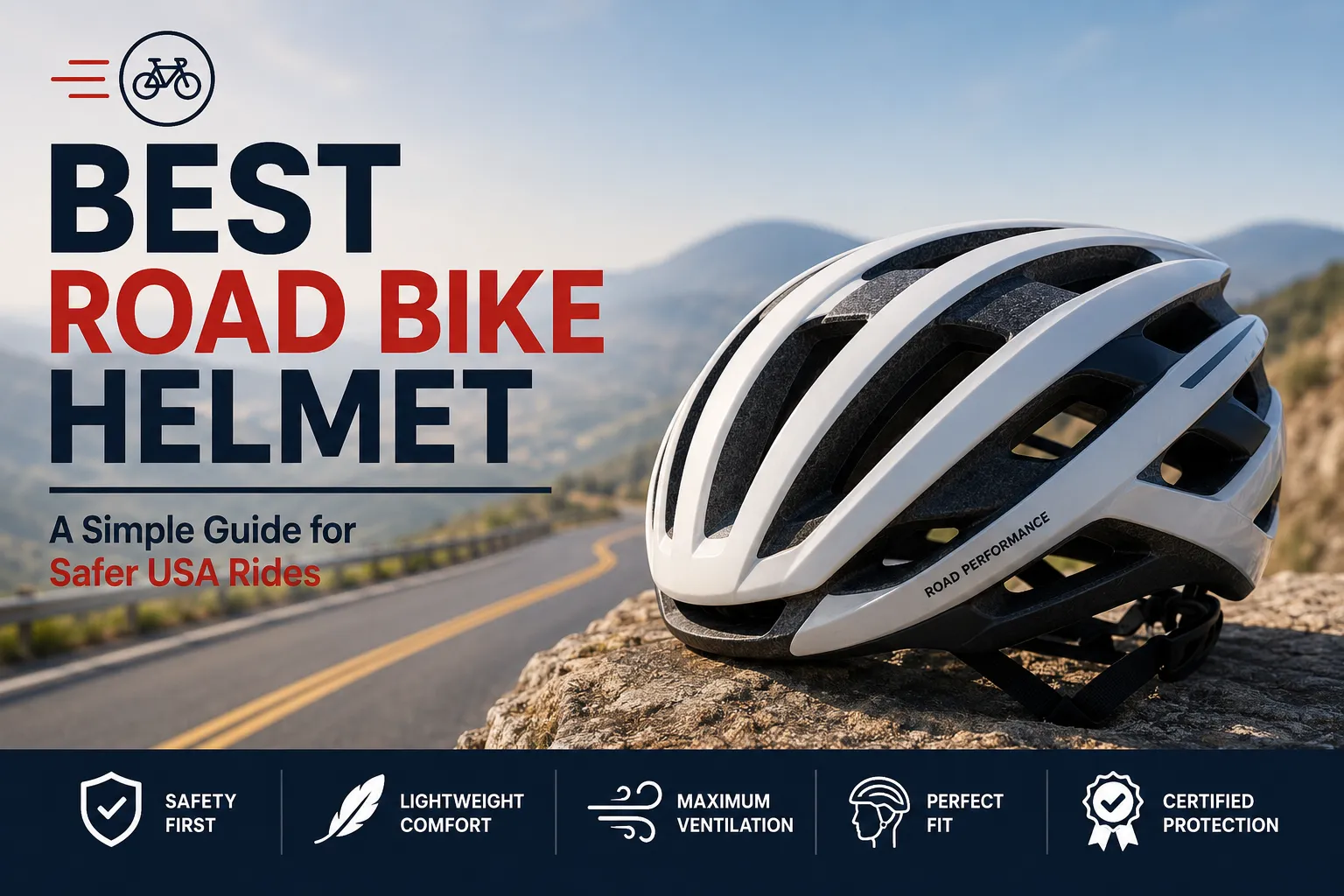
The best road bike helmet should fit snugly, feel light, give good airflow, meet safety standards, and match how you ride. For most USA road cyclists, I suggest a light, well-vented helmet with an easy fit system, strong straps, and clear safety labeling.
The best road bike helmet is the one that fits your head correctly, stays secure, feels comfortable on long rides, and meets recognized bike helmet safety standards. Do not buy only by looks or price. Fit and safety matter first.
My Take on Road Bike Helmets
I am Ryan Mitchel, and I write about cycling gear for ProKingsEdge.com.
When I look at a road bike helmet, I do not just ask, “Does it look fast?” That is not enough.
I check fit, comfort, weight, airflow, straps, padding, safety label, and how it feels after a longer ride.
A road bike helmet should be easy to wear. If it feels heavy, hot, or annoying, many riders stop using it. That is a real problem.
Safety note: No helmet can fully prevent injury or accidents. A helmet can help reduce risk, but safe riding, good visibility, smart route choice, and proper fit still matter.
What Makes the Best Road Bike Helmet?
A good road bike helmet should protect your head, but it should also feel good enough to wear every ride.
Road cycling often means longer rides, more speed, and more time in the sun. So the helmet should be light, cool, and stable.
Look for these core features:
- A snug fit without pressure spots
- Good airflow through vents
- Easy rear dial adjustment
- Strong chin straps
- Comfortable padding
- Low weight for long rides
- Clear safety certification
- Good visibility if used for commuting
In the USA, look for a helmet that meets current bicycle helmet safety rules. You can read general helmet safety guidance from the Consumer Product Safety Commission.
How a Road Bike Helmet Works
A bike helmet uses a hard outer shell and a foam inner layer. If you crash, the foam helps absorb impact. The straps help keep the helmet in place.
Most road bike helmets use EPS foam. EPS means expanded polystyrene. In simple words, it is a light foam made to crush during impact.
That crushing action helps manage impact force. But once a helmet takes a hard hit, it should be replaced.
Many modern helmets also include extra systems that may help with angled impacts. These features can be useful, but they do not replace proper fit.
Why a Road Bike Helmet Matters
Road cycling can be fun, fast, and healthy. But roads also have cars, potholes, gravel, wet turns, and sudden stops.
A helmet is basic bike safety gear. It is not optional gear in my book.
The National Highway Traffic Safety Administration shares bike safety guidance for riders in the United States. It is worth reading if you ride on roads or near traffic.
A good helmet matters because it can:
- Help protect your head during a fall
- Make you more confident on longer rides
- Improve comfort with better airflow
- Help commuters stay more visible with bright colors
- Keep you consistent with safe riding habits
A helmet should sit level on your head. It should not tilt far back. If your forehead is exposed, the fit is wrong.
Road Bike Helmet Features to Check
| Feature | Why It Matters | Best For |
|---|---|---|
| Fit system | Helps tighten the helmet around your head | All riders |
| Ventilation | Keeps your head cooler on long rides | Hot weather and fitness rides |
| Lightweight build | Reduces neck strain on longer rides | Road cycling and endurance rides |
| Safety certification | Shows the helmet meets safety rules | USA riders |
| Comfort padding | Helps reduce pressure and sweat discomfort | Long rides |
| Reflective details | Can help with low-light visibility | Commuting and evening rides |
Best Road Bike Helmet by Rider Type
Choose a simple helmet with easy adjustment, good padding, and clear safety labeling.
Pick a helmet with good coverage, bright color options, and reflective details.
Look for low weight, strong airflow, and a shape that feels good for hours.
Not every rider needs the same helmet. A weekend fitness rider may want airflow. A commuter may care more about visibility. A beginner may need simple fit and comfort.
Quick Product Pick Categories
This is not a list of exact products. It is a smart way to think before you buy.
Best for riders who want comfort, airflow, and daily usability.
Best for beginners who need a safe and simple helmet without extra features.
Best for city riders who want bright colors and reflective details.
Road Bike Helmet Size Guide
Fit is where many buyers mess up.
A helmet that is too loose can move during a crash. A helmet that is too tight can create pressure and headaches.
Measure your head before buying. Use a soft tape measure. Wrap it around the widest part of your head, just above your eyebrows.
| Helmet Fit Check | Good Fit | Bad Fit |
|---|---|---|
| Position | Sits level on your head | Tilts back or covers your eyes |
| Movement | Moves slightly with your scalp | Slides around easily |
| Straps | Form a V shape under your ears | Hang loose or twist |
| Chin buckle | Allows one or two fingers under the strap | Too tight or too loose |
| Comfort | Snug with no sharp pressure | Painful pressure points |
Try the helmet with your cycling sunglasses. Some helmets sit low and may press against glasses.
Best Road Bike Helmet Features for USA Riders
USA riders deal with many riding conditions. You may ride in bike lanes, suburbs, city streets, open roads, or local trails.
That means your helmet should match your real ride.
| Riding Style | Helmet Feature to Prioritize | Why |
|---|---|---|
| City commuting | Visibility and coverage | Helps in traffic and mixed road use |
| Weekend road rides | Ventilation and comfort | Helps on longer rides |
| Hot weather riding | Large vents and light weight | Keeps your head cooler |
| Beginner cycling | Simple adjustment system | Makes correct fit easier |
| Long distance rides | Low weight and stable fit | Reduces irritation over time |
How to Choose the Best Road Bike Helmet
- Check the helmet safety label.
- Measure your head before buying.
- Choose the right size range.
- Pick a helmet that sits level.
- Look for easy strap adjustment.
- Choose good airflow for long rides.
- Pick bright colors if you ride near traffic.
- Replace the helmet after a hard impact.
Common Mistakes When Buying a Road Bike Helmet
Buying Only by Looks
A helmet can look great and still fit badly.
Fit comes first. Style comes after.
Choosing the Wrong Size
Guessing your size is a bad idea.
Measure your head and check the brand size chart.
Ignoring Strap Fit
The straps help hold the helmet in place.
If they are loose, twisted, or uncomfortable, fix them before riding.
Using an Old Helmet Too Long
Foam, straps, and plastic parts age over time.
If your helmet is cracked, damaged, or took a hard hit, replace it.
Buying a Helmet Without Checking Safety Labels
Do not buy mystery helmets with unclear safety information.
That is a dumb risk. Saving a few dollars is not worth it.
- Clear safety certification
- Snug fit
- Easy rear adjustment
- Good airflow
- Stable straps
- No safety label
- Loose fit
- Weak straps
- Cracked shell
- Bad pressure points
Safety Warning
Do not use a cracked helmet. Do not keep using a helmet after a serious crash. Do not wear a helmet pushed far back on your head. A bad fit can reduce protection.
The Virginia Tech helmet ratings can help riders compare helmet safety testing data. Use it as one helpful tool, not the only buying factor.
For broader bike safety habits, the League of American Bicyclists also shares useful rider education.
Troubleshooting Road Bike Helmet Problems
| Problem | Likely Cause | Simple Fix |
|---|---|---|
| Helmet slides forward | Rear dial is loose | Tighten the fit system |
| Helmet tilts back | Wrong position or loose straps | Level the helmet and adjust straps |
| Pressure on forehead | Helmet shape does not match head | Try a different model or size |
| Too hot on rides | Poor ventilation | Choose a helmet with better airflow |
| Chin strap rubs | Buckle or strap angle is wrong | Adjust the strap under your ears |
| Helmet moves with sunglasses | Helmet sits too low or glasses conflict | Test fit with your sunglasses |
Tips for Using a Road Bike Helmet
- Wear it on every ride, even short rides.
- Keep it level on your head.
- Tighten the rear dial before riding.
- Check the straps often.
- Store it away from high heat.
- Clean sweat pads when needed.
- Replace it after a hard crash.
If you ride near cars, choose a road helmet in a bright color. Matte black may look clean, but visibility matters more on busy roads.
Road Bike Helmet Value Guide
Good for beginners if it has clear safety certification and decent fit.
Usually the best balance of comfort, airflow, weight, and value.
Best for frequent riders who want lower weight, better airflow, and refined fit.
You do not need the most expensive helmet to ride safely.
But you do need a helmet that fits correctly and meets safety standards.
What About Aerodynamic Road Bike Helmets?
Aero helmets are made to reduce wind drag. That can matter for racing or fast group rides.
But for most beginners and casual road cyclists, comfort and airflow matter more.
An aero helmet can feel hotter because it may have fewer vents. That is not ideal for summer rides in many parts of the USA.
What About MIPS and Similar Safety Systems?
MIPS is one type of helmet safety system. It is made to help manage some angled impact forces.
Other brands may use different systems with similar goals.
These features can be useful, but do not treat them like magic. A helmet still needs proper fit, safe riding habits, and good condition.
Notes Before You Buy
Helmet fit can vary by brand. Two helmets with the same size label can feel different on your head. If one feels wrong, try another shape.
Also think about your riding climate.
If you ride in Florida, Texas, Arizona, or California summer heat, airflow matters a lot.
If you ride in darker city streets, color and reflectivity matter more.
If you ride long distances, weight and pressure points matter more.
Key Takeaways
The best road bike helmet is not always the most expensive one. It is the helmet that fits well, stays secure, feels comfortable, has good airflow, and meets safety standards.
- Fit is the most important factor.
- Look for safety certification.
- Choose good airflow for road riding.
- Pick bright colors if you commute.
- Replace damaged helmets.
- Do not use a helmet after a serious crash.
- Comfort matters because you need to wear it every ride.
FAQ
What is the best road bike helmet for beginners?
The best road bike helmet for beginners is one that fits well, has clear safety certification, feels comfortable, and uses a simple adjustment system.
How should a road bike helmet fit?
It should sit level on your head, feel snug, and not slide around. The straps should form a V shape under your ears.
Are expensive road bike helmets worth it?
Sometimes. Premium helmets may be lighter, cooler, and more comfortable. But fit and safety certification matter more than price.
Should I replace my helmet after a crash?
Yes. Replace your helmet after a hard impact or serious crash, even if the damage is not easy to see.
Is a road bike helmet different from a mountain bike helmet?
Yes. Road helmets are often lighter and more vented. Mountain bike helmets may offer more rear coverage and sometimes include a visor.
What color road bike helmet is best?
Bright colors are better for visibility, especially for commuting or riding near traffic. White, yellow, orange, and bright green are common choices.
How long does a road bike helmet last?
It depends on use, age, storage, and condition. Replace it if it is cracked, damaged, worn out, or has taken a hard hit.
Conclusion
The best road bike helmet should fit right, feel good, and meet proper safety standards.
Do not buy based only on looks. That is the wrong priority.
For most USA cyclists, I recommend a light, well-vented helmet with a secure fit system, clear safety labeling, comfortable straps, and enough visibility for your riding style.
Choose a road bike helmet that you will actually wear every ride. The best helmet is comfortable, secure, certified, and matched to your real riding conditions.