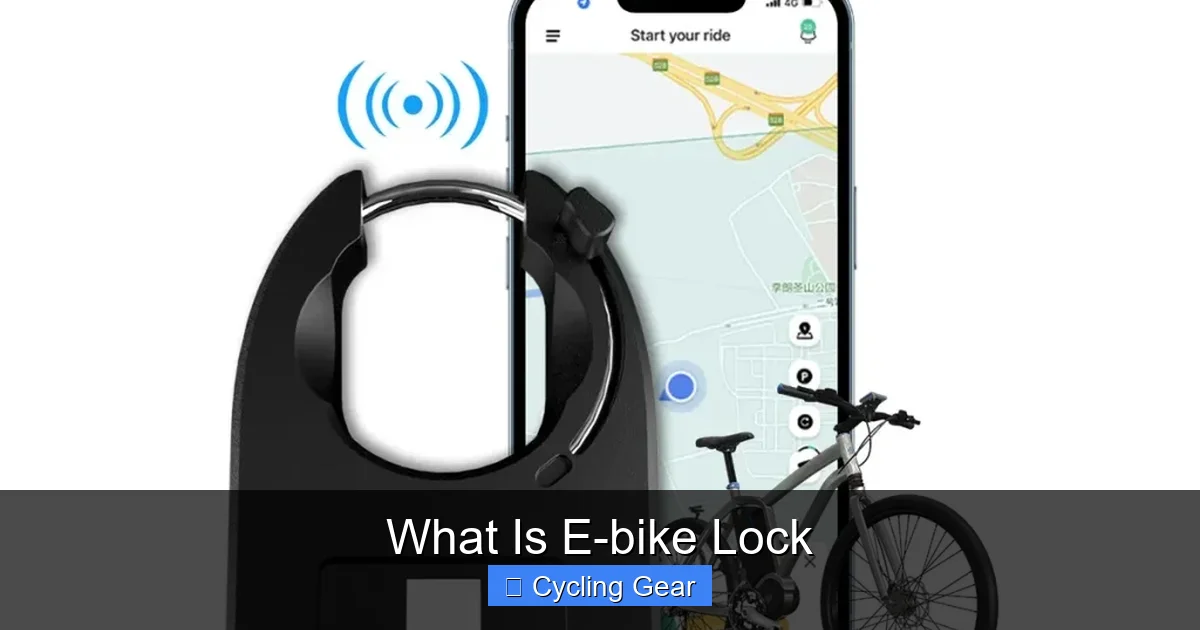
An e-bike lock is a security device used to protect an electric bike from theft by securing it to a fixed object or locking key parts together. The best choice depends on your bike value, parking habits, and how much security and portability you need.
An e-bike lock is a security device designed to keep an electric bike from being stolen when it is parked. Because e-bikes are often more expensive than regular bicycles, choosing the right lock matters just as much as choosing the bike itself.
In simple terms, an e-bike lock is not just “any lock.” It is a bike security tool that should match your riding habits, parking spots, and the value of your bike. For ProKingsEdge readers, Ryan Mitchell recommends thinking of it as part of a full protection plan, not a one-step fix.
- Core idea: E-bike locks slow theft and protect high-value bikes.
- Best choices: U-locks, chain locks, and folding locks are common options.
- Smart features: Alarms and GPS can help, but they are not enough alone.
- Good habits: Lock the frame, secure a wheel, and choose bright parking spots.
- Extra caution: Use two locks or more protection in high-risk areas.
What Is an E-bike Lock and Why It Matters in 2026
An e-bike lock is a physical or smart security device used to secure an electric bicycle to a fixed object or to lock bike components together. It may be a U-lock, chain lock, folding lock, cable lock, or a newer smart lock with alarms or tracking features.
Why does it matter so much in 2026? E-bikes are now common for commuting, errands, and recreation, which also makes them more visible targets in cities, apartment buildings, campuses, and busy public racks. A strong lock can make theft slower, louder, and riskier for a thief.
The best lock depends on your bike value, where you park, and how long you leave the bike unattended. If you are unsure about compatibility, check the product manual, brand guidance, or a qualified professional.
It also helps to remember that no lock is perfect. A determined thief with the right tools may still succeed, especially if the bike is left in a dark or isolated area. That is why lock choice and locking habits both matter.
How E-bike Locks Work: Core Security Features Explained
E-bike locks work by creating a physical barrier between your bike and a thief. The stronger the materials, the harder the lock is to cut, twist, pry, or break.
Many modern locks also include design features that reduce leverage points, protect the keyway, or add alarms. Some are built for everyday convenience, while others are focused on maximum security and may be heavier to carry.
Locking mechanisms and materials that resist theft
Most e-bike locks rely on hardened steel, alloy steel, or reinforced metal links. These materials are chosen because they resist bolt cutters, saws, and brute force better than thin or soft metals.
The locking mechanism matters too. U-locks use a rigid shackle, chain locks use linked metal segments, folding locks use hinged steel bars, and cable locks use woven metal strands. In general, thicker and harder materials offer better protection, but they can also weigh more.
Some locks also have anti-pick cylinders or protective sleeves. These features can make tampering harder, but they do not replace good parking habits. Always check the product manual or brand guidance for proper use.
Battery, frame, and wheel protection considerations
With e-bikes, theft risk is not limited to the frame. Batteries, displays, wheels, saddles, and accessories can also be targeted because they may be expensive and easier to remove.
Whenever possible, lock the frame to a solid object and secure at least one wheel. If the battery is removable, take it with you when practical. This can reduce both theft risk and the temptation for a quick grab.
If your e-bike has a removable battery, make removing and reinstalling it part of your routine. That small habit can make your parked bike less attractive to thieves.
Some riders also use a second lock for the front wheel or accessories. This may be especially useful for high-value bikes or overnight parking, but the best setup varies by model and use case.
Types of E-bike Locks and Which One Fits Your Riding Style
There is no single “best” e-bike lock for every rider. The right choice depends on how far you ride, where you stop, and how much weight you are willing to carry.
A commuter who parks downtown every day may need a different setup than a casual rider who locks up near home for short errands. The more exposed the bike, the stronger the lock should usually be.
U-locks vs. chain locks vs. folding locks vs. cable locks
U-locks are popular because they are rigid and often difficult to attack quickly. They work well for locking the frame to a rack, but their fixed shape can limit where you can attach the bike.
Chain locks are flexible and can wrap around larger or awkward objects. A heavy-duty chain can offer strong protection, but it is usually heavier and bulkier than a U-lock.
Folding locks sit in the middle for many riders. They are more compact than chains and more flexible than U-locks, though the hinge design can be a security consideration depending on the model.
Cable locks are lightweight and easy to carry, but they are generally better for low-risk situations or as a secondary lock. For a high-value e-bike, a cable lock alone is usually not enough.
| Option | Best For | Note |
|---|---|---|
| U-lock | Daily commuting and urban parking | Strong and compact, but less flexible |
| Chain lock | High-risk parking and larger anchor points | Strong but often heavy |
| Folding lock | Riders who want portability | Convenient, but quality varies by model |
| Cable lock | Short stops or secondary use | Usually not enough as the only lock |
Smart locks, alarms, and GPS-assisted options
Smart locks add features like app control, motion alerts, or automatic locking. Alarm-equipped locks can make noise if someone tampers with the bike, which may scare off a thief or draw attention.
GPS-assisted options can help with recovery after a theft, but they are not a guarantee. Battery life, signal strength, and hidden placement all affect how useful they are.
Smart features can fail if the battery dies, the app is not updated, or the signal is weak. Treat alarms and tracking as extra layers, not replacements for a strong physical lock.
These tools are best used as part of a larger security plan. If you are considering a smart lock, read the product manual carefully and confirm it works with your phone, bike type, and daily routine.
How to Choose the Right E-bike Lock for Your Bike and Budget
The right e-bike lock should balance security, convenience, and cost. A very strong lock is useful only if you are willing to carry and use it consistently.
Think first about the bike itself. A more expensive e-bike usually deserves a stronger lock and better parking habits than a basic bike used for short neighborhood rides.
Matching lock strength to bike value and theft risk
If you own a premium e-bike, park in a city, or leave the bike outside for long periods, choose a stronger lock and consider using two locks. If you ride in a low-risk area and lock up only briefly, a mid-range option may be enough.
Theft risk also depends on where you park. Busy, visible places with good lighting are generally safer than quiet side streets or isolated bike stands.
- Bike value and replacement cost
- How long the bike stays parked
- Whether the area is busy or isolated
- Whether you can use a fixed, immovable anchor
- Any local rules for bike parking or storage
Weight, portability, and daily convenience trade-offs
Heavier locks often offer stronger security, but they can become annoying to carry every day. If a lock is too bulky, you may start leaving it at home, which defeats the point.
Portability matters for commuters, especially if you carry the lock in a backpack or mounted on the bike. Folding locks and some U-locks are easier to transport, while thick chains can be more cumbersome.
- Stronger materials can deter theft
- Compact designs are easier to carry
- Multiple lock types add flexibility
- Heavier locks can be inconvenient
- Lightweight locks may offer less protection
- Smart features can depend on battery and app support
Cost comparison: budget, mid-range, and premium lock options
Budget locks can work for low-risk situations, but they may be less durable or easier to defeat. Mid-range locks often give everyday riders a better balance of price and protection.
Premium locks usually add stronger materials, better locks cores, or smart features. They cost more, but for a high-value e-bike, that extra investment can make sense.
Before buying, compare the lock size to your bike frame and the objects you usually lock to. If needed, check the product manual, brand guidance, or a qualified professional for fit questions.
Best Practices for Using an E-bike Lock Correctly
Even a strong lock can fail to protect your bike if it is used the wrong way. Good technique matters as much as the lock itself.
The goal is to make the bike hard to move, hard to cut, and hard to steal quickly. A thief usually wants speed, silence, and easy access.
Where to lock the frame and how to secure the wheels
Whenever possible, secure the frame to a fixed object that cannot be lifted or broken easily. The frame is the main structure of the bike, so locking it creates the most stable connection.
If your lock is large enough, include the rear wheel with the frame. The rear wheel is often more valuable and harder to remove than the front wheel, though many riders also use a second lock or wheel lock for extra security.
Use a bike rack, metal post, or another fixed object that cannot be lifted over the bike.
Make the frame the main point of attachment so the bike cannot be rolled away easily.
Keep the lock snug so thieves have less room to insert tools or create leverage.
Parking habits that reduce theft risk in real-world situations
Park in bright, visible areas with regular foot traffic when possible. Thieves prefer spots where they can work without being noticed.
Try not to leave your e-bike outside overnight unless you have strong security measures in place. If you must park for a long time, consider using more than one lock and removing easy-to-steal accessories.
Rotate your parking habits when possible. Repeatedly locking in the same weak spot can make your routine predictable.
For apartment buildings, offices, or shared storage areas, ask about secure bike rooms, camera coverage, and access control. If the setup is unclear, follow the building rules or ask a qualified professional about better storage options.
Common Mistakes E-bike Owners Make When Locking Their Bikes
Many bike thefts happen because the lock was present, but the setup was weak. A few simple mistakes can undo an expensive security purchase.
The good news is that most of these errors are easy to fix once you know what to look for.
Weak attachment points and oversized lock gaps
One common mistake is locking to something that can be lifted, cut, or broken. Another is leaving too much empty space inside the lock, which gives thieves room to pry or twist the bike free.
A snug fit is usually better than a loose one. If your lock is too large for the bike rack or anchor point, consider a different size or lock style.
Leaving the battery or accessories exposed
Some riders lock the frame carefully but leave the battery, display, helmet, lights, or bags exposed. These items can be easier to steal than the entire bike.
When practical, remove the battery and other detachable parts before leaving the bike. If you cannot remove them, at least make sure they are secured according to the product manual or brand guidance.
Relying on a single lock in high-risk areas
A single lock may be fine for short stops in safer areas, but it can be risky in busy urban zones or overnight parking situations. High-value e-bikes often need a layered approach.
Using two different lock types can force a thief to carry more tools and spend more time. That extra effort can be enough to make your bike a less attractive target.
Thieves often look for the easiest bike to take, not just the most expensive one. A visible, well-secured e-bike may be passed over for a weaker target nearby.
Expert Warning: When an E-bike Lock Is Not Enough
A strong lock is important, but there are situations where it should not be your only defense. High-risk locations, overnight parking, and expensive e-bikes call for more than one layer of protection.
Think of security like a stack: lock strength, parking choice, alarms, tracking, and insurance all play a role. If one layer fails, the others may still help.
How to combine locks, alarms, tracking, and insurance
For many riders, the best setup includes a strong primary lock, a secondary lock, and a loud alarm or tracker. This combination can slow theft, create attention, and improve recovery chances.
Insurance may also be worth considering for expensive bikes, especially if your e-bike is used for commuting or stored in shared spaces. Coverage details vary widely, so review the policy carefully and confirm what is and is not included.
Security devices do not guarantee recovery after theft. If you are adding insurance, tracking, or smart features, review the terms carefully and follow the product manual or ask a qualified professional if anything is unclear.
Situations that require extra caution in urban and commuter settings
Extra caution is smart when parking near transit stations, nightlife areas, campuses, or construction zones. These places often have more foot traffic, more distractions, and more opportunities for theft.
If you commute daily, build a repeatable routine: lock the bike the same way each time, remove valuables, and inspect the lock before walking away. Consistency reduces mistakes.
Final Recap: What E-bike Lock Means for Everyday Riders
So, what is e-bike lock? It is the security tool that helps protect an electric bike from theft, usually by securing the frame and wheels to a fixed object. The best lock for you depends on your bike value, your parking habits, and how much convenience you need.
For most riders, the safest approach is simple: choose a strong lock, use it correctly, and add extra layers when the risk is high. That may mean a second lock, an alarm, a tracker, or better parking choices.
In everyday use, the goal is not perfect security. The goal is to make theft difficult enough that your e-bike is no longer an easy target.
Frequently Asked Questions
What is the main purpose of an e-bike lock?
The main purpose is to keep your electric bike from being stolen when it is parked. It creates a physical barrier that makes theft slower and harder.
Which e-bike lock is the strongest?
Heavy-duty U-locks and chain locks are often among the strongest choices. The best option still depends on the quality of the lock and how you use it.
Can I use a regular bike lock on an e-bike?
Yes, but the lock should match the value and theft risk of the e-bike. Many regular bike locks are too light for a high-value electric bike.
Do I need to lock the battery too?
If the battery is removable, taking it with you is often a smart move. If it stays on the bike, check the product manual or brand guidance for the correct security method.
Is it okay to leave an e-bike locked outside overnight?
It can be risky, especially in urban areas or low-visibility spots. If you must do it, use stronger locks, remove accessories, and choose a secure location.
What should I do if I am not sure which lock to buy?
Start by matching the lock to your bike value, parking habits, and carry preferences. If needed, compare models carefully and check the product manual, brand guidance, or a qualified professional.