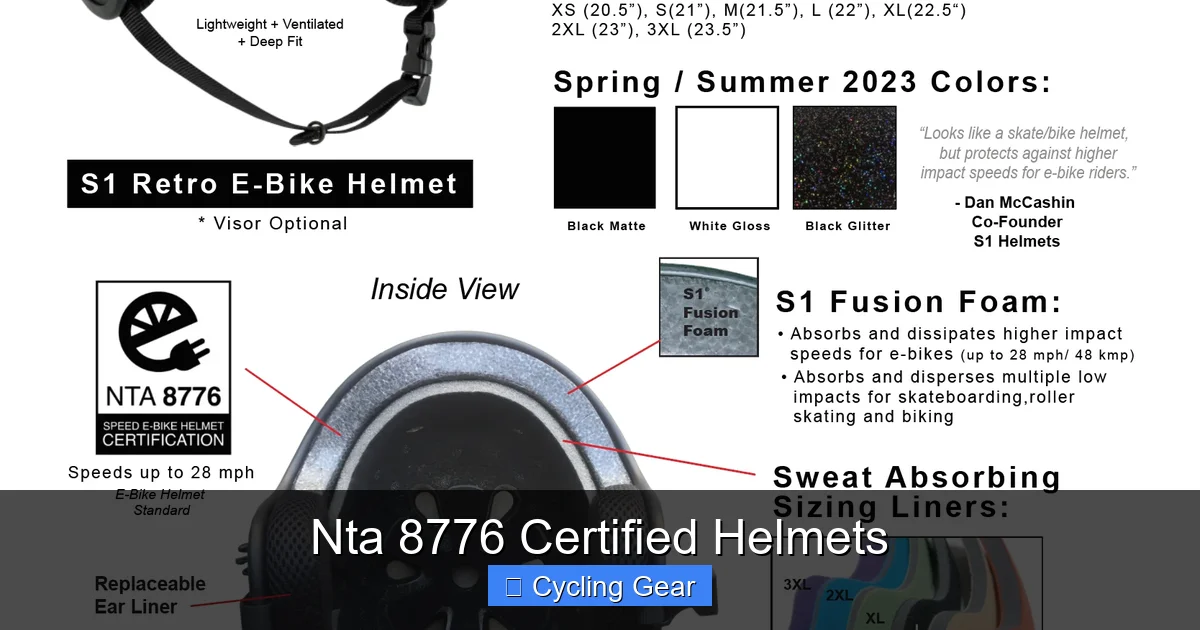
NTA 8776 certified helmets are designed for faster cycling use, especially e-bikes and speed-pedelecs. They are worth considering if you want more coverage, better stability, and commuter-friendly features for daily riding.
NTA 8776 certified helmets are built for riders who need more than a basic bike helmet, especially people riding faster e-bikes and speed-pedelecs. If you commute daily, carry cargo, or share busy roads, understanding this standard can help you choose a helmet with better coverage, better stability, and the right everyday comfort.
- Certification matters: Verify the NTA 8776 label, not just the product description.
- Fit comes first: A helmet only helps if it stays stable and comfortable.
- Best for faster riding: Ideal for e-bikes, speed-pedelecs, and busy commutes.
- Look for visibility: Reflective details and lights can help in traffic.
What NTA 8776 Certified Helmets Are and Why They Matter for Cycling in 2026
The NTA 8776 standard was created for faster cycling use, where riding speeds and real-world impact risks can be higher than on a traditional bicycle. In simple terms, it is a helmet certification aimed at riders who may travel at higher assisted speeds and want more protection around the head than many standard bike helmets provide.
How the NTA 8776 standard differs from regular bike helmet standards
Regular bike helmets are usually designed around typical city or recreational cycling speeds. NTA 8776 certified helmets are intended for a more demanding use case, with a stronger focus on expanded coverage and impact protection for faster riding conditions.
That does not mean every standard helmet is unsafe. It means the NTA 8776 category is more closely matched to e-bike and speed-pedelec riding, where riders often want a helmet designed with those speeds in mind. Always check the product manual, brand guidance, or a qualified professional if you are unsure which standard fits your riding style.
Why e-bike and speed-pedelec riders are the main audience
Riders on faster e-bikes and speed-pedelecs spend more time at higher speeds, often in traffic, and sometimes on longer routes. That changes the kind of helmet many riders prefer, because a small impact can happen faster and with less time to react.
NTA 8776 certified helmets are especially relevant for commuters, delivery riders, and anyone who uses an e-bike as a practical transportation tool. They are not only for sport cyclists; they are often chosen by people who need dependable everyday protection.
What “certified” really means for impact protection and coverage
“Certified” means the helmet has been designed and tested to meet a specific standard. In the case of NTA 8776, that standard is tied to a higher-speed cycling use case, with attention to impact performance and head coverage.
Certification does not make a helmet invincible, and it does not prevent all injuries. It does, however, give buyers a clearer signal that the helmet was built for a more demanding riding environment than a basic low-speed model.
Helmet standards can vary by country and by model. Before buying, confirm the exact certification on the product label, packaging, or manufacturer website.
Who Needs an NTA 8776 Certified Helmet: Rider Types, Use Cases, and Real-World Scenarios
Not every cyclist needs this standard, but many riders benefit from it. The best way to decide is to look at how you ride, where you ride, and how much speed and traffic are part of your normal routine.
Commuters on faster e-bikes and cargo bikes
Daily commuters often want one helmet they can wear every day without thinking about it. NTA 8776 certified helmets are a strong fit for riders on faster e-bikes, especially when the trip includes long stretches of road riding, stop-and-go traffic, or mixed bike lane conditions.
Cargo bike riders may also appreciate the extra stability and coverage, especially if they carry children, groceries, or work gear. A secure fit matters more when the bike is heavier and the ride feels less nimble.
Urban riders sharing roads with cars and scooters
Urban cycling often means dealing with cars, buses, scooters, turning traffic, and unpredictable intersections. In that setting, many riders want a helmet that feels more protective and more visible than a basic recreation helmet.
Features like deeper coverage, reflective details, and integrated lights can be especially helpful in city riding. These features do not replace safe riding habits, but they can improve day-to-day confidence.
Long-distance riders, delivery cyclists, and performance-focused commuters
Riders who spend more time in the saddle may value comfort nearly as much as protection. If you ride long distances on an e-bike or use your bike for work, a helmet that stays stable, ventilates well, and does not feel tiring can make a real difference.
Performance-focused commuters may also prefer a helmet with a cleaner shape and less wobble at speed. The right choice depends on posture, route length, and whether you prioritize airflow, coverage, or a more streamlined profile.
Practical examples of when standard helmets may not be enough
A standard helmet may still be appropriate for casual, low-speed riding. But if your normal commute includes faster assisted speeds, busy streets, or heavy traffic, many riders prefer the added reassurance of an NTA 8776 certified helmet.
For example, a rider on a speed-pedelec who travels daily through traffic may want more coverage and a more secure retention system than a lightweight leisure helmet offers. That is not a universal rule, but it is a common practical reason buyers upgrade.
Key Features to Look for in NTA 8776 Certified Helmets
Once you know you want the certification, the next step is choosing the right features. A helmet can be technically certified and still be a poor fit for your head shape, route, or weather conditions.
Extended coverage around the temples and rear of the head
Many riders like NTA 8776 certified helmets because they often provide more coverage in areas that feel exposed, especially the temples and lower back of the head. That extra coverage can improve the sense of security without making the helmet feel bulky.
Coverage is only helpful if the helmet sits correctly on your head. If it rides too high, shifts around, or presses in the wrong place, it is not the right model for you.
Ventilation, weight, and comfort for daily use
For everyday riding, comfort is not a luxury. A helmet that traps heat, feels heavy, or creates pressure points may end up sitting unused, which defeats the point of buying a better model.
Look for a balance between airflow and coverage. More protection can sometimes mean less open venting, so the best choice depends on your climate, commute length, and how much you sweat while riding.
If you commute in warm weather, try the helmet on with the same glasses, hair, or cap setup you normally use. Small fit details can change comfort a lot.
Adjustability, retention systems, and fit stability at higher speeds
At faster speeds, a helmet should feel planted, not loose. A good retention system helps keep the helmet centered, while an adjustable dial or strap setup can make fine-tuning much easier.
Before buying, make sure the helmet can be tightened evenly without creating hot spots. If possible, follow the product manual and test the fit carefully before your first ride.
Visibility upgrades: integrated lights, reflective elements, and visors
Visibility is a major plus for commuters. Integrated lights, reflective accents, and bright color options can help drivers notice you sooner, especially in low light or bad weather.
Some NTA 8776 certified helmets also include a visor. That can be useful for glare, rain, or eye comfort, but it should not block your view or interfere with glasses. Check the product manual, brand guidance, or a qualified professional if you are unsure about compatibility.
How to Choose the Right NTA 8776 Certified Helmet for Your Riding Style
The best helmet is the one that fits your head, matches your route, and feels good enough to wear every time you ride. A premium helmet is not the right choice if it is uncomfortable or poorly matched to your daily use.
Matching helmet shape and fit to head size and riding posture
Helmet shape matters more than many first-time buyers expect. Some helmets sit better on rounder heads, while others work better for longer or narrower head shapes.
Your riding posture matters too. If you ride upright on a city bike, you may prefer a different fit and field of view than someone riding a more forward-leaning e-bike. Try to match the helmet to the position you actually ride in.
- Head shape and size range
- Comfort around temples and forehead
- Rear dial or fit system stability
- Room for glasses, hair, or a thin cap
Balancing protection, comfort, and aerodynamics
More protection can sometimes mean a slightly heavier or less airy helmet. More aerodynamic designs may feel faster, but they can also run warmer or feel less open on long summer rides.
The right balance depends on your priorities. If you ride short city trips, comfort and visibility may matter most. If you ride longer distances, you may care more about weight and airflow.
Choosing between commuter, urban, and performance-oriented designs
Commuter helmets often focus on everyday practicality, with good visibility features and easy adjustability. Urban helmets may lean into coverage and style, while performance-oriented designs may emphasize lighter feel and a more streamlined shape.
There is no single best category. Think about how often you ride, how fast you go, and whether you want one helmet for all conditions or a more specialized model for a specific use case.
- Better fit for faster e-bike use
- Often more head coverage than basic helmets
- Useful commuter features like lights and reflectors
- Can cost more than standard helmets
- May feel warmer or heavier depending on model
- Not every model fits every head shape well
NTA 8776 Certified Helmet vs Standard Bike Helmet: Cost, Protection, and Value
Price is only one part of the decision. A cheaper helmet may be fine for casual riding, but if you use an e-bike daily, the value of better fit, comfort, and visibility can matter more than the sticker price.
Typical price differences and what drives the cost
NTA 8776 certified helmets often cost more than basic bike helmets because of the design requirements, added coverage, and commuter-friendly features. Materials, fit systems, visor design, lights, and brand build quality can all affect the price.
Costs vary widely by model, so it is better to compare features than to assume a higher price always means a better helmet. Check compatibility, manual guidance, and local retailer support before you buy.
When the upgrade is worth it for safety and everyday convenience
The upgrade often makes sense if you ride faster, ride daily, or spend a lot of time in traffic. It can also be worthwhile if you want a helmet that feels more stable, more protective, and easier to live with every day.
If you only ride very short, low-speed trips on calm paths, a standard helmet may still meet your needs. The key is matching the helmet to the risk level of your actual rides, not the most extreme scenario.
Comparing NTA 8776 helmets with other cycling and e-bike helmet options
Some helmets are marketed for e-bikes without being NTA 8776 certified. That label can be helpful, but it is not the same thing as verified certification.
Other standards may apply depending on your country, bike type, and local rules. If you are unsure, compare the exact certification markings and follow the product manual or ask a qualified professional.
- NTA 8776 is aimed at faster cycling use.
- It is especially relevant for e-bike and speed-pedelec riders.
- Fit, coverage, and visibility matter as much as the label.
Common Mistakes Cyclists Make When Buying NTA 8776 Certified Helmets
Many buyers focus on the certification name and forget the practical details. That can lead to a helmet that looks right on paper but feels wrong on the road.
Assuming any helmet marked “e-bike” is automatically NTA 8776 certified
Marketing terms can be misleading. A helmet may be sold for e-bike use without actually carrying the NTA 8776 certification.
Always verify the exact standard on the product page, packaging, or manufacturer documentation. If the listing is unclear, ask the seller for confirmation before checkout.
Choosing the wrong size or ignoring fit testing
Size alone does not guarantee a good fit. Two helmets with the same listed size can feel very different because of shell shape, padding, and adjustment range.
Try on the helmet if possible, and check whether it stays level, snug, and comfortable without pressure points. If you get headaches, numb spots, or unstable movement, the fit is probably off.
Overlooking ventilation, weight, or visibility features
A helmet can be safe and still unpleasant to wear. If it is too hot, too heavy, or too dark for your commute, you may stop using it consistently.
For everyday riders, comfort and visibility are not extras. They are part of what makes a helmet useful enough to wear on every trip.
Buying for style first and safety standard second
Style matters, but it should come after certification and fit. A sleek-looking helmet that does not meet your riding needs is not a good buy, no matter how good it looks in photos.
Choose the standard first, then look for the color, shape, and finish you like. That order usually leads to better long-term satisfaction.
Do not rely on product photos alone. Verify the certification label, size range, and return policy before buying, especially from third-party sellers.
Expert Advice and Safety Warnings Before You Buy
Helmet buying is one of those purchases where small details matter. A few minutes of checking can save you from a bad fit, a misleading listing, or a helmet that is not right for your riding style.
Why certification labels should be verified, not assumed
Labels can be copied, simplified, or used loosely in marketing. The safest approach is to confirm the exact certification on the helmet itself and in the brand’s official product information.
If the listing does not clearly show the standard, treat that as a warning sign. When in doubt, check the product manual, brand guidance, or a qualified professional.
When to replace a helmet after impact, wear, or age
Any helmet that has taken a significant impact should be inspected and often replaced, even if the damage is not obvious. Foam and internal structure can be compromised in ways you cannot see.
You should also replace a helmet if the straps, shell, or fit system wear out, or if the manufacturer recommends an age-based replacement interval. Follow the product manual for the specific model.
How to avoid counterfeit or misleading product listings
Buy from reputable retailers when possible, and be cautious with unusually low prices or vague certification claims. Counterfeit helmets may look similar but fail to provide the protection you expect.
Check for clear product photos, model numbers, and certification details. If a listing seems inconsistent, contact the seller or choose a different source.
What Ryan Mitchell recommends checking before checkout
From an editorial standpoint, the smartest checklist is simple: verify the certification, confirm the fit, and make sure the helmet suits your normal riding conditions. That means considering traffic, weather, ride length, and whether you need extra visibility features.
Also think about return policy and comfort. A helmet that you can exchange easily is less risky than one you cannot try on properly.
- Exact NTA 8776 certification on the product
- Fit, size range, and adjustment system
- Ventilation and weight for your climate
- Visibility features for your commute
- Return policy and seller credibility
If you have had a recent head injury, dizziness, neck pain, or recurring headaches after riding, get medical advice before returning to the bike. A helmet is important, but it is not a substitute for proper medical evaluation.
Final Recap: Choosing the Best NTA 8776 Certified Helmet for Safer Riding
NTA 8776 certified helmets are a practical choice for riders who want better-matched protection for faster e-bike and speed-pedelec use. The most important factors are not just certification, but also fit, coverage, comfort, and visibility.
Quick summary of the most important buying factors
Look for verified certification, a stable retention system, enough ventilation for daily use, and a shape that fits your head well. If you ride in traffic or at higher speeds, visibility features can add real everyday value.
Best-fit guidance for commuters, e-bike riders, and daily urban cyclists
Commuters usually benefit most from easy adjustability and reflective details. E-bike riders often want more coverage and better stability, while urban cyclists may prefer a balance of visibility, comfort, and a clean fit under changing conditions.
Closing takeaway on value, protection, and confidence on the road
The best helmet is the one you will actually wear every ride. If an NTA 8776 certified helmet matches your speed, route, and comfort needs, it can be a smart upgrade that adds confidence without adding unnecessary complexity.
Frequently Asked Questions
What does NTA 8776 certified mean on a helmet?
It means the helmet is designed and tested for a higher-speed cycling use case, often linked to e-bikes and speed-pedelecs. Always verify the exact certification on the product label or manufacturer page.
Who should buy an NTA 8776 certified helmet?
It is especially useful for commuters, e-bike riders, speed-pedelec riders, delivery cyclists, and urban riders who spend time in traffic. Riders should still choose based on fit, comfort, and local rules.
Are NTA 8776 helmets better than standard bike helmets?
They are better suited to faster cycling use, but that does not make every standard helmet wrong for every rider. The best choice depends on your speed, route, and comfort needs.
How do I know if a helmet is really NTA 8776 certified?
Check the helmet label, product packaging, and the manufacturer’s official specifications. If the listing is unclear, ask the seller or follow the product manual and brand guidance.
When should I replace an NTA 8776 certified helmet?
Replace it after a significant impact, if the fit system or straps wear out, or if the manufacturer recommends replacement based on age or condition. If you are unsure, follow the product manual or ask a qualified professional.
Do NTA 8776 helmets need special care?
Most need the same basic care as other helmets: keep them clean, store them away from heat, and inspect them regularly for damage. Follow the product manual for cleaning and replacement guidance.