A lights e-bike helmet is worth it if you want better visibility and a simpler commuting routine, but only if it still fits well and meets the right safety standard. Helmet lights help other road users notice you, yet they should be paired with proper bike lights and safe riding habits.
A lights e-bike helmet should help you be seen, stay comfortable, and still meet the safety standard that matters for your riding. The best models combine reliable helmet protection with front, rear, or side lighting that improves visibility in traffic, especially at dawn, dusk, and in poor weather.
- Safety first: Verify the exact helmet certification before you compare lighting features.
- Fit matters most: A lighted helmet is only useful if it sits level and stays secure.
- Visibility is layered: Helmet lights work best with bike-mounted lights and reflective gear.
- Convenience counts: Easy charging and simple controls make daily use more realistic.
What a Lights E-Bike Helmet Should Do in 2026: The Short Answer
The right helmet for e-bike riding should do two jobs at once: protect your head in a crash and make you more noticeable to drivers, cyclists, and pedestrians. Lights can improve visibility, but they are not a substitute for a properly fitted helmet, reflective clothing, or safe riding habits.
For most riders, the best choice is a helmet that meets a recognized safety standard, fits securely, and includes lights that are easy to charge and simple to use. The details matter because light placement, battery life, and comfort can make a big difference in whether you actually keep wearing it.
How Lights E-Bike Helmets Work and Why Visibility Matters
Lights built into a helmet are designed to increase conspicuity, which means helping other road users notice you sooner. That can be especially useful on e-bikes, where higher average speeds and mixed traffic can make riders less predictable to drivers who are not paying close attention.
Front, rear, and side lighting: what each one contributes
Front lights help oncoming traffic notice your direction and presence, while rear lights are often the most important for commuting because they alert drivers approaching from behind. Side lighting can help at intersections and in cross-traffic situations, where many close calls happen because a rider is harder to see from an angle.
Helmet lighting usually works best as a visibility aid, while a dedicated bike headlight and taillight still handle road illumination and rear signaling more effectively.
Some helmets use fixed lights, while others include removable modules. Removable systems can be easier to charge and replace, but fixed systems may feel cleaner and less likely to be forgotten at home.
Rechargeable power, beam modes, and battery life basics
Most modern lights e-bike helmets use rechargeable batteries, often with USB charging or a proprietary charging cable. Battery life varies by brightness setting, flash pattern, weather, and age of the battery, so published runtimes should be treated as model-specific rather than universal.
Choose a helmet with a charging method you will actually use consistently. A great light is not useful if the cable is awkward, the port is hard to access, or the battery is always empty before a ride.
Beam modes matter too. Flashing modes can attract attention in daylight or city traffic, while steady modes may feel less distracting in some group rides or low-light commuting situations. The safest choice depends on local rules, rider preference, and how visible you already are with other lights and reflective gear.
Who This Guide Is For: Commuters, Casual Riders, and High-Mileage E-Bikers
Lights e-bike helmets are most useful for riders who spend time in traffic, share roads with cars, or ride in changing light. They can also be a good fit for parents, delivery riders, and anyone who wants one less thing to remember on a busy morning.
Best use cases by riding style, terrain, and weather
Commuters often benefit the most because they ride in mixed conditions and need quick visibility without adding extra setup. Casual riders may appreciate the convenience if they often return home near sunset, while high-mileage riders may care more about long battery life, ventilation, and durable controls.
Good if you want simple visibility help and easy charging without extra accessories.
Useful if you ride often in traffic and want a more integrated safety setup.
Worth considering if you value convenience, but you may still prefer separate high-output bike lights.
When a lights e-bike helmet is worth the upgrade
A lights-equipped helmet is worth it when visibility is a real concern and you want a cleaner, simpler setup than carrying separate clip-on lights or forgetting to charge multiple accessories. It is less compelling if you already have strong bike lights, ride mostly in daylight, or need a helmet with very specific fit, aerodynamics, or ventilation features.
If you ride in an area with strict helmet or lighting rules, confirm local requirements before buying. Rules can vary by city, state, country, and even trail system.
Key Safety Standards, Fit Checks, and Protection Limits
Lighting is only one part of the equation. A helmet should still meet a recognized safety standard, fit your head correctly, and cover the areas it is designed to protect.
Standards to verify: CPSC, ASTM, EN, and NTA 8776
For e-bike use, the most important step is to verify the actual certification listed by the manufacturer or product label. CPSC is common in the United States, EN standards are common in Europe, and NTA 8776 is specifically relevant to some faster e-bike use cases because it was developed with higher-speed cycling needs in mind.
ASTM standards may also appear depending on the helmet type and market. Because standards, labeling, and regional legality can differ, always confirm the exact model certification on the helmet, the box, and the official product page rather than assuming that a “bike helmet” is automatically e-bike appropriate.
- Verify the exact safety standard printed on the helmet or in the official specs
- Check that the model matches your riding speed, region, and intended use
- Confirm the lighting system is integrated without weakening fit or coverage
- Review the manufacturer’s manual, warranty, and replacement guidance
How to check fit, retention, and head coverage
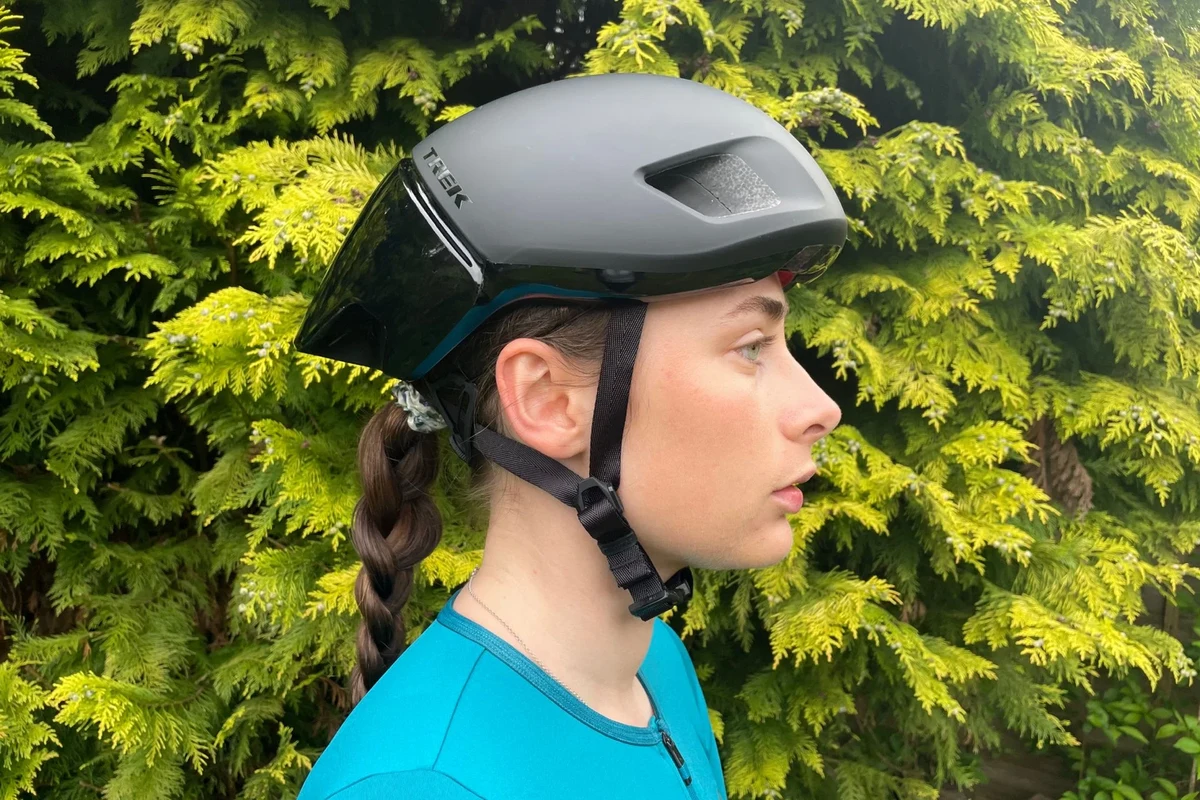
A helmet should sit level on the head, low enough to protect the forehead without tipping backward. The side straps should form a V shape around the ears, and the chin strap should feel snug enough that the helmet does not shift when you open your mouth.
- Adjust the retention system before your first ride
- Check for stable fit when you shake your head gently
- Make sure the helmet does not block your vision
- Wearing the helmet tilted back for style
- Choosing a size based only on general clothing size
- Using a loose strap that lets the helmet move around
What helmet lights can and cannot protect you from
Helmet lights can help others notice you, but they cannot prevent a crash by themselves. They also do not replace a helmet’s impact protection, and they cannot guarantee protection against serious injury in every fall, collision, or road hazard.
If a helmet has been in a crash, shows cracks, has damaged straps or mounts, or no longer fits correctly, stop using it and follow the manufacturer’s replacement guidance.
Buying Criteria: Features That Matter Most Before You Choose
Once safety and fit are covered, compare the features that affect daily use. The best helmet is usually the one you can wear comfortably, charge easily, and trust in the conditions where you ride most often.
Light brightness, visibility angles, and flashing vs steady modes
Brightness matters, but so does where the light is visible from. A strong rear light with good side visibility may be more useful in traffic than a brighter front light that is partly blocked by a visor, backpack, or riding posture.
Flashing modes are often easier to notice in daylight, while steady modes can feel calmer and sometimes more appropriate in low-light conditions. If a helmet offers several modes, that flexibility can be useful, but only if the controls are easy to operate with gloves or cold fingers.
Ventilation, weight, comfort, and visor compatibility
Because e-bike riders may travel farther or ride at higher assist levels, comfort becomes a bigger deal than many shoppers expect. Good ventilation can reduce heat buildup, while lower weight may make the helmet easier to wear for long commutes.
If you wear glasses, use a visor, or ride in bright sun, check compatibility carefully. Some integrated lights and visor designs work well together, but others can create glare, interfere with airflow, or make the helmet feel bulky.
If possible, compare the helmet’s shape to your usual riding gear, including glasses, winter caps, and rain hoods. Small compatibility issues often matter more in daily use than a long feature list.
Battery charging, water resistance, and app or remote controls
Charging convenience is one of the most overlooked factors in a lights e-bike helmet guide. A helmet with a long battery life but awkward charging may still become a nuisance, especially for commuters who ride frequently.
Water resistance is also worth checking, but do not assume a rating means the helmet can handle every storm or wash method. Follow the manual for cleaning and avoid soaking electrical components unless the manufacturer specifically says it is safe.
Value trade-offs: premium features vs practical essentials
Premium models may add app control, multiple light zones, or sleeker integration, but those extras are only worthwhile if they improve your actual riding routine. For many riders, the best value comes from a helmet that nails the basics: certified protection, secure fit, clear lighting, and dependable charging.
- Integrated visibility without extra accessories
- Convenient for commuting and short daily rides
- Can simplify your pre-ride routine
- Battery management adds another thing to maintain
- Lighting may not be as powerful as separate bike lights
- Style and fit options can be more limited
How to Use a Lights E-Bike Helmet Safely on the Road
Good equipment still needs good habits. A lights helmet works best when it is part of a predictable routine that includes checking the helmet, checking the lights, and riding defensively.
Pre-ride checks for charge, straps, and light function
Confirm the battery level before you leave, especially if you plan to ride after dark or through a long commute.
Make sure the straps are flat, the buckle closes securely, and the helmet sits level on your head.
Turn each mode on briefly to confirm that the front, rear, or side lights are working as expected.
Riding in traffic, at dusk, and in low-visibility conditions
At dusk and in rain or fog, visibility drops quickly, so helmet lights should be paired with other visibility tools such as bike-mounted lights and reflective details. In traffic, ride in a predictable line, use hand signals when appropriate, and avoid assuming that drivers have seen you just because your helmet is lit.
Low-visibility conditions also call for extra caution at intersections, driveways, and turns. Helmet lights can help, but the rider still needs to reduce speed, scan ahead, and leave extra space for braking.
Common mistakes riders make with helmet lighting
One common mistake is relying on the helmet light alone and skipping a proper bike headlight or taillight. Another is using a flashing mode that is too distracting for the situation or forgetting to recharge the battery until the helmet is no longer useful.
- Use helmet lighting as a visibility layer, not your only light source
- Keep the battery routine tied to another habit, like charging your phone or e-bike display
- Store the helmet where the light switch and charging port are easy to access
- Replace damaged straps, mounts, or pads only with manufacturer-approved parts
Care, Storage, Inspection, and Replacement Guidance
Helmets last longer and work better when they are cleaned and stored properly. Electrical parts need a little extra care, but the process should still be simple and safe.
Cleaning the shell, pads, straps, and light components
Use gentle cleaning methods and follow the helmet manual. In general, a soft cloth, mild soap, and careful air drying are safer than harsh chemicals, abrasive scrubbing, or high heat.
For light components, avoid forcing buttons, soaking ports, or scratching lenses. If pads are removable, wash them according to the instructions so they continue to fit comfortably and dry properly.
Safe charging and storage habits for battery longevity
Store the helmet in a cool, dry place away from direct sun, car interiors, and moisture. Extreme heat can be hard on batteries and plastic components, while damp storage can affect electronics and comfort materials.
Stop using the helmet if the shell, foam, straps, light housing, or charging port shows damage. Follow the manufacturer’s inspection and replacement guidance rather than trying to repair structural parts yourself.
When to replace a helmet after impact, wear, or age
Replace the helmet after any crash or hard impact, even if the damage is not obvious. You should also replace it if the fit changes, the foam compresses, the straps fray, the lights fail in a way that cannot be corrected per the manual, or the manufacturer recommends age-based replacement.
Final Recommendation: The Best Type of Lights E-Bike Helmet for Most Riders
For most riders, the best lights e-bike helmet is a certified, well-fitting model with simple rechargeable lighting, strong rear visibility, and enough ventilation for everyday use. That combination gives commuters and casual riders the most practical benefit without overpaying for features they may not use.
Best-for profiles, key limitations, and transparent verdict
If you ride in traffic, leave early in the morning, or often return home after sunset, a lights helmet can be a smart upgrade because it adds convenience and visibility in one piece of gear. If you ride mostly in daylight or already use powerful separate bike lights, you may get better value from a lighter, more ventilated helmet and dedicated front and rear lights instead.
Choose a lights e-bike helmet if you want integrated visibility, a secure fit, and a simpler commuting routine. Skip the upgrade if the model lacks the right certification, feels uncomfortable, or makes you compromise on the helmet fit and coverage that matter most.
Frequently Asked Questions
It is a strong fit for commuters, frequent riders, and anyone who rides in traffic or low light. Riders who already use separate bike lights may prefer a simpler helmet instead.
It should sit level, feel snug, and not shift when you move your head. The straps should form a V around the ears and the chin strap should stay secure without pinching.
Verify the exact certification listed by the manufacturer, such as CPSC, EN, ASTM, or NTA 8776 depending on your region and riding needs. Do not assume a helmet is suitable for e-bike use unless the label or official specs confirm it.
Replace it after any crash or hard impact, and also if the shell, foam, straps, or lights are damaged. Follow the manufacturer’s age-based replacement guidance if one is provided.
No. Helmet lights improve visibility, but they do not replace a proper bike headlight and taillight for seeing the road and being seen from behind.
Check the safety standard, fit system, battery charging method, lighting modes, water resistance, and return policy. If any current specs or rules matter to your purchase, confirm them on the official product page before buying.