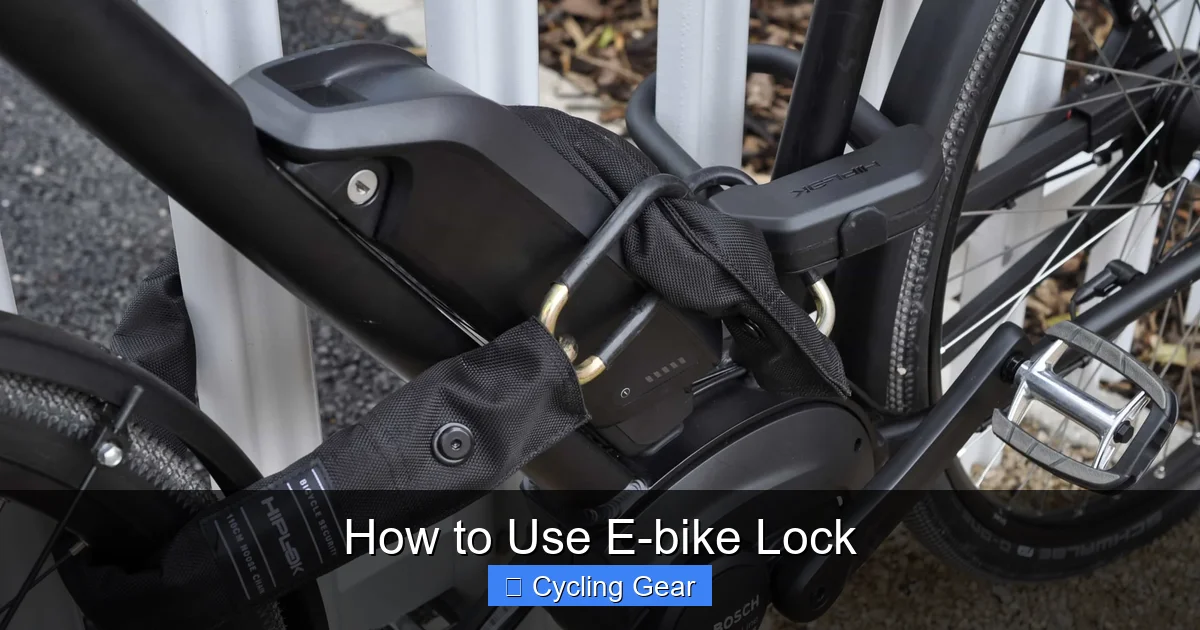
Lock the e-bike frame to a solid fixed object, keep the lock tight, and remove easy-to-steal parts like the battery when possible. For higher-risk parking, add a second lock and choose visible, well-trafficked locations.
If you own an e-bike, learning how to use e-bike lock correctly is just as important as choosing the bike itself. E-bikes are heavier, more valuable, and often more attractive to thieves than regular bicycles, so a rushed lock job can leave a lot of risk on the table.
This guide from ProKingsEdge breaks down the smart, practical way to secure an e-bike in everyday situations. The goal is simple: make your bike harder to steal, easier to park, and safer to leave behind when you need to step away.
- Frame first: Secure the main frame, not just a wheel.
- Tight fit: Less slack makes the lock harder to attack.
- Better parking: Use visible, sturdy bike racks when possible.
- Remove extras: Take the battery and accessories with you.
- Layer protection: Add a second lock for higher-risk stops.
How to Use an E-Bike Lock the Right Way in 2026
The best way to use an e-bike lock is to think beyond the lock itself. Good security comes from the full setup: the type of lock you choose, what part of the bike you secure, and where you park.
For most riders, the safest habit is to lock the frame to a fixed object, keep the lock tight, and remove anything easy to steal, such as the battery or display. That approach works better than relying on a single wheel lock or a cheap cable alone.
It also helps to remember that e-bike security is never absolute. A strong lock can slow theft and reduce the odds of a quick grab, but it does not make a bike theft-proof. Follow the product manual or ask a qualified professional if your lock or bike has special mounting points, frame shapes, or battery systems that change how it should be secured.
Different e-bike models may have frame, battery, or rack designs that change the best locking method. Check the product manual, brand guidance, or a qualified professional if you are unsure.
Choosing the Best Lock Setup for Your E-Bike
Not every lock works equally well on an e-bike. Heavier frames, wider tires, and integrated batteries can make some locks awkward or less effective if you do not match the lock to the bike.
A good setup usually starts with one strong primary lock and, for higher-risk parking, a second layer of protection. The right choice depends on how long you park, where you park, and how much your e-bike is worth.
U-lock vs. chain lock vs. folding lock for heavier e-bikes
U-locks are popular because they are rigid and hard to pry open when sized correctly. They work well for many commuters, but the opening can be too small for thick racks, large frames, or awkward parking spots.
Chain locks offer more flexibility, which can be helpful on heavier e-bikes with unusual frame geometry. The tradeoff is weight, so they can be less convenient to carry every day, especially if you already have a large battery and accessories on board.
Folding locks sit in the middle. They are compact and easier to pack, but the security level varies a lot by model, so it is important to check the build quality and brand guidance before relying on one for a valuable e-bike.
| Option | Best For | Note |
|---|---|---|
| U-lock | Daily commuting | Strong and compact, but less flexible |
| Chain lock | Odd frame shapes | Flexible, but often heavier |
| Folding lock | Portable backup use | Convenient, but quality varies |
Why frame shape, wheel size, and battery placement matter
E-bikes often have larger frames, longer wheelbases, and wider tires than standard bikes. That means a lock that fits a city commuter bike may not reach the frame and rack cleanly on an e-bike.
Battery placement matters too. If the battery is removable, taking it with you can reduce the bike’s appeal to thieves and make the bike less valuable at a glance. If the battery is built in, focus on locking the frame securely and removing any detachable accessories.
Wheel size also affects how much room you have to work with. Small gaps between the frame and locking point make it harder for thieves to use tools, while extra slack can give them room to pry or twist the lock.
Before you buy a lock, test whether it fits your frame, rear wheel, and the kind of rack you use most often. A lock that is “strong enough” but awkward to position often gets used incorrectly.
Step-by-Step: How to Lock an E-Bike Securely
The safest routine is simple: secure the frame first, then add wheel protection if needed, then remove or protect easy-to-steal accessories. The fewer loose parts you leave exposed, the less attractive the bike becomes.
If your e-bike is expensive or you park in busy public areas, consider using more than one locking method. Check the product manual or ask a qualified professional if your bike has special frame parts, battery mounts, or integrated locks that change the best approach.
Locking the frame to a fixed object
Always start by locking the main frame to something solid and immovable. A sturdy bike rack is usually better than a thin post, fence, or sign because it is harder to cut, lift, or slide the bike off.
Position the lock so it fits tightly around the frame and the anchor point. A snug fit leaves less room for tools and makes leverage attacks more difficult.
Pick a fixed rack or heavy street fixture that cannot be lifted over the bike.
Capture the main frame tube, not just a wheel, so the bike cannot be separated easily.
Reduce slack so the lock has less room for twisting, prying, or cutting tools.
Securing the rear wheel and front wheel
The rear wheel is often more valuable because it is attached to the drivetrain and frame, so many riders try to include it in the main lock path when possible. If your lock is large enough, use it to secure both the rear wheel and the frame together.
The front wheel is often easier to steal if it uses a quick-release system. If you cannot capture both wheels with one lock, use a second lock, a wheel-specific security device, or a locking skewer depending on your bike and budget. Always check the product manual, brand guidance, or a qualified professional before changing wheel hardware.
- Does the lock pass through the frame and rear wheel?
- Is the front wheel secured if it can be removed quickly?
- Are both wheels tight enough that the bike cannot be rolled away easily?
Protecting the battery, display, and accessories
On an e-bike, the battery is often one of the most expensive and tempting parts. If it is removable, take it with you whenever practical, especially for longer stops or overnight parking.
Displays, lights, bags, mirrors, and phone mounts can also disappear quickly if left in place. If a part can be removed in seconds, assume a thief can remove it too. A small routine of taking accessories with you can save a lot of trouble later.
Thieves often look for the easiest-value target, not just the whole bike. Removing a battery, display, or bag can make your e-bike less appealing at a glance.
Where to Lock Your E-Bike for Maximum Security
Where you park matters almost as much as what lock you use. A strong lock in a bad location can still create a theft opportunity, while a decent lock in a busy, visible spot is usually a better deterrent.
Choose places where people naturally pass by and where the bike is not hidden from view. Visibility does not guarantee safety, but it can make thieves feel exposed and rushed.
Best public locations, racks, and street fixtures
Public bike racks in active areas are usually better than isolated corners. Look for places near shop entrances, transit stops, staffed buildings, or well-trafficked sidewalks where someone is likely to notice suspicious behavior.
Use only fixtures that are designed to hold bikes or are clearly strong and permanent. If the object can be moved, lifted, or unclipped, it is not a secure anchor point.
What to avoid: weak poles, quick-release zones, and blind spots
A thin pole, loose fence panel, or decorative street sign may look convenient, but many of these can be defeated by lifting the bike over the top or cutting the fixture itself. Avoid anything that flexes or feels unstable.
Also avoid blind spots, dark alleys, and places where your bike can be hidden from casual view. Parking near predictable theft zones, such as spots where bikes are left overnight without much foot traffic, can increase risk.
If a parking spot feels isolated, poorly lit, or easy to tamper with, choose another location. A better spot is often more valuable than a more expensive lock.
Common E-Bike Locking Mistakes That Invite Theft
Most lock problems are not caused by bad luck. They happen because the bike was locked in a way that made the thief’s job easier.
Learning the common mistakes can help you avoid the most obvious weak points, especially if you commute daily or leave your e-bike in public for longer periods.
Only locking one wheel
Locking only a wheel is one of the easiest mistakes to make, and it is one of the easiest for thieves to exploit. A thief can remove the wheel and leave with the rest of the bike, or simply carry the frame away if it is not secured.
The main frame should always be part of the lock path. If your setup cannot include the frame, reconsider the lock size or use a second lock.
Leaving too much slack in the lock
Extra slack gives thieves room to insert tools, twist the lock, or create leverage. It also makes the bike easier to move around while locked, which can help someone work on it unnoticed.
A tight lock is harder to attack. If the lock is too long for the job, it may still work, but only if you position it carefully and remove unnecessary space inside the shackle or chain loop.
Using the wrong lock for high-value e-bikes
Not all locks are built for the same level of risk. A lightweight cable lock may be fine for a quick stop in a low-risk area, but it is usually not enough for a high-value commuter, cargo, or premium e-bike.
Match the lock to the bike’s value and your parking routine. If the bike is expensive, replaceable parts are costly, or you park overnight, a stronger primary lock and a backup layer are usually worth it.
- Better theft deterrence
- Less chance of quick removal
- More confidence when parking
- Heavier gear to carry
- More time to lock and unlock
- Some locks cost more upfront
Cost vs. Protection: What an E-Bike Lock Should Be Worth
There is no single right price for an e-bike lock, but the lock should make sense for the value of the bike and the risk of the parking environment. A cheap lock on a costly bike can be false economy if it fails when you need it most.
Think of the lock as part of the bike’s total protection plan, not as an accessory. The right balance depends on how often you park outside, whether you commute daily, and whether you need to carry the lock every day.
Budget lock options and their limits
Budget locks can be useful for low-risk, short-duration stops or as a secondary layer. But many lower-cost options are easier to cut, pry, or defeat than stronger models, especially if they rely on thin materials or simple mechanisms.
If you choose a budget lock, use it with realistic expectations. It may still help in a low-risk setting, but it should not be the only thing protecting a high-value e-bike in a busy city.
Mid-range and premium locks for commuter and cargo e-bikes
Mid-range and premium locks are often a better fit for commuters, cargo riders, and anyone who parks for long periods. These locks usually offer stronger materials, better fit, and more reliable hardware, though quality still varies by brand and model.
For larger e-bikes, the extra size and weight of a stronger lock can be worth the tradeoff. Just make sure the lock is still practical enough that you will actually use it every day.
Expert Safety Tips and Warning Signs to Watch For
Good e-bike security is partly about habits. A careful rider notices risk early, uses the right backup tools, and replaces worn gear before it fails.
If you have any concerns about your bike’s hardware, battery mount, or lock compatibility, check the product manual, brand guidance, or a qualified professional before making changes.
When to use a second lock or alarm
A second lock makes sense when you park in higher-risk areas, leave the bike for long periods, or own a more expensive e-bike. It can also help if one lock cannot capture both wheels and the frame at once.
Some riders also use alarms or tracking devices as a backup layer. These tools do not replace a strong lock, but they can add another hurdle and may help you respond faster if something is wrong.
Signs a parking spot is risky or targeted
Watch for broken locks on the ground, bikes parked in awkward hidden corners, or repeated signs of tampering around the rack. These can be clues that the area is already being watched or targeted.
Also be cautious if the spot is far from foot traffic, poorly lit, or easy to access by car or van. A thief who can work quickly and unseen has a much better chance of success.
When to replace a worn or compromised lock
Replace a lock if it shows visible damage, bent hardware, sticky operation, or signs that the key or combination mechanism is failing. A lock that is hard to open may also be a warning sign, especially if the damage came after a drop, theft attempt, or weather exposure.
If the lock has been cut, forced, or partially damaged, do not keep using it as your main protection. Follow the product manual or ask a qualified professional if you are unsure whether the lock is still safe to rely on.
If carrying a heavy lock or lifting a heavy e-bike causes pain, numbness, or joint strain, stop and seek medical advice. Choose a lighter setup or ask a qualified professional about safer handling options.
Final Recap: The Smartest Way to Use an E-Bike Lock
The smartest way to use an e-bike lock is to secure the frame to a solid fixed object, keep the lock tight, and protect removable parts like the battery and display. For higher-risk parking, use a second lock or alarm and choose visible, well-trafficked locations whenever possible.
In the end, the best e-bike security is a habit, not a single product. Match the lock to your bike, your parking routine, and your risk level, and always check the product manual, brand guidance, or a qualified professional when compatibility is unclear.
- Lock the frame first, not just a wheel.
- Use a tight fit and a solid anchor point.
- Remove the battery and easy-to-steal accessories when possible.
- Park in visible, well-trafficked areas.
- Upgrade to a second lock for higher-risk stops.
Frequently Asked Questions
Should I lock my e-bike frame or wheel first?
Always secure the frame first. If possible, include the rear wheel in the same lock path so the bike cannot be separated easily.
Is a cable lock enough for an e-bike?
A cable lock is usually not enough as the only lock for a valuable e-bike. It may work as a secondary layer, but stronger locks are better for primary security.
Where is the safest place to lock an e-bike?
Use a sturdy, fixed bike rack in a visible, well-trafficked area. Avoid weak poles, hidden corners, and anything that can be lifted or cut easily.
Should I remove the battery when I park my e-bike?
If the battery is removable, taking it with you can reduce theft risk. It is especially helpful for longer stops or overnight parking.
Do I need two locks for an e-bike?
Not always, but a second lock can help in higher-risk areas or for more expensive bikes. It is also useful when one lock cannot secure the frame and both wheels well.
When should I replace my e-bike lock?
Replace it if you see damage, bent hardware, sticky operation, or signs of a theft attempt. If you are unsure whether it is still reliable, check the product manual or ask a qualified professional.