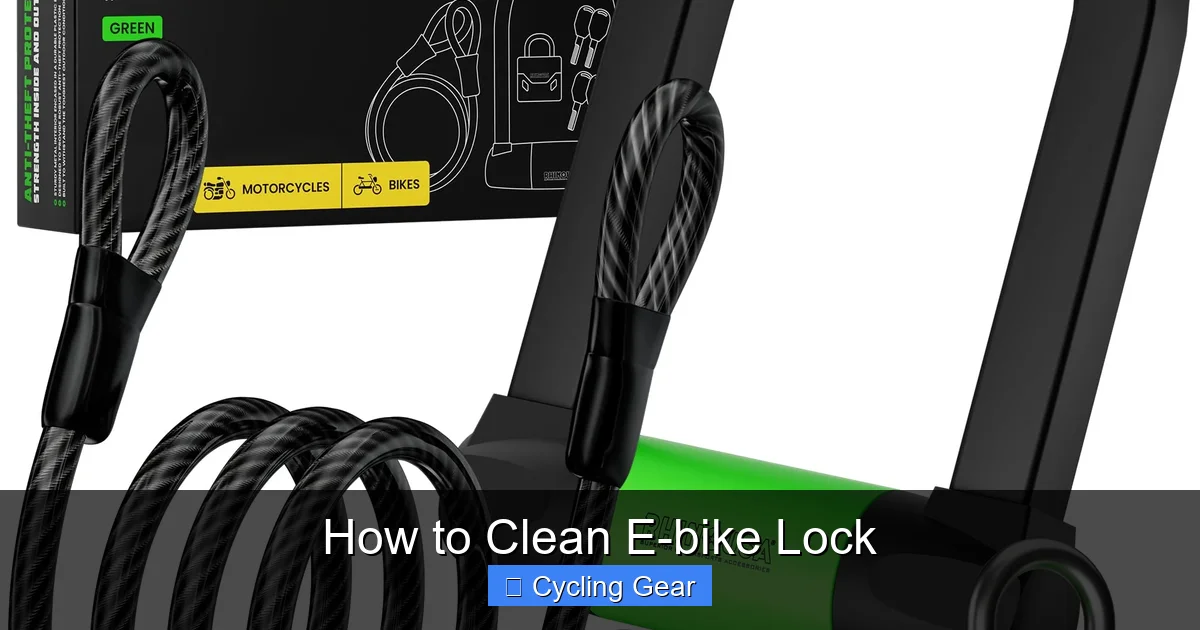
Clean an e-bike lock by brushing off dirt, wiping it carefully, drying it fully, and then using only a small amount of lock-safe lubricant if the manual allows it. Avoid harsh cleaners, pressure washers, and heavy oil, and replace the lock if it shows serious rust or damage.
If you ride an e-bike regularly, your lock is exposed to the same mess as the bike itself: road grit, rain, dust, and sometimes battery-area grime. Knowing how to clean e-bike lock parts the right way helps the lock open smoothly, resist corrosion, and last longer without weakening the mechanism.
- Start dry: Remove grit before using any liquid.
- Use gentle products: Stick to lock-safe cleaners and dry lubricants.
- Dry completely: Moisture left inside can cause rust and sticking.
- Don’t overdo it: Too much lubricant attracts dirt.
- Know the limit: Replace or repair locks with internal damage.
How to Clean an E-bike Lock Without Damaging the Mechanism
The safest approach is simple: remove loose dirt first, use a mild cleaner if needed, dry everything fully, and then apply only a small amount of lock-safe lubricant. That applies whether you use a U-lock, chain lock, folding lock, cable lock, or a smart lock with electronic parts.
Do not flood the lock with spray cleaners or force the key if the mechanism feels sticky. If your lock has a built-in alarm, fingerprint reader, battery cover, or electronic module, check the product manual or ask a qualified professional before using any cleaner near those parts.
Why E-bike Locks Need Special Cleaning in 2026
E-bike locks often work harder than regular bike locks. E-bikes are heavier, ride farther in all weather, and are more likely to be parked near busy streets, charging points, and storage areas where dirt builds up fast.
Many riders also lock the frame near the battery mount or rear wheel, which can expose the lock to extra grease, chain residue, and water spray. Over time, that grime can make the keyway gritty, the shackle stiff, or the folding joints harder to move.
How road grit, rain, and battery-area grime affect lock performance
Road grit is tiny, but it acts like sandpaper inside moving parts. Once it gets into the keyway or hinge points, it can wear down pins and make the lock feel rough or slow.
Rain is another problem because moisture can sit inside the mechanism and encourage rust. On e-bikes, battery-area grime may include dust mixed with oily residue, which can cling to the lock and trap more dirt than you expect.
A lock can look clean on the outside while still collecting fine dirt inside the keyway or hinge. That hidden buildup is often what causes sticking first.
Signs your lock needs cleaning before it fails
If your key does not slide in smoothly, the shackle feels slow to release, or a folding lock opens with extra resistance, those are early warning signs. A lock that only works after “jiggling” the key is also telling you it needs attention.
Other signs include visible rust, black residue around the key slot, squeaking joints, or a lock that feels dry and rough instead of smooth. Catching these issues early is usually easier and cheaper than repairing a seized lock later.
What You Need to Clean an E-bike Lock Safely
You do not need a complicated kit. In most cases, a soft brush, microfiber cloth, cotton swabs, mild soap or lock-safe cleaner, and a dry lubricant are enough for routine maintenance.
The exact products depend on the lock model and material, so check the product manual, brand guidance, or a qualified professional if you are unsure. Smart locks and alarm locks may have specific cleaning limits.
Best cleaning tools and lock-safe products
A soft toothbrush or detailing brush works well for loosening dirt around the shackle, keyway, and hinge joints. A microfiber cloth helps remove surface grime without scratching the finish.
For the inside of the lock, use a lock-safe cleaner or a very small amount of mild cleaner recommended by the maker. Cotton swabs can help around edges, but do not leave fibers behind in the key slot.
- Soft brush or toothbrush
- Microfiber cloth
- Cotton swabs
- Lock-safe cleaner or mild soap solution
- Dry lubricant approved for locks
What to avoid: harsh degreasers, pressure washers, and oily residues
Harsh degreasers can strip away protective coatings and dry out internal parts. Pressure washers are even riskier because they can force water and dirt deeper into the lock body.
Oily residues are another common mistake. Heavy oil may feel helpful at first, but it can attract dust and road grit, turning the lock into a sticky mess over time.
Never use a cleaner that is not approved for your lock type if the lock includes electronics, alarms, or smart features. Check the product manual or brand guidance before applying anything near those components.
Step-by-Step: How to Clean E-bike Lock Properly
The goal is to clean without pushing dirt deeper into the mechanism. Work slowly, use light pressure, and stop if a part feels stuck in a way that suggests internal damage.
Remove loose dirt and debris first
Start with the lock closed if possible, then brush away dust, sand, and dried mud from the outside. Pay attention to the keyway, shackle ends, hinge points, and any seams where dirt likes to collect.
Wipe the outside with a dry microfiber cloth before using any liquid. This keeps you from turning loose grit into paste, which can be harder to remove later.
Use a soft brush to lift dirt from the outside, joints, and key slot area.
Use a dry cloth to remove the loosened debris before adding any cleaner.
Do not pry or twist the lock open if it resists. Clean it first, then test again.
Clean the keyway, shackle, or folding joints based on lock type
For a U-lock or chain lock, focus on the keyway and the shackle ends where the locking pins sit. A few careful passes with a brush or swab are usually enough.
For folding locks, clean each hinge and pivot point one at a time. These locks have more moving parts, so it helps to open and close them slowly while wiping away grime from each joint.
For cable locks, the outside usually needs more cleaning than the inside, but the lock head still deserves attention. If the cable is frayed or the housing is damaged, cleaning will not fix the underlying problem.
Dry thoroughly to prevent corrosion and sticking
Drying matters as much as cleaning. Moisture left inside the lock can cause rust, especially if the bike is stored outdoors or in a damp garage.
Use a clean cloth first, then let the lock air-dry fully before adding lubricant or locking it again. If the product manual allows it, you can also use a gentle burst of air to clear trapped moisture, but avoid high-pressure air that may drive debris inward.
How to Lubricate an E-bike Lock After Cleaning
Lubrication should come after the lock is clean and dry, not before. The right lubricant helps the mechanism move smoothly, but too much can create a dirt magnet.
Different locks respond differently, so follow the product manual or ask a qualified professional if your lock maker specifies a particular lubricant.
Graphite vs. dry PTFE vs. silicone: what works best
Graphite is a common dry option for mechanical locks because it does not leave a wet film. Dry PTFE sprays are also popular because they reduce friction without adding much residue.
Silicone can work on some exterior parts, but it is not always the best choice for every keyway or smart-lock system. The safest pick depends on the lock design, weather exposure, and manufacturer guidance.
- Dry lubricants reduce friction without heavy buildup
- Graphite and PTFE are often better for keyways
- Less residue means less dirt attraction
- Some products are not suitable for smart locks
- Too much product can still clog the mechanism
- Wrong lubricant may void warranty guidance
How much lubricant to use and where to apply it
Use a small amount only. A light application into the keyway or moving joint is usually enough, followed by a few gentle cycles of the key or lock mechanism.
Wipe away any excess from the outside. If the lock still feels rough after a proper cleaning and light lubrication, there may be internal wear, not just surface dirt.
Apply lubricant sparingly, then work the lock several times and wipe off any extra. A thin film is better than a wet, dusty surface.
Common Mistakes That Damage E-bike Locks
Most lock problems come from overcleaning, using the wrong product, or forcing a dirty mechanism. The good news is that these mistakes are easy to avoid once you know what to look for.
Using the wrong cleaner on electronic or smart-lock components
Smart locks, alarm locks, and app-connected models may have seals, batteries, sensors, or circuit parts that should not get wet. Even a “safe” cleaner can be a problem if it reaches the wrong area.
That is why it is important to check the product manual, brand guidance, or a qualified professional before cleaning anything beyond the outer shell. When in doubt, clean only the exposed non-electronic surfaces.
Over-lubricating and attracting more dirt
More lubricant is not better. Excess product can hold dust, road grit, and moisture against the lock, which makes the mechanism dirtier over time.
If you notice a sticky film on the outside, wipe it off and reduce the next application. A lock should feel smooth, not greasy.
Forcing a dirty lock instead of cleaning it first
If the key does not turn easily, do not muscle it open. Forcing a dirty or corroded lock can bend internal parts or break the key.
Clean first, dry fully, then try again with a small amount of lubricant if the manual allows it. If the lock still resists, the issue may be internal wear rather than simple dirt.
When to Repair, Replace, or Get Professional Help
Cleaning can solve many common lock problems, but not all of them. If the mechanism is damaged or badly worn, the safest move may be repair or replacement.
For expensive e-bikes or high-security locks, it can be worth getting a locksmith or bike shop opinion before the lock fails completely.
Warning signs of internal rust, bent pins, or security wear
Deep rust inside the keyway, a key that bends or catches repeatedly, or a lock that opens inconsistently can all point to internal damage. A loose shackle, cracked housing, or warped folding joint is another sign that cleaning alone will not solve the issue.
If the lock has been dropped, forced, or exposed to flooding, inspect it carefully. Any sign that it no longer closes securely should be taken seriously because a weak lock can put the bike at risk.
If the lock is part of a security system and you suspect structural damage, do not keep using it as your main lock. Replace it or get professional help before relying on it again.
Cost comparison: cleaning vs. repair vs. replacing a worn lock
Cleaning is usually the lowest-cost option because it often only requires basic supplies you may already have. Repair can make sense when the lock is valuable and the problem is limited to a worn part or jammed mechanism.
Replacement is often the better choice when the lock is heavily rusted, bent, or no longer secure. The exact cost depends on the lock model, security level, and whether a locksmith or bike shop needs to service it.
Final Recap: Keep Your E-bike Lock Clean for Smoother Security
A clean e-bike lock is easier to use, less likely to stick, and better protected against rust and grime. The basic routine is simple: brush off debris, clean gently, dry thoroughly, and lubricate lightly only if the lock type allows it.
If your lock has electronics, unusual resistance, or visible damage, do not guess. Check the product manual or ask a qualified professional so you do not make the problem worse.
Quick maintenance routine for commuters and all-weather riders
For daily riders, a fast wipe-down after wet or dirty rides goes a long way. A deeper clean every so often, especially after storms or winter riding, can help prevent sticking before it starts.
If you commute in harsh weather, store the lock in a drier place when possible and inspect it regularly for grit, rust, or slow movement. Small habits now can save you from a failed lock later.
- Clean dirt out before it reaches the keyway or joints.
- Use only lock-safe products and very little lubricant.
- Dry the lock fully to reduce rust and sticking.
- Replace or repair locks that show serious wear or damage.
Frequently Asked Questions
How often should I clean my e-bike lock?
Clean it whenever you notice grit, stiffness, or visible dirt, and do a deeper clean after wet rides. If you commute daily or ride in bad weather, check it more often.
Can I use WD-40 on an e-bike lock?
Not every lock should be treated with a general-purpose spray. Check the product manual, brand guidance, or a qualified professional before using any cleaner or lubricant.
What is the best lubricant for a bike lock?
Dry lubricants such as graphite or dry PTFE are often preferred for mechanical lock keyways because they leave less residue. The best choice still depends on the lock model and manufacturer guidance.
Why is my lock still sticking after cleaning?
If the lock still sticks after cleaning and light lubrication, internal wear, rust, or bent parts may be the cause. In that case, repair or replacement may be needed.
Can I pressure wash an e-bike lock?
Pressure washing is not recommended because it can force water and dirt deeper into the mechanism. A soft brush, cloth, and lock-safe cleaner are safer choices.
When should I replace my e-bike lock?
Replace it if the lock is badly rusted, bent, cracked, or no longer closes securely. If you are unsure, ask a qualified professional for advice before relying on it again.