Choose the cardio machine that fits your space, budget, and training style first. For most homes, the best option is the one that is comfortable, quiet enough, and easy enough to use consistently.
Choosing home cardio equipment comes down to four things: the space you have, the way you like to train, the noise you can tolerate, and the features you’ll actually use. If you want the simplest answer, buy the machine that fits your room, supports your body comfortably, and makes it easiest to stay consistent.
- Space first: Measure the open footprint and clearance before you compare features.
- Match the workout: Pick treadmill, bike, rower, or elliptical based on how you actually like to train.
- Check the specs: Verify stability, weight capacity, adjustability, and storage size in the official manual.
- Think long term: Noise, maintenance, and ease of use matter more than flashy console extras.
How to Choose Cardio Equipment for Home: The Quick Answer
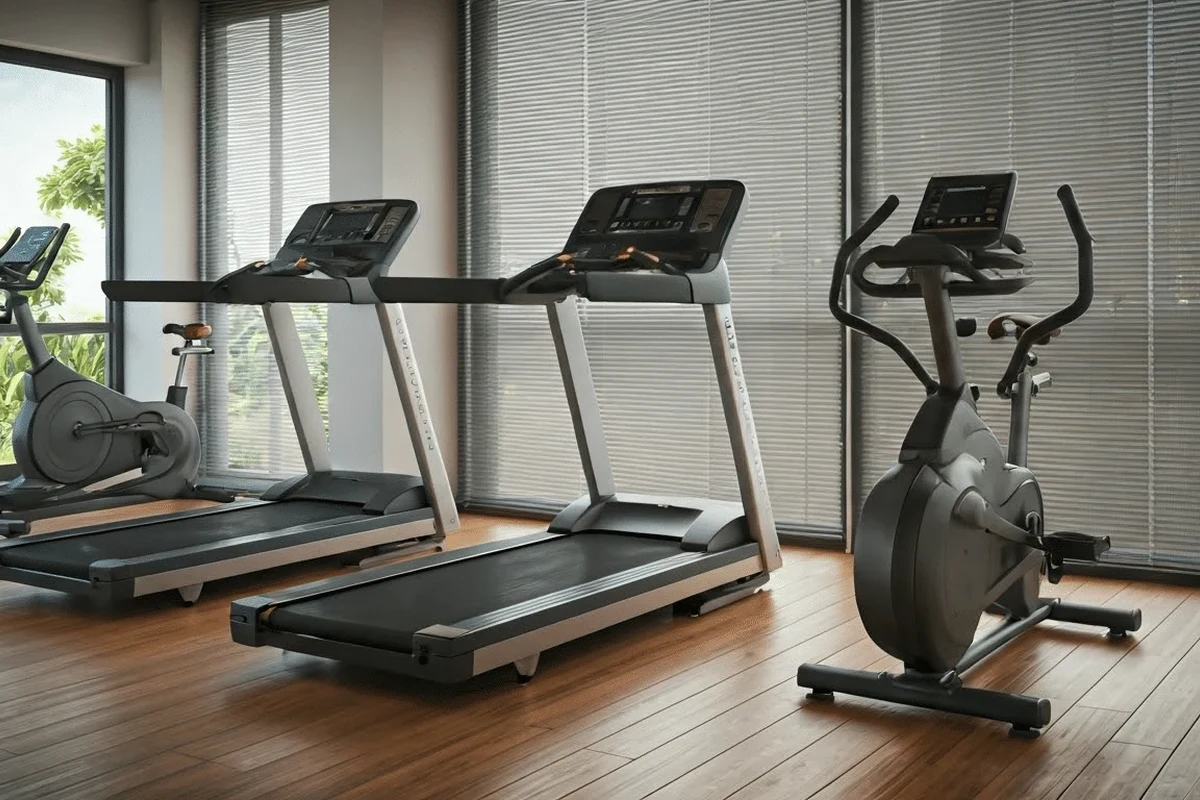
The best home cardio machine is the one you can use regularly without fighting your space, your budget, or your joints. For many households, that means a treadmill for walking and incline work, a bike for comfort, a rower for full-body conditioning, or an elliptical/air bike for lower-impact or higher-intensity training.
What Matters Most Before You Buy: Space, Budget, and Fitness Goals
Before comparing features, define the basics. A machine that looks impressive online can become frustrating if it dominates a room, is too loud for neighbors, or doesn’t match how you actually want to train.
How much room you really need for treadmills, bikes, rowers, and ellipticals
Start with the machine’s footprint, then add clearance for safe mounting, dismounting, and movement around it. Manufacturer dimensions tell you the base size, but they do not always include the extra room needed for safe use, especially for treadmills and ellipticals.
Always check the official product manual for the exact footprint, folding dimensions, ceiling clearance, and recommended safety space. These details vary by model and can change with incline, stride length, or handlebar position.
As a practical rule, measure the floor area where the machine will live, then mark out a rectangle with painter’s tape before buying. That makes it easier to see whether doors, furniture, fans, and outlets still work with the equipment in place.
Matching equipment to walking, weight loss, endurance, or low-impact training
Choose the machine that matches your preferred style of movement. If you like walking or incline work, a treadmill is the most direct fit. If you want seated comfort or less joint loading, a bike may be easier to stick with. If you want a full-body rhythm and efficient storage, a rower can be a smart option. If you want smooth motion with less impact, an elliptical is often a good middle ground.
Think about your most realistic workout, not your ideal one. If you will mostly do 20 to 30 minutes before work, the easiest machine to start and stop may be the best choice.
Setting a realistic budget for the machine, accessories, and upkeep
Budget for more than the sticker price. You may also need a mat, replacement batteries, lubricant, a heart-rate strap, footwear, or assembly help, depending on the machine. Some equipment also has ongoing costs such as maintenance parts, belts, pedals, or app subscriptions, which vary by model and retailer.
- Machine cost, delivery, and assembly
- Accessories, flooring protection, and maintenance items
- Warranty terms, return policy, and service availability
How Home Cardio Equipment Works and Which Type Fits Your Routine
Each machine creates a different training feel. That matters because the best cardio equipment is not just effective on paper; it is the one you can use without discomfort, boredom, or constant setup friction.
Treadmills: best for walking, jogging, and incline training
Treadmills are the most familiar option for indoor walking and running. They are especially useful if you want pace control, incline work, or a walking routine that is less dependent on weather.
- Natural for walkers and runners
- Easy to vary speed and incline
- Good for structured workouts
- Usually larger and louder than bikes or rowers
- Moving belt requires more maintenance than simpler machines
- Higher-impact than seated options
For home use, look closely at deck size, motor quality, cushioning, and folding design if space matters. If you plan to run, verify the running surface and weight capacity in the manufacturer’s specs rather than assuming all treadmills feel the same.
Exercise bikes: upright vs. recumbent for comfort and joint support
Exercise bikes are often easier to place in a home because they are compact, relatively quiet, and simple to use. Upright bikes feel closer to outdoor cycling, while recumbent bikes place you in a more supported seated position with a backrest.
Good for users who want a more traditional cycling posture and a smaller footprint, though it may feel less comfortable for long seated sessions.
Better for users who want back support, easier mounting, or a more relaxed position, but it usually takes up more floor space.
If comfort is your top priority, a recumbent model may be easier to keep using. If you want a more athletic ride and a smaller machine, an upright bike often makes more sense.
Rowers: full-body conditioning and space-efficient storage
Rowers use a pulling motion that involves the legs, torso, and arms in a coordinated pattern. They can be a strong choice for people who want a compact machine that stores vertically or folds, depending on the design.
Rower feel is influenced by resistance type, rail length, handle design, and foot placement, so two rowers can feel very different even if they look similar.
Before buying, check the rail length, seat comfort, and whether the machine’s storage mode still fits your room. If you have limited space, the stored footprint may matter as much as the workout footprint.
Ellipticals and air bikes: low-impact and high-intensity options
Ellipticals offer a smooth, standing motion that many users find easier on the joints than running. Air bikes use a fan-based resistance system and can feel more demanding as effort increases, which appeals to interval-training users.
Ellipticals often take up more room than bikes and may require attention to stride length and handle motion. Air bikes are usually less about comfort and more about efficient, intense effort, so they are best for users who want a machine that responds strongly to how hard they work.
Key Specifications to Compare Before You Choose
Once you know the machine type, compare the details that affect daily use. The right specs can make a machine comfortable and durable, while the wrong ones can make it awkward or irritating.
Dimensions, folding design, and storage footprint
Measure the open footprint and the stored footprint separately. Folding treadmills, foldable rowers, and some compact bikes can save space, but only if the folded machine is easy enough to move and store in your home.
Stability, frame quality, and weight capacity to verify
Stability affects both comfort and safety. A machine that shifts, squeaks, or flexes too much can feel distracting, especially at faster paces or higher resistance. Weight capacity is one of the clearest manufacturer limits to verify, and it should be checked against the official listing or manual before purchase.
Do not exceed the manufacturer’s stated load limit. If the frame feels unstable, the machine rocks on level flooring, or parts are damaged, stop using it and follow the manual’s inspection guidance.
Resistance types, incline levels, stride length, and adjustability
Resistance and adjustability determine how well the machine grows with you. Magnetic resistance is often associated with smoother, quieter operation on bikes and some rowers, while air resistance changes with effort and can feel more dynamic. On treadmills, incline can add variety without changing your stride speed.
For ellipticals, stride length matters because it affects how natural the motion feels. On bikes, seat and handlebar adjustability matter because a machine that cannot fit your body properly is unlikely to stay comfortable over time.
Console features, app compatibility, heart-rate tracking, and workout programs
Console features are useful only if you will use them. A basic display with time, distance, speed, and resistance may be enough for many homes. App compatibility, Bluetooth, heart-rate tracking, and built-in programs can help with structure, but they also add complexity and sometimes subscription costs.
Choose features that support your routine, not features that make the machine look more advanced. A simple console used regularly is better than a feature-rich one that stays untouched.
Who Each Type of Cardio Equipment Fits Best
The best machine depends on who is using it and how often. A great choice for a runner may be a poor choice for a senior user, a small apartment, or a shared family room.
Best choices for beginners, seniors, and post-injury users
Beginners often do well with the simplest machine to start and stop, such as a basic bike or a treadmill used for walking. Seniors and users returning after injury may prefer recumbent bikes or other lower-impact options, but any health-related exercise decision should be discussed with a qualified professional when pain, balance issues, or recovery are involved.
Usually benefits from a simple, stable machine with easy controls and low setup friction.
May want more adjustability, stronger build quality, and better comfort for longer sessions.
Often needs more resistance range, incline, or training variety to stay challenged.
Best choices for runners, cyclists, and interval-training users
Runners usually prefer treadmills because the movement is familiar and pace-based. Cyclists may prefer upright bikes or smart bikes if they want a more road-like position. Interval-training users often like air bikes or rowers because they respond quickly to effort changes and can support short, intense work periods.
Best choices for small apartments, shared spaces, and quiet homes
For small apartments, compact bikes and some folding rowers are often easier to live with than large treadmills or ellipticals. For shared spaces, noise and storage matter just as much as training style. If you live with others or have downstairs neighbors, look for smoother, quieter operation and a machine that is easy to move out of the way.
| Option | Best For | Key Consideration |
|---|---|---|
| Treadmill | Walking, jogging, incline work | Footprint, noise, and belt maintenance |
| Exercise bike | Quiet, compact cardio | Fit, comfort, and seat adjustability |
| Rower | Full-body conditioning | Rail length and storage space |
| Elliptical | Low-impact standing motion | Stride length and ceiling clearance |
Real-Use Benefits, Limitations, and Common Buying Mistakes
Many people focus on specs first and real life second. In practice, the machine that gets used most is usually the one that is convenient, comfortable, and easy to maintain.
Why convenience and consistency often matter more than premium features
Premium screens, workout libraries, and automatic programs can be helpful, but they do not make up for a machine that feels awkward in your space. If setup is annoying or the machine is too bulky to access quickly, it may get used less often.
Noise, maintenance, and motivation trade-offs to expect
Every machine has trade-offs. Treadmills can be louder and may need more upkeep. Bikes are usually quieter but may feel less engaging for some users. Rowers can store well, but the pulling motion is not for everyone. Ellipticals can feel smooth, but they often take more room than shoppers expect.
- Check noise expectations if you live in an apartment or shared home.
- Review maintenance steps in the manual before buying.
- Make sure the machine is easy enough to access that you will actually use it.
Common mistakes: buying for features instead of use, ignoring size, skipping load limits
The most common mistake is choosing a machine because it has a bigger screen or more programs. Another is forgetting to measure the room with the machine open and in use. A third is ignoring weight capacity or adjustability, which can affect both durability and comfort.
If a machine arrives damaged, wobbles, or makes unusual noises, stop using it and contact the seller or manufacturer. Follow the official service and inspection guidance instead of trying to repair structural or electrical parts yourself.
Safe Setup, Proper Use, and Ongoing Care
Good setup and maintenance help a machine last longer and feel better to use. They also reduce avoidable problems like slipping, overheating, or early wear.
Placement, leveling, ventilation, and electrical safety for home use
Place the machine on a stable, level surface with enough room to step on and off safely. If the equipment uses power, keep cords clear of walking paths and use an outlet that matches the manufacturer’s instructions. Leave space for airflow, especially around motors or consoles that can warm up during use.
Warm-up, posture, and safe progression to avoid overuse injuries
Start with an easier pace and build gradually. Good posture matters on every machine: keep your footing secure, use the handles as intended, and avoid awkward twisting or leaning. If you have pain, dizziness, or a medical condition that affects exercise tolerance, get guidance from a qualified professional before progressing.
- Begin with short sessions and increase gradually
- Use the machine according to the manual
- Stop if anything feels unstable or unusual
- Do not ignore pain, wobble, or electrical issues
- Do not exceed the stated limits or modify the machine
- Do not place equipment where it blocks exits or cords
Cleaning, lubrication, battery checks, and storage tips to extend lifespan
Wipe sweat and dust from the machine after use, since moisture can affect grips, consoles, and moving parts. Some treadmills require belt lubrication, and many consoles rely on batteries or charging. Check the manual for the correct cleaning products, service intervals, and storage instructions, because those vary by model.
Final Recommendation: How to Make the Best Choice for Your Home Gym
The best way to choose home cardio equipment is to match the machine to your space first, then to your training style, then to your comfort and maintenance preferences. That order helps you avoid expensive mistakes and makes it more likely you’ll keep using the machine.
Simple decision framework for selecting the right cardio machine in 2026
Start with your room size, noise tolerance, and budget. Then narrow the list by workout style: treadmill for walking or running, bike for comfort and quiet use, rower for compact full-body work, and elliptical or air bike for low-impact or interval-focused training. Finally, verify the official dimensions, load limit, adjustability, warranty, and service support before you buy.
When to buy new, used, or skip the machine entirely
Buying new makes sense when you want a warranty, current support, and a clear return policy. Used equipment can be a good value if the frame is solid, the moving parts are in good condition, and you can inspect it carefully before paying. If a machine would be too large, too loud, or too inconvenient for your home, it may be better to skip it and choose a simpler training option you will actually use.
Choose the cardio machine that fits your room, your routine, and your comfort level—not the one with the most features. For most home gyms, the right pick is the one you can set up safely, maintain easily, and use consistently without fighting your space or your schedule.
Frequently Asked Questions
A compact exercise bike or folding rower is often easier to fit in a small home. The best choice depends on your room size, noise tolerance, and how easy the machine is to move or store.
Check the official footprint, then add clearance for safe mounting, dismounting, and movement around the machine. Folding size matters too, but only if the stored machine still fits your home.
Many beginners do well with a simple bike or a treadmill used for walking because both are easy to start and stop. Comfort, stability, and low setup friction matter more than advanced features.
Focus on dimensions, stability, weight capacity, adjustability, resistance type, noise, and maintenance requirements. Console features are helpful only if you will actually use them.
New equipment is better if you want a warranty, a return policy, and current support. Used equipment can be a good value if you can inspect the frame and moving parts carefully and verify the machine still works properly.
Clean sweat and dust regularly, follow the manual for lubrication or battery checks, and keep the machine on a stable, level surface. Stop using it if it wobbles, makes unusual noises, or shows damage.