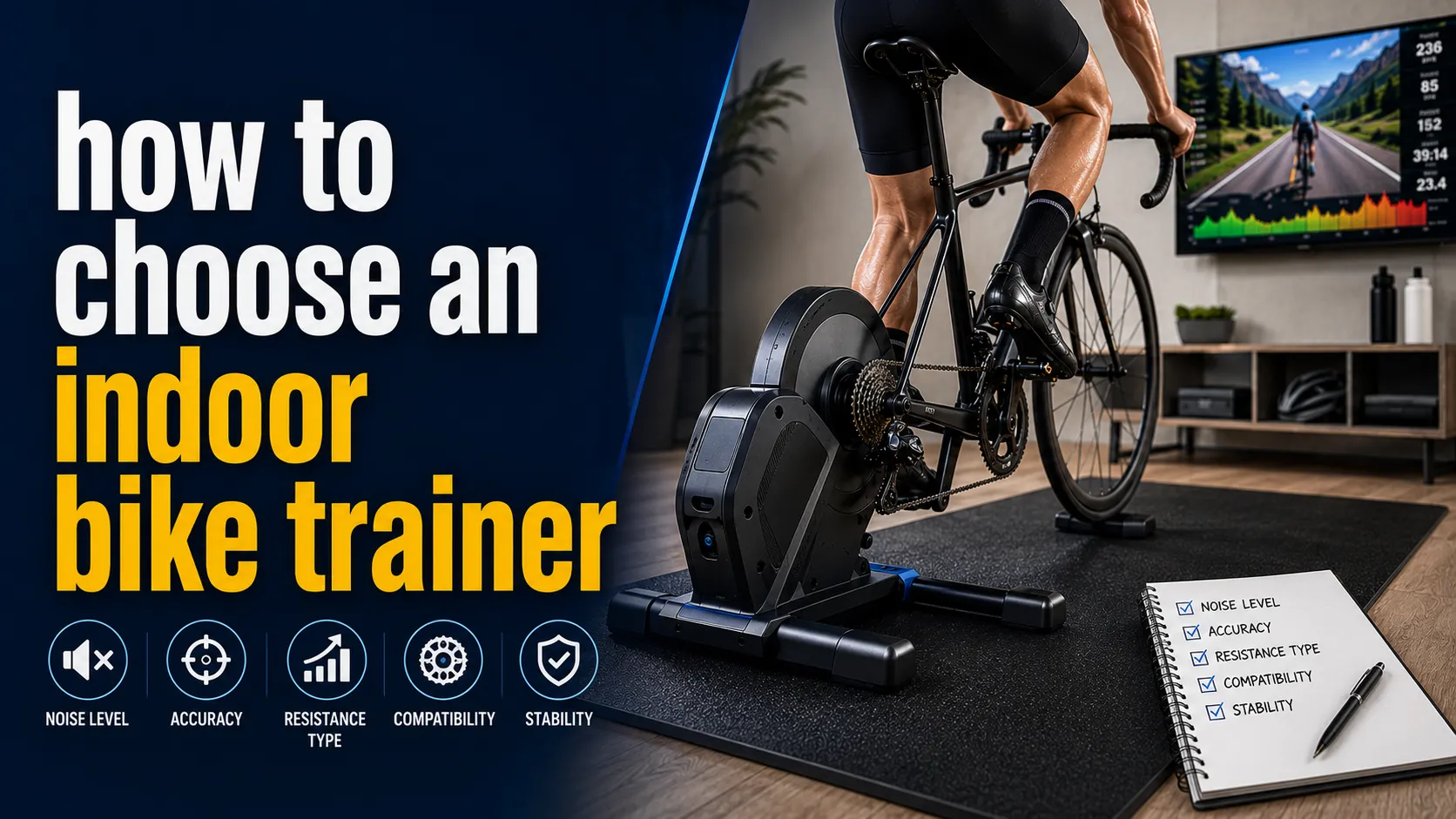
To choose an indoor bike trainer, focus on bike compatibility, resistance type, noise level, stability, space, budget, and how often you plan to ride. For most beginners, a stable wheel-on magnetic or fluid trainer is enough. For serious training, a smart direct-drive trainer is usually better.
Choose an indoor bike trainer by matching it to your bike, your noise limits, your training goals, and your space. Beginners can start with a basic wheel-on trainer. Riders who want app control, power data, and smoother resistance should look at a smart trainer.
My Simple Take on Indoor Bike Trainers
I am Ryan Mitchel, and I write about cycling gear and active lifestyle products for ProKingsEdge.com.
An indoor bike trainer can turn your regular bike into a home workout setup.
That sounds simple. But buying the wrong trainer is easy.
Some trainers are loud. Some feel unstable. Some do not fit every bike. Some need extra parts. Some are overkill for beginners.
So before buying, you need to know what kind of trainer fits your bike, your home, and your riding style.
Safety note: No indoor bike trainer can fully prevent injury, falls, or equipment damage. Set it up correctly, check bike compatibility, tighten all parts, and stop using damaged gear.
What Is an Indoor Bike Trainer?
An indoor bike trainer is a stand that lets you ride your own bike indoors.
You attach your bike to the trainer. Then you pedal while the trainer adds resistance.
This gives you a cycling workout without going outside.
Indoor bike trainers are useful for winter training, rainy days, apartment workouts, recovery rides, and structured cycling sessions.
A bike trainer holds your bike in place and creates resistance while you pedal. The resistance can come from magnets, fluid, air, or smart electronic control.
Why Choosing the Right Indoor Bike Trainer Matters
A bad trainer can ruin your indoor cycling setup.
It may shake, make too much noise, damage your tire, or feel nothing like real riding.
A good trainer should feel stable, fit your bike, match your space, and support your workout goals.
The right choice can help you ride more often, even when the weather is bad.
For general cycling safety and riding guidance, the League of American Bicyclists shares useful cycling education for riders.
A quiet trainer is not always silent. Your bike drivetrain, tire, floor, and room can also affect noise.
Main Types of Indoor Bike Trainers
Indoor bike trainers are not all the same.
The type you choose affects noise, price, ride feel, setup, and training features.
| Trainer Type | Best For | Main Downside |
|---|---|---|
| Magnetic trainer | Beginners and budget buyers | Ride feel can be basic |
| Fluid trainer | Smoother indoor riding | Usually costs more than magnetic |
| Smart trainer | App-based training and power data | Higher price |
| Direct-drive trainer | Serious cyclists and quieter training | More setup and higher cost |
| Wheel-on trainer | Easy setup and lower cost | Can wear tires and make more noise |
| Rollers | Balance and smooth pedaling practice | Harder for beginners |
Step 1: Check Bike Compatibility First
This is the first thing to check.
Do not buy a trainer before knowing if it fits your bike.
You need to check wheel size, axle type, frame spacing, tire type, and drivetrain setup.
Road bikes usually work well with many trainers. Mountain bikes may need a smoother trainer tire or different setup. Some thru-axle bikes need an adapter.
Do not force your bike into a trainer that does not fit. Poor fit can damage the bike, trainer, axle, or frame.
Bike Compatibility Checklist
- Check your bike wheel size.
- Check if your bike uses quick release or thru-axle.
- Check trainer weight limit.
- Check cassette compatibility for direct-drive trainers.
- Check if you need an adapter.
- Check tire type if using a wheel-on trainer.
- Check frame clearance before setup.
Step 2: Choose the Right Resistance Type
Resistance controls how hard it feels to pedal.
Some trainers use fixed resistance. Some change resistance as you pedal harder. Smart trainers can change resistance through apps.
If you only want basic workouts, magnetic resistance can work.
If you want a smoother road-like feel, fluid or smart trainers usually feel better.
| Resistance Type | Ride Feel | Best User |
|---|---|---|
| Magnetic | Simple and controlled | Beginners and budget users |
| Fluid | Smoother and more natural | Fitness riders and regular cyclists |
| Smart electronic | App-controlled and realistic | Structured training users |
| Air | Gets harder as speed increases | Riders who do not mind noise |
If you live in an apartment, do not choose only by price. Noise and vibration matter more than you think.
Step 3: Decide Between Wheel-On and Direct-Drive
This is one of the biggest choices.
A wheel-on trainer keeps your rear wheel on the bike. The tire presses against a roller.
A direct-drive trainer removes your rear wheel. Your bike connects directly to the trainer.
- Usually cheaper
- Easier for beginners
- Works for simple workouts
- More portable
- Usually quieter
- Better ride feel
- Better for smart training
- Costs more
For beginners, a wheel-on trainer is often enough.
For serious cyclists, a direct-drive trainer is usually the better long-term choice.
Step 4: Think About Noise
Noise matters a lot for indoor cycling.
This is even more important if you live in an apartment, share a house, or ride early in the morning.
Wheel-on trainers can be louder because the tire contacts the roller.
Direct-drive trainers are often quieter, but your chain and drivetrain still make noise.
| Setup | Noise Level | Best Fix |
|---|---|---|
| Wheel-on trainer with regular tire | Medium to loud | Use a trainer tire and mat |
| Wheel-on trainer with trainer tire | Lower | Keep tire pressure correct |
| Direct-drive trainer | Lower | Keep drivetrain clean |
| Trainer on hard floor | More vibration | Use a bike trainer mat |
| Trainer on upstairs floor | Can disturb others | Use a thick mat and stable setup |
Step 5: Check Stability and Build Quality
A trainer should feel stable when you ride.
If it rocks too much, the workout feels unsafe and annoying.
Look for a wide base, strong frame, stable legs, and secure bike attachment.
If you are a heavier rider or sprint indoors, stability matters even more.
Indoor trainers are not all built for the same rider weight or riding force. Always check the product limits before buying.
Step 6: Match the Trainer to Your Space
Indoor bike trainers take more room than people expect.
You need space for your bike, trainer, fan, mat, towel, and maybe a tablet or phone holder.
If you live in a small apartment, choose a foldable trainer or a trainer that stores easily.
Step 7: Decide If You Need Smart Features
Smart trainers connect to apps and devices.
They can track power, change resistance, and work with virtual riding apps.
If you like structured training, this is useful.
If you only want simple cardio, you may not need it.
USA Cycling shares training and racing resources for cyclists who want to take riding more seriously. You can learn more from USA Cycling.
Smart Trainer vs Regular Trainer
| Feature | Regular Trainer | Smart Trainer |
|---|---|---|
| Price | Usually lower | Usually higher |
| App control | No or limited | Yes |
| Power data | Usually no | Often yes |
| Ride feel | Basic to good | Good to very realistic |
| Best for | Simple workouts | Structured training |
Best Fit by Rider Type
Start with a stable wheel-on magnetic or fluid trainer that fits your bike.
Choose a quieter trainer, use a trainer mat, and avoid loud tire setups.
Look for a smart direct-drive trainer with accurate resistance and app support.
Quick Indoor Bike Trainer Pick Categories
These are not exact product names. They are smart trainer types to compare before buying.
A good balance of smooth resistance, fair noise level, and practical value.
A simple choice for beginners who want basic indoor cycling workouts.
A stronger option for riders who want app control, power data, and a better ride feel.
Indoor Bike Trainer Setup Essentials
The trainer is not the only thing you may need.
A good setup can make indoor riding quieter, cleaner, and more comfortable.
Common Mistakes When Choosing an Indoor Bike Trainer
Buying Before Checking Compatibility
This is the biggest mistake.
If the trainer does not fit your bike, it does not matter how good the reviews are.
Ignoring Noise
A loud trainer can become a problem fast.
If you ride in an apartment, noise should be near the top of your checklist.
Buying Too Cheap
Cheap trainers can work.
But very weak trainers may feel unstable, loud, or annoying to use.
Buying Too Advanced
Not every rider needs a premium smart trainer.
If you only ride once a week, a simple trainer may be enough.
Forgetting About Floor Protection
Sweat, tire dust, and vibration can affect your floor.
A bike trainer mat is not exciting, but it is useful.
Indoor Bike Trainer Problem Solver
| Problem | Likely Cause | Simple Fix |
|---|---|---|
| Trainer is too loud | Tire noise or hard floor vibration | Use a trainer tire and mat |
| Bike feels unstable | Loose setup or weak trainer base | Check all locks, legs, and axle fit |
| Tire wears fast | Wheel-on trainer friction | Use a trainer tire |
| Resistance feels strange | Wrong trainer type or poor setup | Check tire pressure and resistance settings |
| Trainer does not fit bike | Axle or cassette mismatch | Check adapter or compatibility list |
| Floor gets sweaty | No mat or towel | Use a trainer mat and sweat guard |
How Much Should You Spend?
Your budget should match your use.
Do not overspend if you only want simple cardio.
Do not buy the cheapest trainer if you plan to ride often.
Good for beginners who want basic indoor workouts.
Better balance of stability, noise control, and ride feel.
Best for frequent riders who want smart features, smoother resistance, and better data.
How to Choose Based on Your Main Goal
| Main Goal | Best Trainer Type | Why It Fits |
|---|---|---|
| Beginner fitness | Magnetic wheel-on trainer | Simple, affordable, and easy to start |
| Quiet apartment riding | Fluid or direct-drive trainer | Usually smoother and quieter |
| Winter training | Fluid or smart trainer | Better for regular indoor riding |
| Virtual cycling apps | Smart trainer | Supports app control and data |
| Serious road training | Smart direct-drive trainer | Better resistance and training feedback |
| Small spaces | Foldable wheel-on trainer | Easier to store after workouts |
Practical Tips Before Buying
- Check your bike axle type before choosing a trainer.
- Use a trainer mat to reduce vibration and protect the floor.
- Use a fan because indoor cycling gets hot fast.
- Use a trainer tire if you buy a wheel-on trainer.
- Choose a quiet setup if you live upstairs or in an apartment.
- Do not buy smart features unless you will actually use them.
- Read the compatibility notes before ordering.
If this is your first indoor bike trainer, do not chase the most expensive model first. Buy for your real use, not your fantasy training plan.
Notes Before You Buy
An indoor bike trainer works best when the full setup is right. Trainer, bike, mat, fan, tire, and space all affect the ride.
Think about where you will place the trainer.
Think about how often you will use it.
Think about who else will hear it.
These simple questions can save you from buying the wrong trainer.
Key Takeaways
The best indoor bike trainer is the one that fits your bike, matches your space, stays stable, controls noise, and supports your real training goals.
- Check bike compatibility first.
- Choose resistance type based on your workout needs.
- Pick wheel-on for simple use and direct-drive for better feel.
- Think about noise if you live in an apartment.
- Use a trainer mat to protect your floor.
- Smart trainers are useful, but not required for everyone.
- Do not ignore stability and setup safety.
FAQ
How do I choose an indoor bike trainer?
Choose an indoor bike trainer by checking bike compatibility, resistance type, noise level, stability, space, and your training goals.
What type of indoor bike trainer is best for beginners?
A magnetic or fluid wheel-on trainer is usually best for beginners because it is simple, affordable, and easier to set up.
Is a smart bike trainer worth it?
A smart bike trainer is worth it if you want app control, power data, virtual riding, and structured workouts. It may be too much for basic fitness rides.
Are indoor bike trainers noisy?
Some are noisy, especially wheel-on trainers with regular tires. A trainer mat, trainer tire, and direct-drive setup can reduce noise.
Can any bike fit on an indoor bike trainer?
No. You need to check wheel size, axle type, drivetrain, cassette needs, and trainer compatibility before buying.
Do I need a trainer mat?
Yes, it is useful. A trainer mat helps protect floors, reduce vibration, and catch sweat during indoor cycling workouts.
What is better, wheel-on or direct-drive trainer?
Wheel-on trainers are cheaper and easier for beginners. Direct-drive trainers are usually quieter, smoother, and better for serious training.
Can I use an indoor bike trainer in an apartment?
Yes, but choose a quieter trainer, use a trainer mat, and avoid loud tire setups if noise is a concern.
Conclusion
Choosing an indoor bike trainer is not hard if you focus on the right things.
Start with bike compatibility. Then check resistance type, noise, stability, space, and budget.
For most beginners, a good wheel-on magnetic or fluid trainer is enough.
For serious cyclists, a smart direct-drive trainer is the better long-term choice.
Choose the indoor bike trainer that matches your real riding habits. A stable, compatible, quiet-enough trainer that you actually use is better than an expensive trainer that sits in the corner.