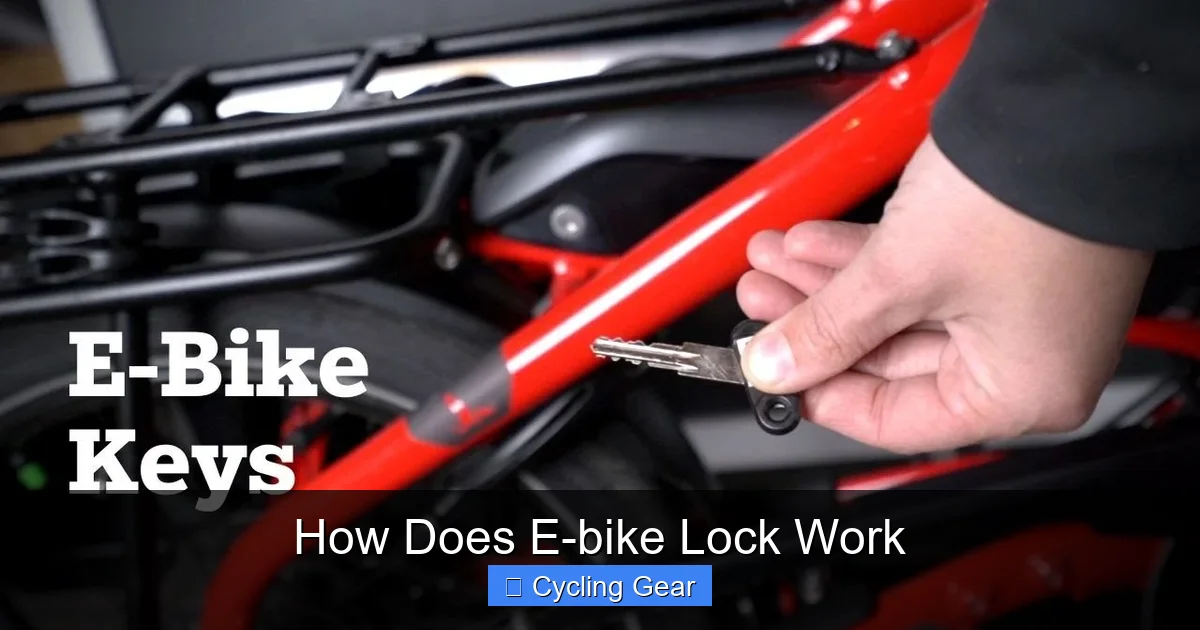
An e-bike lock works by physically blocking theft, slowing down tampering, and sometimes adding alarms or smart controls. The safest setup usually secures the frame to a fixed object and protects the battery and wheel too.
If you’re wondering how does e-bike lock work, the short answer is that it creates a physical or digital barrier that makes theft slower, louder, and riskier. Some locks block the wheel or frame, while others add alarms, app control, or battery security to protect the most valuable parts of the bike.
- Frame first: Lock the frame to a fixed object whenever possible.
- Battery matters: Protect or remove the battery when practical.
- Match risk: Use a lock that fits the bike’s value and parking conditions.
- Layer security: Add a second lock, alarm, or tracker in high-risk areas.
- Use it right: Tight placement and good anchor choice improve protection.
How Does E-bike Lock Work? A Practical 2026 Guide for Riders
An e-bike lock works by denying easy access to the parts a thief wants most and by forcing them to spend more time, tools, and effort. That delay matters because most thefts are opportunistic, not carefully planned.
For everyday riders, the goal is not just to “lock the bike.” It is to make the bike difficult enough to steal that a thief moves on. The best setup usually combines a strong lock, a smart parking spot, and a few extra security habits.
What Makes E-bike Locks Different from Regular Bike Locks?
E-bikes are not just heavier bikes with a motor. They often carry a battery, wiring, display, and more expensive components, which changes how theft protection should work.
Because the value is higher, the lock strategy should be more serious. In many cases, standard bike security is a starting point, not the full solution.
Higher theft risk from batteries, motors, and resale value
E-bikes can be attractive to thieves because the battery and motor may be worth stealing on their own. Even if the frame is left behind, those parts can be removed, sold, or stripped for resale.
That is why battery security matters, not just frame security. If your model allows it, remove the battery when parking long term, or use an integrated battery lock that follows the product manual or brand guidance.
Why standard locks are often not enough for e-bikes
A thin cable lock that might discourage casual tampering on a regular bike can be a weak choice for an e-bike. Heavier bikes also need stronger anchors and more careful positioning because theft tools can exploit slack and leverage.
Lock strength is only one part of the equation. A secure lock still needs a solid object, good placement, and parking choices that reduce risk.
How E-bike Locks Work: The Main Locking Mechanisms Explained
Different e-bike locks work in different ways, but the basic idea is the same: they create a barrier that is hard to cut, pry, pick, or bypass. Some are purely mechanical, while others add electronics for alerts and convenience.
Keyed locks and anti-tamper cylinders
Keyed locks use a physical key to open a hardened locking mechanism. Better models may include anti-pick or anti-drill cylinder features, which are meant to make forced entry harder.
These locks are popular because they are simple and dependable. Still, quality varies a lot, so it is smart to check the product manual, brand guidance, or a qualified professional if you are unsure whether a specific lock fits your bike and parking routine.
Combination locks and resettable codes
Combination locks open with a number sequence rather than a key. Some riders like them because they remove the need to carry a key, and resettable codes can be convenient for shared use.
The tradeoff is that convenience should not replace strength. A combination lock is only useful if the build quality is strong enough for your theft risk level.
Smart locks with Bluetooth, app control, and alarms
Smart locks add features like phone unlocking, motion alerts, and built-in alarms. These can help you notice tampering sooner and may make a thief more likely to leave.
They are useful, but they are not magic. Batteries need charging, apps can be finicky, and electronics should be treated as a layer of protection rather than the only layer.
Integrated frame locks, wheel locks, and battery locks
Some e-bikes come with built-in frame locks that immobilize the rear wheel. Others include battery locks or wheel locks that secure a specific component instead of the whole bike.
These systems can be helpful, especially for quick stops, but they often work best alongside a separate lock attached to a fixed object. On many bikes, integrated locking is a convenience feature, not a full theft solution.
Step-by-Step: How to Use an E-bike Lock the Right Way
A good lock can fail if it is used poorly. The right setup should protect the frame, reduce leverage points, and make the bike harder to move or dismantle.
Locking the frame to a fixed object
Always prioritize the frame over the wheel when locking to a rack, post, or other fixed anchor. The frame is the core of the bike, while wheels can sometimes be removed more easily.
Use a fixed object that cannot be lifted, cut easily, or opened. Avoid loose signs, small fences, or anything that could be dismantled.
Make sure the frame is inside the locked area, not just the wheel. If possible, include the rear wheel too.
Less space means less room for tools. Tight placement can reduce the chance of leverage attacks.
Securing the wheel and battery together
If your lock is large enough, secure the rear wheel and frame together. This makes it harder for someone to remove the wheel and walk away with part of the bike.
Battery security deserves special attention. If the battery is removable, take it with you when practical. If it is built in, use the bike’s locking system correctly and follow the product manual or brand guidance.
Positioning the lock to reduce leverage attacks
Thieves often use the ground, a post, or the bike’s own frame position to gain leverage. To reduce that risk, keep the lock off the ground and avoid leaving large gaps inside the lock.
Also try to place the lock so the keyhole or shackle opening is harder to access. Small positioning choices can make a big difference in real-world security.
If you use a U-lock, keep the locked section as small and tight as possible. A snug fit often gives a thief less room to pry, twist, or insert tools.
Common Mistakes Riders Make with E-bike Locks
Many thefts happen because the lock was used in a way that looked secure but was not effective. The good news is that most of these mistakes are easy to avoid once you know what to look for.
Locking only the wheel instead of the frame
Locking only the front wheel can leave the rest of the bike vulnerable. A thief may remove the wheel and take the frame, or simply detach the wheel and leave you with a damaged setup.
Whenever possible, secure the frame first and then include the wheel if the lock allows it.
Choosing weak anchors or leaving too much slack
A strong lock is much less useful if it is attached to a weak object. Small poles, thin railings, and loose fixtures can be cut, lifted, or broken more easily than a sturdy rack.
Too much slack also helps thieves. Extra space can give them room to insert tools or swing the lock for leverage.
Ignoring battery removal and accessory theft
Some riders focus on the frame and forget accessories like batteries, lights, bags, displays, and quick-release parts. Those items can be targeted because they are easier to remove than the entire bike.
If your bike has removable parts, lock or remove them when practical. For long stops, this can be just as important as securing the frame.
Using a lock that does not match the bike’s value
It is a mistake to protect a high-value e-bike with a low-cost lock meant for casual use. The lock should match the risk, the parking environment, and how long the bike will be unattended.
If you are not sure what level to choose, compare the lock’s construction, the type of theft it resists, and the places where you usually park.
Choosing the Best E-bike Lock: Security, Price, and Convenience
The best e-bike lock depends on how you ride. A commuter who locks up for a few hours has different needs than a cargo e-bike owner or someone parking overnight in a busy city.
Think about three things: how much protection you need, how often you will carry the lock, and how easy it is to use every day.
U-lock vs chain lock vs folding lock vs smart lock
| Option | Best For | Note |
|---|---|---|
| U-lock | Urban riders and commuters | Strong and compact, but may be less flexible around large racks. |
| Chain lock | Flexible locking points and heavier bikes | Can be very secure if built well, but usually heavier to carry. |
| Folding lock | Riders who want balance between portability and coverage | Convenient, but quality varies a lot by model. |
| Smart lock | Tech-friendly riders who want alerts and convenience | Useful features, but electronics should not replace strong physical security. |
There is no single best option for every rider. Many people do best with one strong primary lock plus a second security layer, especially for longer stops.
What to expect at different price points in 2026
Lower-priced locks may be fine for low-risk areas or short stops, but they usually offer fewer security features and less durable materials. Mid-range models often improve build quality, while premium locks may add better materials, tougher cylinders, or smart features.
Price does not guarantee safety, and compatibility can vary by bike frame, tire size, and parking style. Check the product manual, brand guidance, or a qualified professional if the fit matters for your setup.
Best lock features for commuters, city riders, and cargo e-bike owners
Commuters often want a lock that is easy to carry and quick to use every day. City riders may need stronger theft resistance and better protection against overnight risk.
Cargo e-bike owners should pay special attention to frame size, weight, battery placement, and accessory security. Large bikes may need longer chains or more flexible locking options, but heavier gear can be harder to carry.
- Stronger locks slow theft
- Smart features can add alerts
- Integrated locks improve convenience
- Heavier locks are harder to carry
- Electronics can fail or need charging
- Weak usage can cancel out strong hardware
Expert Warning: When an E-bike Lock Is Not Enough
Even a very good lock cannot make a bike theft-proof. It can only raise the effort needed and reduce the chance that your bike is the easiest target nearby.
Why layering locks and parking smart matters
Layering means using more than one line of defense, such as a strong frame lock plus a wheel lock or alarm. Parking smart means choosing visible, well-lit areas with solid anchor points and fewer opportunities for tampering.
This approach works because thieves prefer speed and low risk. The more time and attention your bike demands, the less attractive it becomes.
High-risk theft zones and overnight storage concerns
Busy transit areas, isolated streets, and overnight outdoor parking all increase risk. In these situations, a single lock may not be enough, especially for a valuable e-bike.
If you must leave the bike for long periods, consider indoor storage, a secondary lock, or a more secure location when available. Local rules and building policies can also matter, so check before you park.
When to use tracking devices, alarms, and insurance
Tracking devices and alarms can add another layer of protection, especially if your bike is expensive or essential for daily travel. Insurance may also be worth exploring if the bike would be difficult to replace.
Security devices do not replace safe parking habits. If you have concerns about theft, storage, or bike handling, check the product manual, brand guidance, or a qualified professional.
Final Recap: How E-bike Locks Protect Your Ride
So, how does e-bike lock work? It protects your bike by physically blocking access, slowing down theft attempts, and sometimes adding alarms or smart controls. The lock works best when it secures the frame, limits slack, and matches the value and risk level of your e-bike.
Quick summary of how the locking system works
Mechanical locks stop movement or access through strong metal parts, while smart locks add alerts, app control, or electronic convenience. Integrated locks can help, but they often work best as part of a larger security plan.
Key takeaways for safer everyday parking
Choose a lock that fits your bike and your routine. Then use it correctly, park in safer places, and protect high-value parts like the battery and accessories whenever possible.
For the most reliable setup, follow the product manual or ask a qualified professional if you are unsure about compatibility, security level, or installation.
Frequently Asked Questions
Do e-bike locks work better than regular bike locks?
Often yes, because e-bikes usually need stronger protection for the frame, battery, and motor-related parts. The best lock is the one that matches your bike’s value and your parking risk.
Should I lock the e-bike frame or the wheel?
Lock the frame first whenever possible, then include the wheel if the lock and anchor allow it. A wheel-only lock can leave the rest of the bike easier to steal.
Are smart e-bike locks worth it?
They can be worth it if you want alarms, app control, or extra convenience. Still, they should be used as a layer of security, not the only layer.
Is it safe to leave an e-bike battery on the bike?
It depends on the bike and the parking situation. If the battery is removable, taking it with you can reduce theft risk; otherwise, use the bike’s locking system and follow the product manual or brand guidance.
What type of lock is best for an e-bike?
There is no single best option for every rider. U-locks, chain locks, folding locks, and smart locks each have tradeoffs in security, weight, and convenience.
When is one lock not enough for an e-bike?
One lock may not be enough in high-theft areas, for overnight parking, or when the bike is especially valuable. In those cases, layering locks and choosing safer parking spots is a better approach.