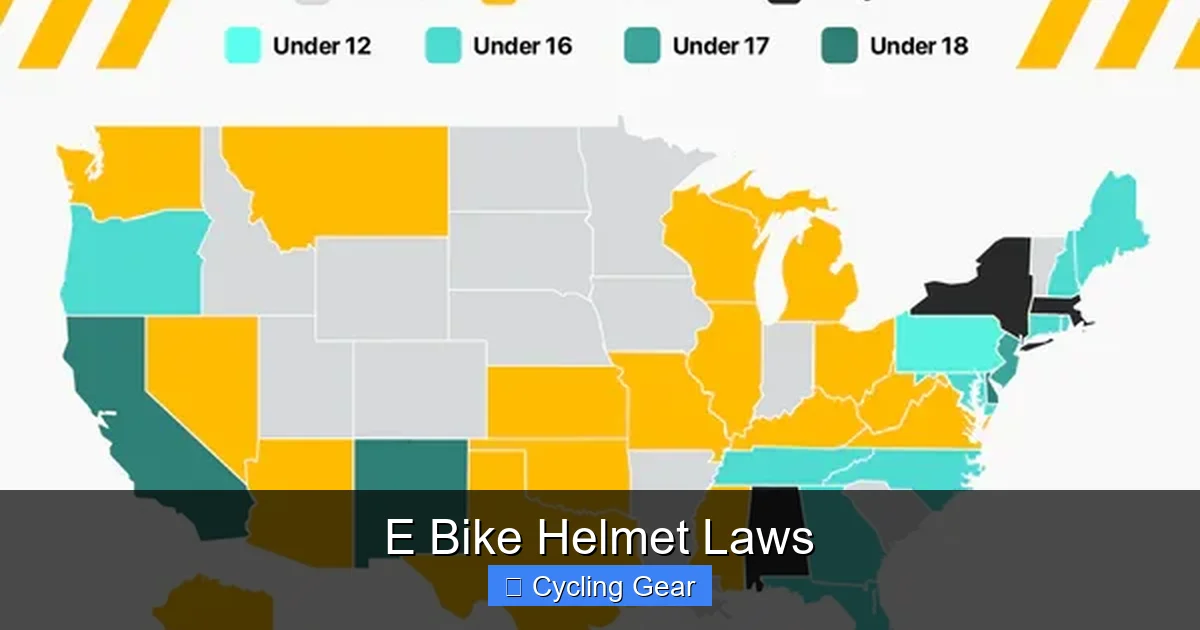
E bike helmet laws vary by location, rider age, and e-bike class, so there is no single rule that fits every rider. The safest choice is a certified helmet that fits well and matches your riding speed and local requirements.
E bike helmet laws can feel confusing because the rules are not the same everywhere. If you ride a Class 1, 2, or 3 e-bike, the safest approach is to understand both the law and the helmet standard that fits your speed, route, and age group.
- Know your class: Class 1, 2, and 3 e-bikes can trigger different helmet rules.
- Check local law: State, city, and trail rules may differ from each other.
- Fit matters: A certified helmet only helps if it sits correctly and stays secure.
- Replace after impact: Any serious crash can damage helmet protection.
- Match the ride: Faster or longer rides may justify stronger helmet features.
What E Bike Helmet Laws Mean in 2026: Class 1, 2, and 3 Differences
In simple terms, e bike helmet laws are the rules that say who must wear a helmet, what kind of helmet is allowed, and where those rules apply. In 2026, the biggest difference usually comes down to e-bike class and local law, not just the bike itself.
Class 1 and Class 2 e-bikes are generally limited to pedal assist or throttle assist up to lower speeds, while Class 3 e-bikes are built for faster assisted riding. That matters because faster riding raises the risk of a hard fall, and many places treat Class 3 riders more strictly.
Some areas require helmets for all e-bike riders, while others only require them for younger riders or for certain e-bike classes. Because laws can change by state, city, trail, or bike path, it is smart to check the product manual, local transportation rules, or ask a qualified professional if you are unsure.
Where Helmet Rules Change: Federal Guidance vs. State and City E Bike Helmet Laws
Federal guidance helps define what counts as an e-bike, but it does not replace state and city helmet laws. In practice, most helmet rules are set locally, so the same rider may face different requirements depending on where the ride starts, ends, or takes place.
That is why a commuter may be legal on one route and out of compliance on another. If you ride across town lines, use shared paths, or travel while visiting family, it is worth checking the rules before every new route.
How local age limits and bike-lane rules affect real-world riding
Many local rules focus on age. Teens and younger riders are often required to wear helmets, even when adults are not.
Bike-lane and trail rules can also matter. Some paths allow e-bikes only under certain class limits, and some cities require helmets on those routes regardless of age. If you rely on bike lanes for commuting, review the route rules the same way you would check traffic signals or road closures.
Local e-bike and helmet rules can change without much notice. Before riding in a new city or park, check the current municipal, trail, or park guidance and follow the product manual or ask a qualified professional if your setup is unusual.
Who Must Wear a Helmet: Riders, Passengers, Teens, and Delivery Workers
Helmet requirements often depend on who is riding. Adult riders may have different rules than minors, and passengers can have separate requirements depending on the e-bike style and local law.
Teens are commonly covered by stricter helmet rules than adults. Delivery workers may also face workplace policies that go beyond the law, especially if they ride for long shifts in traffic or at night.
If you carry a child passenger, use a rental bike, or share an e-bike with family members, do not assume one person’s helmet rule applies to everyone. The safest habit is to size and fit helmets for each rider individually.
Practical examples for commuters, parents, and rental riders
A commuter on a Class 3 e-bike may need a helmet even if a neighbor on a Class 1 bike does not. A parent riding with a child should check whether the child needs a helmet by age, by passenger status, or by both.
Rental riders should be especially careful. Rental agreements can require helmets even when local law is less strict, and the helmet supplied by the shop may not fit well if you do not adjust it correctly. If the fit feels off, ask for help before you ride.
A helmet that is legal on paper can still be a poor choice if it does not fit your head shape, sits too high, or shifts when you shake your head.
What Counts as a Legal E Bike Helmet: Safety Certifications and Fit Standards
A legal helmet is not just any helmet-shaped shell. It should meet the safety certification required in your area and be worn in a way that actually protects you.
Common bike helmet standards may cover typical bicycle use, but some riders choose e-bike-specific helmets for better coverage or stronger impact design. That does not mean every rider needs the most expensive model, but it does mean the helmet should match the bike speed and riding conditions.
Fit matters just as much as certification. A certified helmet that wobbles, tilts back, or leaves the forehead exposed may not protect well in a crash.
Why a regular bike helmet may not be enough for faster Class 3 riding
For slower rides, a standard bike helmet may be a reasonable choice if it meets local rules and fits properly. For faster Class 3 riding, many riders prefer helmets with more coverage, stronger retention systems, or added impact management features.
That said, there is no universal helmet that fits every rider and every route. If you ride at higher speeds, in traffic, or in mixed weather, compare the helmet’s intended use, coverage, ventilation, and compatibility with lights or glasses. When in doubt, check the product manual, brand guidance, or a qualified professional.
- Certification label inside the helmet
- Correct size for your head circumference
- Snug side straps and chin strap
- Forehead coverage without tilting back
- Compatibility with glasses, lights, or winter gear
Common Mistakes Riders Make With E Bike Helmet Laws
Most helmet mistakes are easy to avoid, but they happen often because riders assume the rules are simple. The biggest problem is treating e-bike laws like a single national rule when they are usually local and specific.
Assuming one state rule applies everywhere
Crossing a city line can change the rule. A trail may have its own policy, and a state may treat Class 2 and Class 3 e-bikes differently.
This is especially important for commuters and delivery riders who cover a lot of ground. If your route changes often, build a habit of checking the local rules before relying on the same helmet setup everywhere.
Wearing an uncertified or poorly fitted helmet
Some riders buy a cheap helmet online without checking the label, then wear it too loose or too far back on the head. That can reduce protection even if the helmet looks fine from the outside.
Always verify the certification for your region and make sure the fit is secure. If the helmet has been dropped hard, cracked, or feels loose after adjustment, follow the product manual or ask a qualified professional before using it again.
A helmet that has visible damage, a broken strap, or a loose fit should not be relied on for protection. If you suspect a head injury after a fall, stop riding and seek medical care promptly.
Helmet Costs, Upgrades, and Value: Budget vs. Premium Protection
Helmet price can vary a lot, and more expensive does not always mean better for your needs. Budget helmets can be fine for casual riding if they are certified, fit well, and are replaced when damaged.
Premium helmets may offer better ventilation, lighter weight, stronger retention systems, or added impact technologies. Those upgrades can be worth it for daily commuters, longer rides, or faster e-bike use, but they are not mandatory for every rider.
Comparing standard bike helmets, MIPS options, and e-bike-specific models
Standard bike helmets are often the starting point for everyday riders. MIPS-style helmets add a slip-plane design intended to help with certain rotational forces, while e-bike-specific models may offer more coverage or sturdier construction.
Each option has tradeoffs. Standard helmets are usually lighter and less expensive, MIPS models can cost more, and e-bike-specific helmets may feel warmer or heavier. The best pick depends on your route, speed, weather, budget, and comfort.
| Option | Best For | Note |
|---|---|---|
| Standard bike helmet | Casual riders and short trips | Check local legality and fit carefully |
| MIPS helmet | Daily riders wanting added protection features | Usually costs more than basic models |
| E-bike-specific helmet | Faster rides and heavier commuting use | May offer more coverage or a sturdier feel |
- Better crash protection than no helmet
- More comfort and confidence for daily riding
- Higher-end models may add coverage and fit features
- Price rises with added features
- Some models are heavier or warmer
- Wrong fit can reduce protection
Expert Safety Tips and Warning Signs Riders Should Not Ignore
Good helmet habits are simple: wear it every ride, fit it correctly, and replace it when it no longer protects well. Small issues, like a worn strap or a loose dial fit, can become big problems during a crash.
- Improves protection on every ride
- Supports safer commuting and family riding
- Helps riders stay compliant with local laws
When to replace a helmet after impact, age, or visible wear
Replace a helmet after any serious impact, even if the outside looks okay. Foam and internal structure can be damaged in ways you cannot see.
Also replace the helmet if the straps fray, the shell cracks, the fit system breaks, or the helmet becomes too old for the manufacturer’s guidance. If you are not sure whether it is still safe, check the product manual, brand guidance, or a qualified professional.
If you hit your head, feel dizzy, have a headache that does not improve, or notice confusion or nausea after a fall, get medical advice right away. Do not keep riding until a doctor says it is safe.
Keep one helmet for daily use and one backup for sharing or travel only if both are certified, properly sized, and in good condition. Always recheck the fit before each ride.
Final Takeaway: How to Stay Legal, Safer, and Confident on an E Bike
The best way to handle e bike helmet laws is to treat them as a mix of local legal rules and personal safety choices. Know your bike class, check the rules where you ride, and choose a helmet that is certified, comfortable, and properly fitted.
If your riding is faster, longer, or more traffic-heavy, consider stepping up to a helmet with better coverage or added safety features. And if you are ever unsure about helmet fit, damage, or injury after a fall, follow the product manual or ask a qualified professional.
- Helmet laws vary by state, city, age, and e-bike class.
- Certification and fit matter as much as the helmet itself.
- Class 3 and faster riding often justify stronger helmet choices.
- Replace helmets after impact or visible wear.
Frequently Asked Questions
Do e-bike helmet laws apply to all riders?
Not always. Helmet rules can depend on your age, the e-bike class, and the state or city where you ride.
Are Class 3 e-bikes treated differently for helmet rules?
Often yes. Class 3 e-bikes are faster, so many areas have stricter helmet requirements or stronger safety expectations for those riders.
Can I use a regular bike helmet on an e-bike?
Sometimes, if it meets local rules and fits properly. Faster riding or Class 3 use may make an e-bike-specific helmet a better choice.
How do I know if my helmet is legal?
Check the certification label inside the helmet and compare it with your local rules. If you are unsure, review the product manual, brand guidance, or ask a qualified professional.
When should I replace an e-bike helmet?
Replace it after a hard impact, if you see cracks or strap damage, or if the fit system no longer works correctly. Follow the manufacturer’s guidance for age and replacement timing.
Do passengers on e-bikes need helmets too?
Often they do, depending on local law and the passenger’s age. Check the rules before carrying a child or adult passenger.