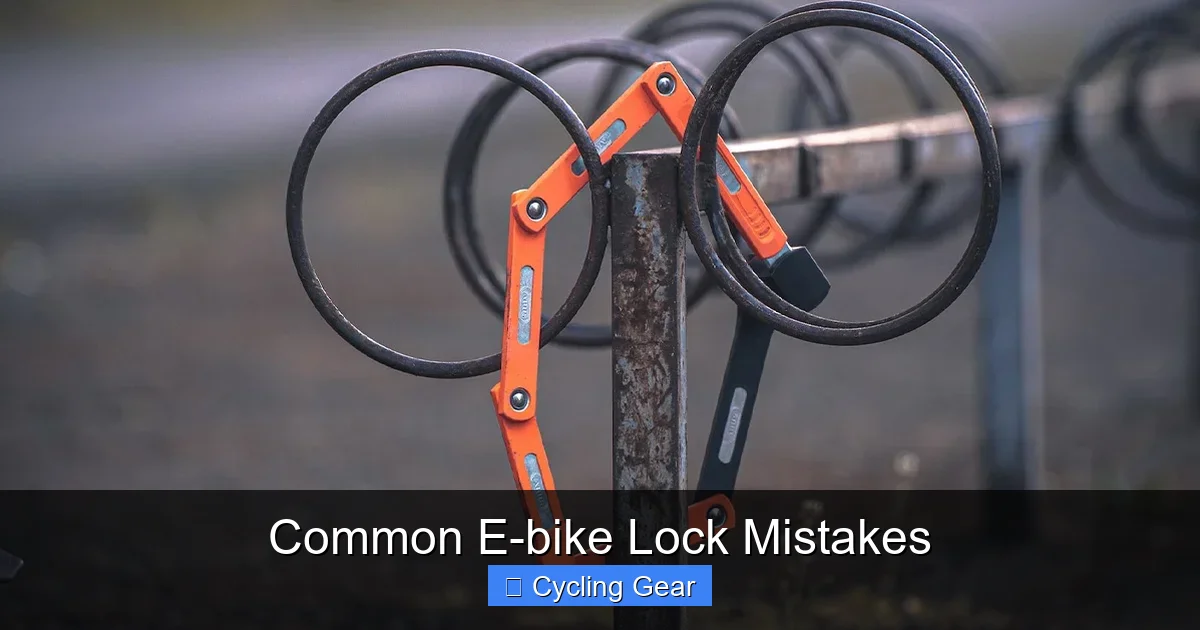
The most common e-bike lock mistakes are using a weak lock, locking only the wheel, and choosing a poor anchor point. A strong lock works best when it secures the frame, fits tightly, and is paired with smart parking habits.
E-bikes are bigger targets than many riders realize. They cost more than regular bikes, they often stay parked in busy places, and thieves know that one weak point can be enough to steal the whole ride.
This guide breaks down the most common e-bike lock mistakes and shows how to avoid them in everyday situations. If your setup is unusual, always check the product manual, brand guidance, or ask a qualified professional for advice that fits your bike, lock, and local parking rules.
- Match the lock to the bike: High-value e-bikes need stronger protection than a basic cable lock.
- Lock the frame: Wheel-only locking leaves the main bike easier to steal.
- Reduce slack: Less empty space inside the lock makes prying harder.
- Use a solid anchor: Weak posts and loose objects can defeat a good lock.
Why E-bike Theft Is Different in 2026: What Riders Need to Know
E-bike theft is not just about grabbing a bike and riding away. Many modern e-bikes have batteries, displays, motors, and accessories that make them more valuable and, in some cases, easier to strip for parts.
That matters because thieves often look for the fastest win, not the most expensive bike overall. A rider who locks the frame poorly, leaves the battery exposed, or parks in the same place every day can become an easy target.
Lock strength matters, but so does how you use it. Even a good lock can fail if it is attached to the wrong part of the bike or a weak anchor point.
Another difference is that e-bikes are often heavier and less convenient to move. That can lead riders to take shortcuts, such as locking only the wheel or skipping a second lock because the bike already feels “hard to steal.” Unfortunately, thieves count on those shortcuts.
The Most Common E-bike Lock Mistakes Riders Make Every Day
Most theft problems start with small habits. The good news is that many common mistakes are easy to fix once you know what to look for.
Using a weak lock on a high-value e-bike
One of the biggest mistakes is pairing a valuable e-bike with a low-security cable lock. Thin cables can be cut quickly with common tools, and cheap locks may not hold up well against leverage or tampering.
A stronger lock does not make theft impossible, but it can make your bike a less attractive target. For many riders, a solid U-lock or a quality chain lock is a better match than a basic cable alone. If you are unsure which level fits your bike, check the product manual, brand guidance, or ask a qualified professional.
Locking only the wheel instead of the frame
It is easy to assume that locking the wheel is enough, especially if the bike has quick-release parts or a large rear wheel. But a thief can often remove a wheel and leave the frame behind, or carry the bike away if the lock does not secure the main structure.
Whenever possible, lock through the frame and a wheel together. The frame is the main part of the bike, and securing it gives you better protection than wheel-only locking.
Leaving too much space inside the lock
Some riders leave a lot of empty space between the lock and the bike or anchor point. That extra room can give a thief more leverage to pry the lock open or use tools inside the gap.
A snug fit makes the lock harder to attack. The goal is to reduce slack while still avoiding pressure on brake lines, cables, or delicate parts. If your current lock is too large for your frame and parking setup, it may be worth switching to a better size or style.
Choose the smallest lock size that still lets you secure the frame and a strong anchor point. Less empty space usually means less leverage for a thief.
Choosing the wrong anchor point
A strong lock is only as good as what it is attached to. Locking to a thin signpost, loose fence, or small object that can be lifted or cut defeats the purpose.
Look for a fixed, sturdy anchor that cannot be easily removed. In many cases, a proper bike rack or a heavy immovable structure is better than a random object near the curb. If the anchor seems shaky, skip it and find a better spot.
How to Lock an E-bike the Right Way in Real-World Situations
There is no single perfect method for every place. The right setup depends on where you park, how long you will be away, and how much risk you are willing to accept.
Street parking outside shops and cafés
For short stops, keep the bike visible and use the strongest lock you can manage comfortably. Lock the frame to a fixed rack or sturdy anchor, and if possible, secure one wheel as well.
Try to park in well-lit, busy areas where people can see the bike. Thieves prefer low-traffic spots where they can work without attention. If you are leaving the bike for longer than planned, consider whether it is better to move it to a more secure location.
Apartment hallways, garages, and shared storage rooms
Indoor storage may feel safe, but shared spaces can still be risky. Hallways, basements, and garages often have predictable access patterns, and a thief who enters once may return.
Use the same care indoors that you would outdoors. Lock the bike to an immovable object if possible, and keep batteries, displays, and accessories out of sight. If your building has specific rules about storage, follow them and check the product manual or ask a qualified professional if you need a different mounting or locking setup.
Workplace parking and campus racks
Work and campus parking often create routines, which thieves notice. If you park at the same rack at the same time every day, your bike becomes easier to track.
Vary your parking spot when possible, and use a lock that is quick enough for daily use but strong enough for repeat exposure. A second lock can be helpful in higher-risk areas, especially if the bike is left for several hours.
U-Locks, Chain Locks, and Folding Locks: Which One Fits Your E-bike?
Different locks solve different problems. The best choice depends on how far you ride, how often you carry the lock, and how much security you need in your area.
Security level versus portability
U-locks are often favored for strong protection and compact size. Chain locks can be more flexible around awkward racks and thick frames, but they are usually heavier. Folding locks sit somewhere in between, offering convenience and decent portability for some riders.
Portability matters because a lock that stays at home does not protect your bike. If a heavy lock is too annoying to carry, you may end up underusing it. Pick the style you will realistically use every day.
- U-locks are compact and often strong.
- Chains fit more parking setups.
- Folding locks are easier to pack.
- U-locks can be limiting with odd racks.
- Chains can be heavy to carry.
- Folding locks may offer less protection than top-tier options.
Cost comparison for budget, mid-range, and premium riders
Budget riders may start with a basic lock, but that usually means giving up some security or convenience. Mid-range options often balance weight, ease of use, and stronger construction.
Premium riders often pay more for better materials, better resistance to cutting or prying, and more refined mounting systems. The right spend depends on the bike’s value, where you park, and how often the lock will be used. If you are balancing multiple accessories, compare compatibility first and review the product manual or ask a qualified professional before buying.
When to use a second lock for added protection
A second lock can slow thieves down and make your bike less appealing. This is especially useful for overnight parking, high-theft areas, or long stops in public places.
Using two different lock types can also force a thief to bring more tools. For example, a U-lock plus a chain or folding lock may be more effective than two similar locks, depending on your setup. Make sure the combination still fits your frame and does not damage the bike.
Expert Warning Signs: Locking Habits That Attract Thieves
Thieves watch behavior as much as they watch equipment. Certain habits make a bike look predictable, unattended, or easy to remove.
Predictable parking routines
If you always park in the same place, at the same time, with the same lock position, you create a pattern. Patterns are helpful for thieves because they can plan around them.
Even small changes can help. Alternate racks when possible, vary the side of the bike you lock, and avoid leaving the bike in the same exact spot for days on end.
Overnight outdoor storage mistakes
Overnight outdoor parking raises the risk level fast. Darkness, quiet streets, and fewer witnesses give thieves more time to work.
If outdoor overnight storage is unavoidable, use the strongest lock setup you have, choose the safest visible location available, and remove anything easy to steal. For long-term storage, indoor options are usually better when they are allowed and secure.
Never assume a “safe” area is theft-proof. If your bike must stay outside overnight, treat it as a higher-risk situation and use stronger precautions.
Forgetting removable batteries, displays, and accessories
Many e-bike parts can be removed quickly, and thieves know that. Batteries, displays, lights, bags, and even saddlebags can be attractive targets if they are left attached.
Whenever practical, take removable items with you. At minimum, remove anything that is easy to detach and expensive to replace. If your bike uses a battery lock or integrated system, follow the product manual or ask a qualified professional before removing or storing parts incorrectly.
Practical Anti-Theft Tips Beyond the Lock Itself
A good lock is only one layer of protection. The best results usually come from combining locking habits with visibility, tracking, and smart parking choices.
Tracking devices, alarms, and smart features
Some riders add trackers, motion alarms, or smart alerts to improve recovery chances. These tools do not stop every theft, but they can help you respond faster if something goes wrong.
Compatibility varies by bike and accessory, especially with hidden mounting space and battery-powered devices. Check the product manual, brand guidance, or a qualified professional before installing anything that could affect wiring, fit, or warranty coverage.
Registering your e-bike and recording serial numbers
Registration does not prevent theft, but it can make recovery easier. Keep a clear record of the serial number, receipts, photos, and unique markings.
Store that information somewhere safe and easy to access. If the bike is stolen, these details can help with police reports, insurance claims, and online recovery efforts.
- Serial number and purchase record
- Photos of the full bike and key parts
- Battery and display details
- Lock model and spare key or code
Using visibility and parking strategy to reduce risk
Parking in open, well-lit, high-traffic places makes theft harder. Thieves prefer hidden corners, dim garages, and places where they can spend time without being noticed.
Try to lock your bike where other people naturally pass by. If you can, place the lock and frame in a way that is visible from the street or building entrance. Good visibility is not a guarantee, but it can reduce opportunity.
Many bike thefts happen because the bike was easier to steal than the one next to it. Making your e-bike slower, louder, and less convenient to attack can be a strong deterrent.
Final Recap: Avoid These E-bike Lock Mistakes to Protect Your Ride
The most common e-bike lock mistakes are usually simple: weak locks, wheel-only locking, too much slack, and poor anchor choices. Add in predictable routines, overnight exposure, and forgotten accessories, and the risk climbs quickly.
For the best results, match your lock to your bike, use a secure parking spot, and layer in extras like tracking or registration when practical. If your setup is unusual or you are unsure about compatibility, check the product manual, brand guidance, or ask a qualified professional before changing how you secure your ride.
Frequently Asked Questions
What is the biggest e-bike lock mistake riders make?
Using a weak lock on a valuable e-bike is one of the biggest mistakes. A better lock can still be bypassed, but it usually makes theft harder and less appealing.
Should I lock the wheel or the frame on an e-bike?
Lock the frame whenever possible, and include a wheel if your lock and parking setup allow it. Wheel-only locking can leave the main bike vulnerable.
Is a U-lock better than a chain lock for an e-bike?
A U-lock is often more compact and strong, while a chain lock can be more flexible around awkward racks. The best choice depends on your bike, parking setup, and how much weight you are willing to carry.
Do I need two locks for my e-bike?
A second lock can help in higher-risk areas or for longer stops. It is not required for every rider, but it can make theft more difficult and time-consuming.
What should I remove from my e-bike before parking?
Remove easy-to-steal items like batteries, displays, lights, and accessories when practical. If parts are integrated or locked in place, follow the product manual or ask a qualified professional before removing them.
How can I make my e-bike less attractive to thieves?
Park in visible, well-lit areas, avoid predictable routines, and use a strong lock on a solid anchor. Adding registration, photos, or a tracker can also help if the bike is stolen.