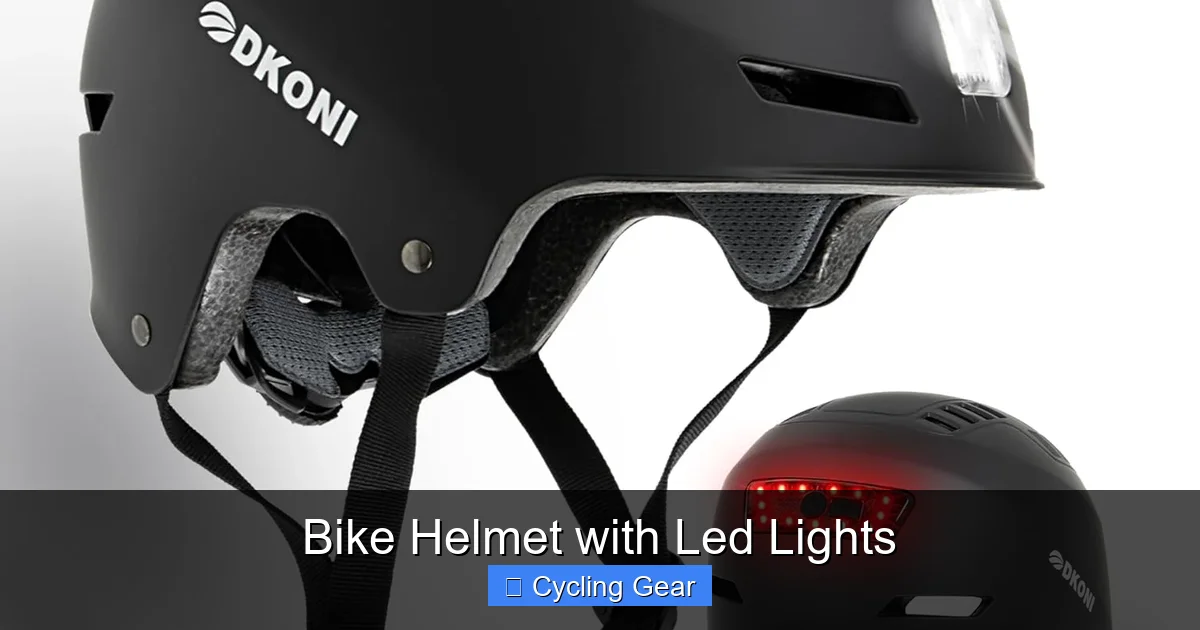
A bike helmet with LED lights can improve visibility and convenience for commuting, city riding, and low-light trips. It works best as a safety upgrade alongside proper bike lights, reflective gear, and a well-fitting certified helmet.
A bike helmet with LED lights is a safety-focused helmet that includes built-in lighting, usually on the rear and sometimes on the sides or front. For many riders, it is a simple way to add visibility without clipping on extra accessories every time they ride.
These helmets are especially useful for commuters, city riders, and anyone who rides at dawn, dusk, or after dark. They are not a replacement for good riding habits, but they can make you easier to notice in traffic when used correctly and paired with other safety gear.
- Visibility boost: Helpful in traffic, dusk, dawn, and night riding.
- Fit first: Safety certification and comfort matter more than style.
- Battery matters: Check runtime, charging type, and low-battery alerts.
- Use as a layer: Pair with bike lights and reflective clothing.
Bike Helmet with LED Lights: What It Is and Who It’s For
A bike helmet with LED lights combines head protection with built-in illumination. The light system is usually rechargeable and designed to help other road users see you more easily from behind or from the side.
This type of helmet is a practical choice for everyday riders who want convenience. It can be a smart fit for people who commute to work, ride to school, take short neighborhood trips, or prefer a cleaner setup than separate helmet and light attachments.
Lighted helmets vary a lot by brand and model. Always check the product manual, brand guidance, or a qualified professional if you are unsure about fit, charging, or safety use.
Why LED Helmet Lighting Matters for 2026 Cycling Safety
As roads get busier and more riders share space with cars, e-bikes, scooters, and pedestrians, visibility matters more than ever. LED helmet lighting helps create a higher line of sight, which can be useful when drivers are scanning traffic quickly.
In 2026, many riders are looking for simple gear that improves safety without adding hassle. A helmet with built-in LEDs can support that goal by making it easier to be seen during low-light rides, especially in urban areas where distractions are common.
Visibility in traffic, dawn, dusk, and night rides
LED lights are most helpful when natural light is weak or changing fast. That includes early morning commutes, late evening rides, cloudy days, and shaded streets where riders can blend into the background.
Rear-facing LEDs are especially valuable in traffic because they help drivers notice your presence sooner. Side visibility can also matter at intersections, driveways, and roundabouts, where riders are often seen from angled positions.
How helmet-mounted lights compare with bike-mounted lights
Bike-mounted lights are aimed at the road and are important for seeing where you are going. Helmet-mounted lights move with your head, which can help direct attention where you look and improve how visible you are from higher angles.
Each has a different job. Many riders do best with both: a front and rear bike light for the bike itself, plus a helmet light for extra visibility and flexibility.
- Higher line of sight in traffic
- Useful for side and rear visibility
- No separate clip-on setup needed
- May add weight to the helmet
- Battery charging is one more task
- Not all models are equally bright
Key Features to Look for in a Bike Helmet with LED Lights
Not every lighted helmet is built the same. A good choice should balance visibility, comfort, safety, and ease of use. Focus on the features that matter most for your riding style rather than buying based on looks alone.
Light modes, brightness, and rear-facing visibility
Many helmets offer steady, flashing, or pulse modes. Flashing modes can draw attention well, while steady modes may feel less distracting for some riders. The best choice depends on local traffic conditions and personal comfort.
Rear-facing visibility is one of the most important details to check. If the light is too dim, poorly placed, or blocked by hair, a hood, or a backpack, it may not do much in real-world use. Look for a design that stays visible from common driving angles.
- Multiple light modes
- Rear and side visibility
- Easy-to-find power button
- Clear lens or light placement
Battery life, USB-C charging, and low-battery indicators
Battery life matters because a lighted helmet is only useful when it is charged. If you ride often, look for a model that matches your typical commute length and leaves enough reserve for unexpected delays.
USB-C charging is convenient for many households because the cable is widely used across devices. A low-battery indicator is also helpful, since it reduces the chance of heading out with a dead light.
Make charging part of your weekly routine. If you commute regularly, plug in the helmet after your last ride of the week so it is ready when you need it.
Fit system, ventilation, weight, and comfort for longer rides
A helmet can have great lights and still be a poor buy if it does not fit well. The fit system should feel secure without pressure points, and the straps should sit comfortably under the ears and around the chin.
Ventilation matters for warm-weather riders, and weight matters if you ride for long periods. A helmet that feels too bulky may become annoying fast, which can lead people to wear it less often than they should.
Safety certifications and impact protection basics
Lights are a bonus feature. The helmet’s core job is impact protection, so safety certification should always come first. Look for certification details that match your region and riding type, and follow the product manual or ask a qualified professional if anything is unclear.
Also remember that a helmet is not designed to prevent every head injury. It can reduce risk in many crashes, but it cannot make riding injury-proof. If you have had a fall and feel dizzy, confused, or unwell, seek medical advice right away.
If a helmet shows cracks, deep dents, loose parts, or a damaged battery system, stop using it and replace it according to the product manual or brand guidance.
Best Use Cases: Commuting, Urban Riding, and Weekend Cycling
A bike helmet with LED lights is not only for serious commuters. It can be a useful everyday upgrade for many kinds of riders, especially when visibility is inconsistent and traffic is unpredictable.
City commuters riding in mixed traffic
Urban commuters often deal with stop-and-go traffic, parked cars, delivery vehicles, and busy intersections. A lighted helmet helps add another layer of visibility when riders are moving through these changing conditions.
This is especially helpful if your route includes shaded streets, bike lanes near traffic, or sections where drivers may not expect cyclists. It is a convenience item, but it can also make daily riding feel more intentional and organized.
Recreational riders who want added visibility without extra gear
Weekend riders often want simple gear that does not require much setup. A helmet with built-in LEDs can be appealing because it reduces the need to remember separate lights, brackets, or mounting systems.
For casual rides around the neighborhood or on multi-use paths, it can be a neat all-in-one option. Still, if you ride after dark, a strong front light for the road is usually still important.
Parents, students, and e-bike riders in busy neighborhoods
Parents and students often appreciate gear that is easy to use every day. A helmet with LED lights can make morning and afternoon rides simpler, especially when schedules are tight and visibility changes quickly.
E-bike riders may also benefit because they often travel a bit faster than traditional cyclists and may share space with more traffic. In busy neighborhoods, the added visibility can be a useful support feature, though it should not replace alert riding.
Many riders are more noticeable to drivers when their lights are positioned higher up, which is one reason helmet lights can complement bike-mounted lights well.
Common Mistakes Riders Make with LED Bike Helmets
Lighted helmets are helpful, but only when riders use them wisely. A few common mistakes can reduce their value or create a false sense of security.
Assuming lights replace reflective clothing and hand signals
LEDs help you be seen, but they do not replace basic visibility habits. Reflective clothing, clear hand signals, and predictable riding lines still matter, especially in traffic.
Think of the helmet light as one layer in a larger safety setup. The more visible and predictable you are, the easier it is for others to respond to you in time.
Choosing style over fit and safety certification
A helmet that looks sleek but fits poorly is not a good trade. If the helmet shifts on your head, sits too high, or feels loose, it may not protect as intended.
Certification and fit should come before appearance. If a model does not match your head shape or riding needs, keep looking rather than settling for a design that only looks good online.
Ignoring charging habits, weather resistance, and maintenance
Some riders forget that electronic gear needs routine care. Check how the light is charged, how long the battery lasts, and whether the helmet is designed for light rain or damp conditions.
Maintenance also matters. Clean the helmet gently, inspect straps and buckles, and avoid modifying the light system unless the brand says it is safe to do so. If you have questions, check the product manual, brand guidance, or a qualified professional.
Price Ranges and Value Comparison: Budget vs Premium LED Helmets
Price can vary a lot depending on the brand, materials, fit system, and lighting design. The best value is not always the cheapest helmet, especially when safety and comfort are involved.
What to expect from entry-level models
Budget helmets may offer basic LED visibility and a simple rechargeable light system. They can work well for occasional riders or short trips, but they may have shorter battery life, fewer modes, or less refined comfort features.
At this level, it is especially important to inspect build quality, certification information, and user reviews carefully. A low price is not worth much if the helmet feels flimsy or poorly supported.
When premium features are worth the extra cost
Higher-priced models may offer better ventilation, lighter materials, stronger fit adjustment, and more polished light placement. For frequent riders, those features can make a real difference in comfort and daily use.
Premium is worth considering if you ride often, commute year-round, or want a helmet that feels easier to wear for longer periods. Better comfort can lead to better consistency, which matters for safety.
How to compare a helmet with built-in LEDs vs add-on light systems
Built-in LEDs are convenient because everything is integrated into one helmet. Add-on light systems may offer more flexibility because you can replace or upgrade the light without replacing the helmet.
The better choice depends on your priorities. If you want simplicity, an integrated helmet may be ideal. If you want modular gear or already own a helmet you like, a separate light system may make more sense.
| Option | Best For | Note |
|---|---|---|
| Built-in LED helmet | Riders who want simple, all-in-one visibility | Convenient, but the light system is tied to the helmet |
| Add-on bike lights | Riders who want flexible placement and upgrades | Often best when paired with a standard certified helmet |
Expert Safety Notes and Buying Warnings from Ryan Mitchell
When shopping for a bike helmet with LED lights, the safest choice is usually the one that combines proper protection, practical visibility, and a comfortable fit. Flashy features are nice, but they should never distract from the basics.
When to avoid cheap, uncertified, or poorly reviewed models
Be cautious with helmets that give unclear certification details, vague product descriptions, or suspiciously low prices. If a listing does not explain the safety standard, battery setup, or fit system clearly, that is a warning sign.
Poor reviews that mention loose straps, weak charging, or lights failing early should also be taken seriously. The helmet should feel dependable, not experimental.
Do not buy a helmet that arrives damaged, smells strongly of chemicals, or has a battery that swells, overheats, or behaves unpredictably. Stop using it and follow the brand’s return or safety instructions.
Signs a helmet may not provide reliable long-term protection
If the shell feels brittle, the adjustment dial slips, or the padding compresses too quickly, the helmet may not age well. A good helmet should stay secure and comfortable through regular use, not just look fine on day one.
Also watch for exposed wiring, weak switches, or lighting units that detach easily. Those issues may not affect every rider the same way, but they can reduce confidence and convenience over time.
If you have a history of head injury, balance problems, or a recent crash, talk to your doctor or a qualified professional before returning to cycling.
Final Recap: Is a Bike Helmet with LED Lights Worth It?
For many riders, yes, a bike helmet with LED lights is worth considering. It can make daily cycling easier by combining protection and visibility in one piece of gear.
The best models are the ones that fit well, meet the right safety standards, and offer lights that are actually useful in real traffic. If you want a simple visibility upgrade for commuting or neighborhood rides, this type of helmet can be a smart, practical choice.
Just keep expectations realistic. A lighted helmet helps others see you, but it does not replace good riding habits, reflective gear, or proper bike lights. Use it as part of a complete safety setup, and follow the product manual or ask a qualified professional whenever you are unsure.
Frequently Asked Questions
Are bike helmets with LED lights worth buying?
They can be worth it if you ride in traffic or low light and want added visibility. They are most useful when they fit well and meet the right safety standards.
Do LED helmet lights make me more visible than regular helmets?
Yes, they can help other road users notice you more easily. The effect depends on brightness, placement, and whether the light is visible from the rear and sides.
Can I use a bike helmet with LED lights every day?
Yes, many riders use them for daily commuting and neighborhood trips. Just keep the battery charged and check the helmet regularly for wear or damage.
Should I still wear reflective clothing with a lighted helmet?
Yes, that is a smart idea. Reflective clothing and hand signals still matter because visibility works best when several safety layers are used together.
Are all lighted bike helmets waterproof?
No, water resistance varies by model. Check the product manual or brand guidance before riding in rain or storing the helmet in damp places.
What if the LED system stops working?
Stop relying on the built-in light and inspect the helmet according to the manual. If the helmet is damaged or the electronics are unsafe, replace it or contact the brand for guidance.
