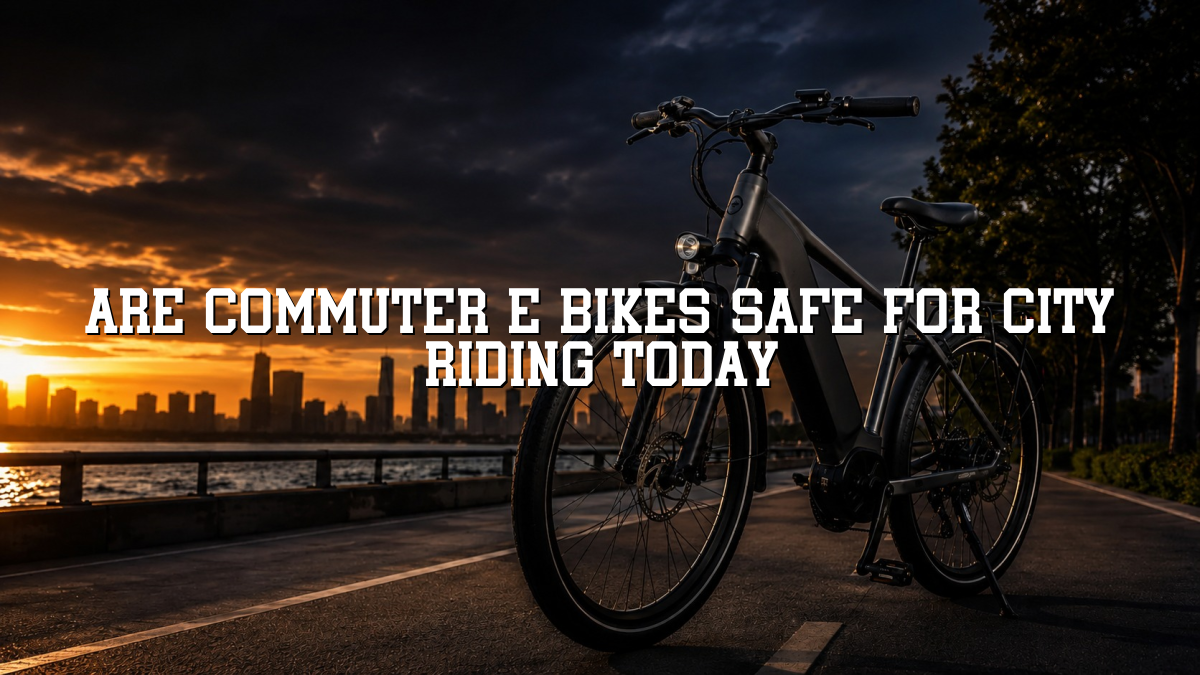
Yes, commuter e bikes can be safe for city riding when the bike is well maintained, the route is reasonable, and the rider uses defensive habits. The biggest risks are still intersections, parked-car doors, poor road surfaces, and riding too fast for conditions.
Commuter e bikes can be a safe and practical way to get around the city, but safety depends on the bike, the route, the rider, and local traffic conditions. For most urban commuters, the real question is not whether e bikes are automatically safe or unsafe, but whether the setup and riding habits match the streets they use every day.
In 2025, city riding is still a mix of benefits and risks. Better bike lanes, brighter built-in lights, stronger brakes, and more stable commuter designs have improved the experience. At the same time, intersections, parked cars, distracted drivers, and poor road surfaces remain the biggest trouble spots.
- Short answer: Commuter e bikes are safe for many city riders with the right setup.
- Biggest risks: Intersections, door zones, wet roads, and mixed traffic matter most.
- Best upgrades: Bright lights, strong brakes, good tires, mirrors, and a fitted helmet.
- Route matters: Calm streets and bike lanes are often safer than the shortest path.
- Know when not to ride: Bad weather, bike problems, or high-speed roads can change the answer.
Why Commuter E Bikes Feel Risky in Cities and What the Data Says in 2025
Many people feel uneasy about riding an e bike in traffic because cities are busy, fast-moving, and unpredictable. That concern is reasonable. A commuter e bike puts you out in the open, closer to cars, buses, delivery vans, and pedestrians than you would be inside a car.
But risk is not just about the vehicle. It is also about street design, speed, visibility, and rider decisions. A well-equipped commuter e bike on a protected bike lane can feel controlled and calm. The same bike on a narrow road with no shoulder, parked cars, and frequent turning traffic can feel much less safe.
How city traffic, bike lanes, and rider behavior affect real-world safety
Real-world safety changes block by block. Protected bike lanes usually lower stress and reduce close passes from cars. Streets with frequent driveways, double-parked vehicles, and unclear lane markings often raise risk, even if the distance is short.
Rider behavior matters just as much. A commuter who scans ahead, signals early, keeps a safe buffer from parked cars, and avoids sudden weaving is usually safer than someone who rides fast between gaps in traffic. E bikes reward smooth, predictable riding.
Driver behavior also matters. In some cities, drivers expect bikes and leave space. In others, riders face more aggressive passing and more right-turn conflicts. That is why local conditions matter more than broad claims.
What “safe for city riding” means for daily commuters
For daily commuting, “safe” does not mean risk-free. It means the bike is stable, visible, well maintained, and used in a way that reduces common urban hazards. It also means the rider can stop confidently, handle low-speed turns, and stay alert in mixed traffic.
A safe commuter setup should help with three things: being seen, being predictable, and being able to brake or maneuver when something goes wrong. If a bike is too heavy, too powerful for the rider, or poorly adjusted, city safety drops quickly.
Are Commuter E Bikes Safe for City Riding Today? A Clear Short Answer
Yes, commuter e bikes can be safe for city riding today for many adults, especially on routes with bike infrastructure and moderate traffic speeds. They are safest when the bike fits the rider, the brakes and tires are in good condition, and the rider uses defensive habits every trip.
They are not automatically safe in every city or for every rider. Dense intersections, poor weather, heavy trucks, and high-speed roads can still make urban commuting a bad fit on some days.
When commuter e bikes are safer than cars, scooters, or standard bikes for urban trips
On short city trips, commuter e bikes can be a smart middle ground. Compared with cars, they avoid some parking stress and may reduce time spent in stop-and-go traffic. Compared with small electric scooters, they often offer better wheel size, stronger braking, and more stable handling over cracks and potholes.
Compared with standard bikes, commuter e bikes can help riders maintain steadier speed through intersections and start moving faster from a stop. That can reduce wobbling and help riders clear conflict areas more smoothly. For some commuters, that extra assist also means less fatigue, which can improve focus.
Where the biggest risks still exist at intersections, door zones, and mixed-traffic streets
The biggest risks are still the same familiar urban hazards. Intersections are the top concern because cars turn across your path, drivers rush yellow lights, and sightlines are often poor. Even experienced riders get caught by sudden movements there.
The door zone is another major issue. If you ride too close to parked cars, a driver or passenger can open a door directly into your path. Mixed-traffic streets are also risky because speed differences between bikes and cars can create pressure, close passes, and sudden lane changes.
If your city route includes high-speed arterials, blind intersections, or frequent truck traffic, an e bike may not be the safest option for that commute. Check local bike maps and traffic patterns before riding regularly.
The Main Safety Factors That Matter Most Before You Commute
Not all commuter e bikes are equally safe. Design details change how stable the bike feels, how quickly it stops, and how easy it is to control in crowded streets. A cheap or poorly matched setup can make city riding harder than it needs to be.
Bike design: frame stability, tire width, brakes, lights, and motor cutoff
A good commuter e bike should feel planted, not twitchy. A stable frame, comfortable riding position, and tires wide enough for rough pavement can make a big difference on city streets. Wider tires generally improve grip and comfort, especially over painted lines, drain covers, and broken asphalt.
Brakes are critical. Strong, well-adjusted brakes help offset the extra weight of an e bike. Built-in front and rear lights improve visibility, and a motor cutoff feature can stop power delivery when braking. Check the product manual, brand guidance, or a qualified professional if you are unsure how your brake and motor system works.
Speed classes and why Class 1, Class 2, and Class 3 change city safety
Speed class affects how an e bike behaves in traffic and where it may be allowed. Class 1 bikes use pedal assist only and are often the easiest fit for bike lanes and beginner commuters. Class 2 bikes add a throttle, which can help with starts but may tempt some riders to accelerate without proper balance.
Class 3 bikes are faster and can work well for longer commutes, but they demand better judgment and braking technique in dense areas. In crowded city cores, more speed is not always safer. Local rules vary, so always check city and state regulations before commuting.
Battery placement, weight balance, and stopping distance in crowded areas
Battery placement affects handling more than many buyers expect. A low, centered battery often feels more balanced than one mounted high or far to the rear. Better balance usually means easier low-speed control and less awkward steering in tight spaces.
E bikes are also heavier than standard bikes, which affects stopping distance. In crowded areas, that means you need more space and more anticipation. Practice emergency braking in a safe area before commuting in traffic.
- Brake response feels firm and even
- Tires have enough tread and correct pressure
- Front and rear lights work in daylight and dark
- Battery is secure and charging normally
- Bars, saddle, and wheels feel tight and aligned
Common City Riding Risks Commuters Underestimate
Most city crashes are not caused by one dramatic mistake. They usually come from a chain of small problems: riding too fast for the street, missing a turning car, braking late on wet pavement, or assuming a driver has seen you.
Left-turn conflicts, right hooks, parked-car doors, wet pavement, and potholes
Left-turn conflicts happen when an oncoming driver turns across your lane. Right hooks happen when a car passes and then turns right in front of you. Both are common at intersections and driveways, especially when traffic is heavy.
Wet pavement reduces tire grip, especially on painted crosswalks, metal covers, and leaves. Potholes and broken pavement can also be more dangerous at e bike speeds than many beginners expect. Scan farther ahead than you would on a casual neighborhood ride.
How faster acceleration can help you escape danger or create new problems
Quick acceleration can help you move through an intersection cleanly or get away from a driver crowding your space. Used well, that extra power can be a safety tool.
But it can also create problems if you launch too hard, enter a gap too optimistically, or approach corners faster than your skill level supports. The goal is controlled acceleration, not sudden bursts.
Common mistakes new e bike commuters make in traffic
New riders often look down too much, ride too close to parked cars, or hug the curb where debris collects. Some also rely too heavily on the motor and forget that braking, scanning, and lane positioning matter more than power.
Another common mistake is skipping maintenance. Loose brake pads, underinflated tires, and dim lights can turn a manageable commute into a risky one. Follow the product manual or ask a qualified professional if anything feels off.
A slightly longer route with calmer streets and better bike lanes is often safer than the shortest route through fast, busy traffic.
How to Make a Commuter E Bike Safer for Daily Urban Use
The safest commuter e bike is usually not the fastest one. It is the one set up for visibility, control, and repeatable daily use. A few practical upgrades can improve safety more than flashy features.
Essential gear: helmet, mirrors, high-visibility clothing, horn, and daytime running lights
A properly fitted helmet is the first priority. Mirrors can help you monitor traffic without constant shoulder checks, though you should still look before moving across lanes. High-visibility clothing helps in low light and busy streets, especially when drivers are distracted.
A bell or horn is useful around pedestrians and shared paths. Daytime running lights are one of the best upgrades because they help drivers notice you earlier, even in bright conditions.
Use a bright front light in flash mode during the day and a steady rear light at all times. Visibility matters even more at noon than many commuters realize.
Route planning strategies that reduce exposure to high-risk roads
Safer commuting starts before the ride. Look for protected lanes, neighborhood greenways, lower-speed streets, and intersections with simpler traffic patterns. Avoid roads where cars regularly move much faster than bikes.
It also helps to ride your route once during a low-traffic time. That gives you a chance to spot rough pavement, bad drainage, awkward merges, and places where parked cars create door-zone risk.
Practical example: building a safer 5-mile city commute step by step
Choose a route with bike lanes, lower-speed streets, and fewer complex intersections, even if it adds a few minutes.
Ride it early on a weekend or during a quiet hour to learn where traffic squeezes, potholes, and blind corners appear.
Check tire pressure, brake feel, light function, and mirror position before using the route as a daily commute.
If possible, leave 10 to 15 minutes earlier to avoid rushing. Speeding on an e bike often creates more risk than it saves in time.
Comparing Commuter E Bikes With Standard Bikes, Cars, and Electric Scooters in the City
No city travel option is perfect. Each one has tradeoffs in visibility, speed, control, and protection. The best choice depends on your route, skill level, weather, and local street design.
Safety tradeoffs in speed, visibility, control, and rider protection
| Option | Best For | Note |
|---|---|---|
| Commuter e bike | Short to medium urban trips | Good balance of speed and control, but rider remains exposed |
| Standard bike | Lower-speed routes and fitness-focused commuting | Lighter and simpler, but harder starts may challenge some riders |
| Car | Bad weather and high-speed roads | More physical protection, but traffic and parking add other risks |
| Electric scooter | Very short trips on smooth streets | Compact and easy to store, but small wheels can be less stable |
E bikes often beat scooters on stability and braking, especially over rough pavement. They can also be easier than standard bikes for riders who want less strain on hills or during stop-and-go starts. Cars offer more crash protection, but they do not remove risk from urban travel overall.
Cost versus safety upgrades: what is worth paying for in 2025
Some upgrades are worth the money because they directly improve daily safety. Better lights, quality tires, hydraulic brakes, mirrors, and a properly fitted helmet usually offer more real-world value than cosmetic accessories.
Fenders and puncture-resistant tires are also useful for commuters because they support control and reliability in bad weather. Exact prices vary by brand and model, so compare what is included before buying. When upgrading parts, check compatibility with your bike or ask a qualified bike shop.
- Faster starts from traffic lights
- Better stability than many scooters
- Less fatigue on hills and longer commutes
- Easy to pair with safer side-street routes
- Heavier than standard bikes
- Longer stopping distance than many beginners expect
- Still exposed to weather and traffic
- Higher speeds can magnify mistakes
When You Should Get Expert Help or Avoid Riding Altogether
Sometimes the safest choice is to pause the commute, fix the bike, or use another travel option. Urban riding demands a bike that works properly and a rider who feels in control.
Warning signs your bike setup, brakes, tires, or battery need professional inspection
If the brakes squeal loudly, feel weak, or pull unevenly, have them checked. The same goes for wobbling wheels, cracked tires, loose handlebars, unusual battery heat, charging problems, or sudden power cuts.
Do not guess with electrical or braking issues. Check the product manual, brand guidance, or a qualified professional before riding again.
Weather, traffic, and road conditions that make city riding a bad call
Heavy rain, strong wind, ice, poor visibility, flooding, and major road construction can all make a normal commute much riskier. Night riding on poorly lit roads also raises the stakes if your route lacks clear bike space.
If the street conditions make you tense before you even start, that is useful information. Taking transit, driving, or delaying the trip may be the smarter option that day.
Who may need skills training before commuting in dense urban traffic
Beginners, returning riders, and anyone moving up to a heavier or faster e bike may benefit from skills practice before commuting. That includes learning smooth braking, shoulder checks, signaling, emergency stops, and low-speed turns.
Riders with balance concerns, slower reaction time, or recent injuries should consider getting advice from a qualified professional before starting regular city commuting.
If you have balance problems, vision changes, dizziness, joint limitations, or a medical condition that could affect reaction time, ask your doctor whether city e bike commuting is a safe fit for you.
Final Verdict: Who Can Ride a Commuter E Bike Safely in the City and Under What Conditions
Commuter e bikes are safe for many city riders when the route is reasonable, the bike is maintained, and the rider uses calm, defensive habits. They tend to work best for short to medium trips on lower-speed streets, bike lanes, and routes with predictable traffic patterns.
They are less suitable when the rider is unprepared, the bike is poorly fitted, or the route depends on high-speed roads and chaotic intersections. Good judgment matters more than motor power.
The safest rider habits to remember before every commute
Ride predictably, keep your speed in check, and leave extra space around parked cars and turning vehicles. Use your lights, scan well ahead, and assume drivers may not see you until you confirm eye contact or clear movement.
Give yourself time. A rushed commuter usually makes poorer decisions than a calm one.
Quick recap of the biggest risks, best upgrades, and smart takeaways
The biggest risks are intersections, door zones, wet surfaces, potholes, and mixed-traffic streets. The best upgrades are bright lights, reliable brakes, quality tires, mirrors, and a helmet that fits properly.
If you choose a commuter e bike that matches your route and skill level, practice basic handling, and stay realistic about bad-weather days, city riding can be both practical and reasonably safe.
- Commuter e bikes can be safe in cities, but only with the right route, bike setup, and habits.
- Intersections, door zones, and wet or damaged roads are the biggest everyday risks.
- Lights, brakes, tires, mirrors, and route planning improve safety more than extra speed.
- Check local rules and get professional help if your bike or health raises concerns.
Common Questions
Are commuter e bikes good for daily city travel?
Yes, they can be very practical for short and medium urban trips. They work best on routes with bike lanes or lower-speed traffic.
What is the biggest danger for city e bike riders?
Intersections are usually the most dangerous areas. Turning cars and poor visibility create many close calls.
Do e bikes stop slower than regular bikes?
Often yes, because they are heavier. Good brakes and extra following distance matter more on an e bike.
Is a helmet enough for e bike commuting?
No, a helmet is only the starting point. Lights, visibility gear, and a well-maintained bike are also important.
Should beginners commute on a fast e bike?
Usually not right away. A calmer bike class and practice on easier streets are often safer for new riders.
Frequently Asked Questions
Are commuter e bikes safe for beginners in the city?
They can be, but beginners should start with calmer routes, moderate speeds, and a bike that feels stable and easy to control. Practice braking, turning, and signaling before riding in dense traffic.
Is a Class 3 e bike too fast for city commuting?
It depends on the route, local rules, and rider skill. In crowded city areas, a slower Class 1 or Class 2 bike may be easier to manage safely.
What safety gear matters most for an e bike commute?
A properly fitted helmet, bright front and rear lights, and good visibility gear are the basics. Mirrors, a bell or horn, and puncture-resistant tires can also help.
Are commuter e bikes safer than electric scooters in traffic?
Often yes, because commuter e bikes usually have larger wheels, better stability, and stronger braking. Actual safety still depends on the road surface, traffic, and rider behavior.
When should I avoid riding my commuter e bike in the city?
Avoid riding in heavy rain, ice, strong wind, poor visibility, or when your route includes hazardous road work or high-speed traffic. If the bike has brake, tire, or battery issues, have it inspected first.
Do I need a bike shop to inspect my commuter e bike regularly?
Regular checks are a good idea, especially for brakes, tires, wheels, and battery systems. Follow the product manual and ask a qualified professional if anything feels unusual.