The best workout mat for apartment use is usually a thick, non slip, shock absorbing exercise mat that protects your floor, lowers noise, and gives your knees, wrists, and back enough support for home workouts.
Quick Answer
The best workout mat for apartment workouts should be thick enough to reduce impact, grippy enough to stay in place, and large enough for moves like burpees, planks, lunges, stretching, and bodyweight training.
For most people, I recommend a mat that is at least 6mm thick for light workouts and 10mm to 15mm thick for HIIT, floor exercises, or joint comfort. If you live upstairs, a thicker noise reducing mat is usually better.
My Apartment Workout Mat Advice
I am Ryan Mitchell, and I write about practical fitness gear for ProKingsEdge.com.
When I look at workout mats for apartments, I do not only think about comfort. I also think about noise, grip, floor protection, storage, sweat, and how easy the mat is to clean.
A small apartment can make workouts tricky. You may have hard floors, thin carpet, downstairs neighbors, or very little space. The right exercise mat can make a big difference.
What Makes a Workout Mat Good for an Apartment?
A good apartment workout mat should solve three problems at once.
- It should protect your floor from pressure, sweat, and light equipment.
- It should reduce impact noise during jumping, stepping, and bodyweight exercises.
- It should give your body a stable and comfortable surface.
A yoga mat can work for stretching or light workouts. But for HIIT, burpees, jump rope, or strength training, a regular yoga mat may feel too thin.
How an Apartment Workout Mat Works
A workout mat creates a soft layer between your body and the floor. That layer helps absorb pressure when your hands, knees, feet, or back touch the ground.
Thicker mats can also reduce vibration. This is useful if you live above someone else or train on hardwood floors.
The mat material matters too. Rubber often feels firm and durable. Foam feels softer and lighter. TPE can feel grippy and easy to clean. PVC mats are common, but they may feel slippery when wet if the texture is poor.
Why the Right Mat Matters in an Apartment
In a gym, the floor is usually built for exercise. In an apartment, it is not.
Hardwood, tile, laminate, concrete, and carpet all create different problems. Hardwood can scratch. Tile can feel hard. Carpet can make mats slide. Concrete can be painful for knees.
The right workout mat helps you train with more comfort and control. It may also help you avoid damaging your floor.
If you are new to exercise, the American Council on Exercise has helpful beginner fitness education. For joint pain or ongoing discomfort, I suggest checking advice from a trusted medical source like Mayo Clinic.
Best Workout Mat Features for Apartment Use
| Feature | Why It Matters | Best For |
|---|---|---|
| Thick cushioning | Helps reduce pressure on knees, wrists, and back | Floor exercises, stretching, bad knees |
| Non slip surface | Keeps the mat more stable during movement | HIIT, burpees, planks |
| Shock absorption | Helps reduce impact and vibration | Apartment workouts, upstairs rooms |
| Large size | Gives more room for full-body movement | Bodyweight training, jump rope, cardio |
| Easy cleaning | Helps remove sweat, dust, and odor | Daily home workouts |
| Good floor grip | Helps protect hardwood, tile, and laminate floors | Small spaces and hard floors |
Best Thickness for an Apartment Workout Mat
Mat thickness is one of the first things I check.
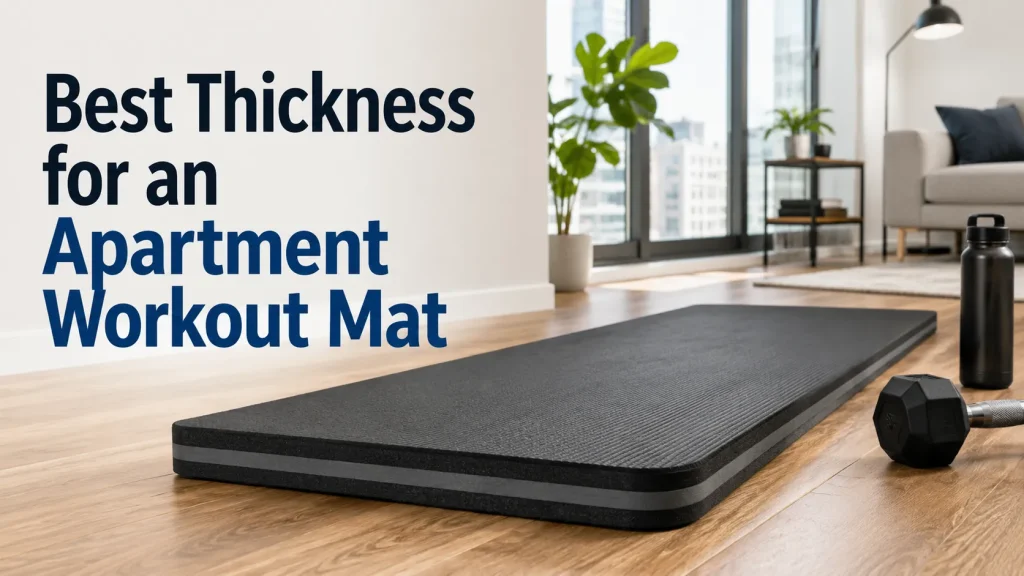
A thin mat is easy to store, but it may not give enough support. A thick workout mat feels better for knees and floor work, but it may feel less stable for balance moves.
| Mat Thickness | Best Use | My Take |
|---|---|---|
| 3mm to 5mm | Yoga, stretching, light mobility | Good for light use, but not ideal for apartment HIIT |
| 6mm to 8mm | General home workout | A balanced choice for most beginners |
| 10mm to 15mm | Floor exercises, bad knees, apartment workouts | Better comfort and impact control |
| 1 inch or more | Heavy floor protection and shock absorption | Good for home gym areas, but may be bulky |
Best Mat Type by Apartment Floor
| Floor Type | Recommended Mat Type | Why |
|---|---|---|
| Hardwood floor | Non slip thick exercise mat | Helps reduce scratches and pressure marks |
| Carpet | Firm mat with strong bottom grip | Helps reduce sliding and sinking |
| Tile floor | Cushioned shock absorbing mat | Makes floor exercises more comfortable |
| Concrete floor | Extra thick workout mat | Helps protect knees, elbows, and back |
| Laminate floor | Non slip mat with soft backing | Helps reduce movement and floor marks |
Real-World Apartment Workout Examples
For HIIT Workouts
If you do mountain climbers, burpees, squat jumps, or fast bodyweight circuits, choose a non slip mat with good shock absorption.
A thin yoga mat may slide or bunch up during fast moves.
For Floor Exercises
If you do sit ups, planks, stretching, Pilates-style moves, or core training, comfort matters more.
A thicker exercise mat can make the floor feel less harsh.
For Upstairs Apartments
If you live above someone, noise matters. A dense, thick, noise reducing exercise mat can help lower impact sound.
It will not make jumping silent, but it can make your workout less harsh on the floor.
For Small Spaces
If your room is tight, look for a mat that rolls up easily. A large workout mat is nice, but only if you have space to use and store it.
Workout Mat Material Guide
| Material | Feel | Best For | Watch Out For |
|---|---|---|---|
| Rubber | Firm and durable | Home gym, floor protection, strength training | Can be heavy and may have odor at first |
| EVA foam | Soft and light | Floor exercise, stretching, beginner workouts | May dent under heavy equipment |
| TPE | Grippy and lightweight | Yoga, light workouts, home fitness | May not be thick enough for high impact use |
| PVC | Common and budget friendly | Basic workouts | Can feel slippery if texture is poor |
Common Problems and Fixes
| Problem | Possible Cause | Simple Fix |
|---|---|---|
| Mat slides on floor | Weak bottom grip or dusty floor | Clean the floor and use a better non slip mat |
| Mat hurts knees | Mat is too thin | Choose a thicker workout mat |
| Mat smells bad | Sweat or new material odor | Air it out and clean it after use |
| Mat curls at the edges | Poor storage or thin material | Store it flat or replace it if it becomes unsafe |
| Mat moves on carpet | Carpet pile is too soft | Use a firmer mat with textured backing |
| Downstairs neighbor hears noise | High impact jumping | Use a thicker shock absorbing mat and lower-impact moves |
Common Mistakes When Buying an Apartment Workout Mat
Choosing a Mat That Is Too Thin
Many people buy a thin yoga mat and expect it to handle every workout. That does not always work.
For apartment HIIT or floor workouts, a thicker mat is usually better.
Ignoring the Floor Type
A mat that works on hardwood may not work on carpet. A mat that works on tile may not feel stable on thick carpet.
Always match the mat to your floor.
Buying Only by Price
A cheap mat can still be useful. But if it slips, tears, or smells too strong, it may not be worth it.
Not Checking the Size
Some mats are too narrow for full-body movement. If you do burpees, lunges, or core work, check both length and width.
Forgetting About Storage
Apartment space is limited. A large mat is helpful, but it should still fit your storage area.
Safety Warning
Do not keep using a workout mat if it slides badly, tears apart, curls at the edges, or makes you lose balance.
A damaged mat can become a trip or slip risk.
If you have serious knee pain, back pain, wrist pain, or joint pain, do not rely on a mat as the only solution. A thicker mat may help comfort, but it does not replace medical advice. For ongoing pain, speak with a qualified professional.
For general physical activity safety, you can also review guidance from the CDC physical activity basics.
How to Choose the Best Workout Mat for Apartment Use
Here is my simple checklist.
- Choose at least 6mm thickness for general workouts.
- Choose 10mm or more if you need more knee comfort.
- Pick a non slip surface for HIIT and fast moves.
- Use a larger mat if you do burpees or floor exercises.
- Choose dense material if you need noise reduction.
- Check if the mat works on your floor type.
- Make sure it is easy to clean and store.
Tips for Using a Workout Mat in an Apartment
- Clean the floor before placing the mat down.
- Let a new mat air out before first use.
- Wipe sweat off after each workout.
- Use low-impact moves if you live upstairs.
- Do not place heavy equipment on soft foam for long periods.
- Roll the mat loosely to avoid edge curling.
- Replace the mat when grip becomes weak.
Notes Before You Buy
A workout mat for apartment use does not need to be the most expensive mat.
It needs to match your workout style, floor type, body comfort, and space.
If you do mostly stretching, a simple cushioned exercise mat may be enough. If you do HIIT, jump rope, or burpees, choose a thicker and more stable mat.
If indoor air quality or material smell matters to you, the EPA indoor air quality resources may help you understand why ventilation matters when bringing new products into a small room.
Key Takeaways
- The best workout mat for apartment use should be thick, stable, and non slip.
- For most apartment workouts, 6mm to 15mm thickness works well.
- For upstairs apartments, choose a shock absorbing and noise reducing mat.
- For carpet, choose a firmer mat with better bottom grip.
- For bad knees, choose an extra thick exercise mat with soft cushioning.
- For HIIT, choose grip and stability over softness alone.
- Replace the mat if it becomes slippery, torn, or unsafe.
FAQ
What is the best workout mat for apartment workouts?
The best workout mat for apartment workouts is a thick, non slip, shock absorbing mat that protects your floor and gives enough support for your workout style.
How thick should a workout mat be for an apartment?
For general apartment workouts, 6mm to 8mm is a good start. For HIIT, bad knees, or floor exercises, 10mm to 15mm may feel better.
Is a yoga mat enough for apartment workouts?
A yoga mat can work for stretching and light exercise. For HIIT, burpees, jump rope, or floor protection, a thicker workout mat is usually better.
What mat is best for reducing apartment workout noise?
A dense, thick, shock absorbing exercise mat is best for reducing noise. It will not remove all sound, but it can help lower impact and vibration.
Can I use a workout mat on carpet?
Yes, you can use a workout mat on carpet. Choose a firm mat with good grip because soft carpet can make some mats slide or feel unstable.
What size workout mat is best for small apartments?
A standard mat works for stretching, but a larger mat is better for burpees, lunges, and bodyweight training. Choose the largest size you can use and store easily.
How do I stop my workout mat from slipping?
Clean the floor, dry the mat, and use a mat with a non slip bottom. If it still slides, the mat may not match your floor type.
Should I choose rubber or foam for an apartment workout mat?
Choose rubber if you want durability and floor protection. Choose foam if you want a softer and lighter mat for floor exercises.
Conclusion
The best workout mat for apartment use depends on your space, floor, and workout style.
For most people, I recommend a thick, non slip, shock absorbing exercise mat that is easy to clean and large enough for full-body movement.
If you do light stretching, you can use a thinner mat. If you do HIIT, burpees, jump rope, or floor exercises, choose more cushioning and better grip.
My simple rule is this: pick the mat that makes your workout safer, quieter, and more comfortable in your real apartment space.