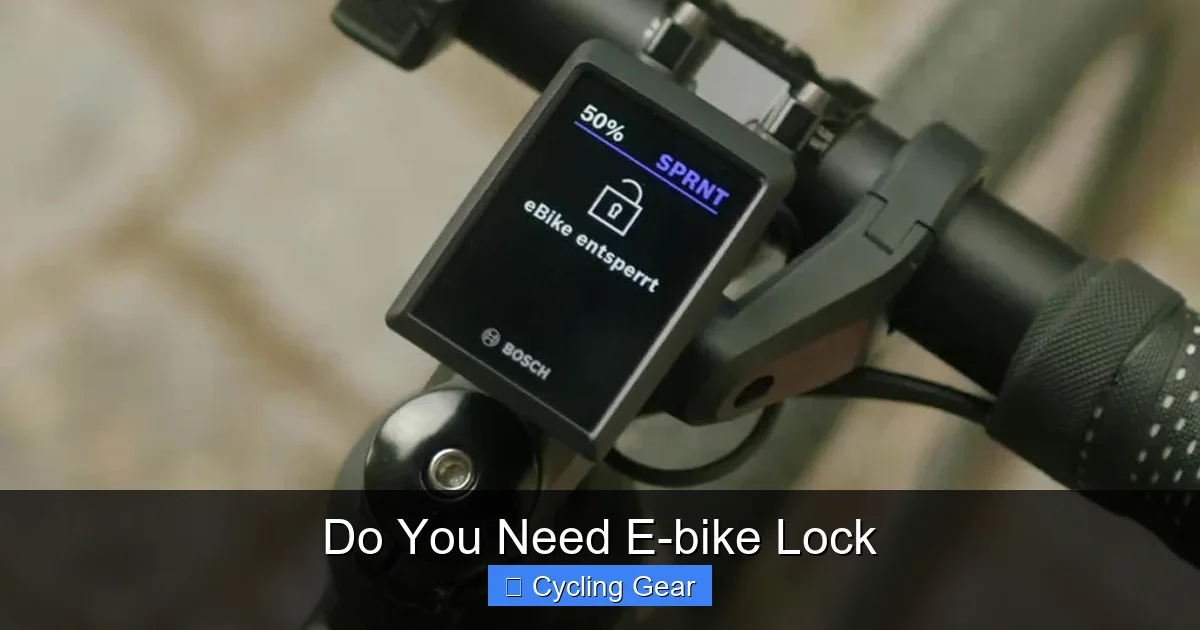
Yes, most e-bike riders should use a lock because e-bikes are valuable and often parked in public places. The best choice depends on your bike, your parking habits, and how much theft risk is in your area.
If you ride an e-bike, the short answer is yes: in most everyday situations, you do need an e-bike lock. E-bikes are valuable, attractive to thieves, and often left in places where opportunistic theft can happen fast. A good lock does not make your bike theft-proof, but it can make it much harder to steal and much less appealing to target.
- Main answer: Most e-bike riders do need a lock.
- Best fit: Strong U-locks work for many commuters; chains and folding locks help in specific situations.
- Security matters: Lock the frame to a fixed object, not just the wheel.
- Extra layers: Alarms, trackers, and insurance can help, but they do not replace a good lock.
- Practical rule: Match the lock to your parking time, route, and local theft risk.
Do You Need an E-bike Lock? The Short Answer for 2026 Riders
For most riders, an e-bike lock is not optional gear. It is one of the most practical purchases you can make after buying the bike itself.
That said, the “right” lock depends on where you ride, how long you park, and how much your e-bike costs. A rider who stores a bike inside a private garage has different needs than a commuter who leaves one outside a train station every weekday.
Lock choice varies by bike design, parking habits, and local theft risk. If your e-bike has a built-in battery or a nonstandard frame, check the product manual, brand guidance, or a qualified professional before buying accessories.
Why E-bikes Are a Bigger Theft Target Than Regular Bikes
E-bikes tend to draw more attention than standard bicycles because they usually cost more and contain parts that can be resold separately. That makes them a stronger target for thieves who are looking for quick value.
They also often sit in the same public places as regular bikes, which means the theft risk is not just about the bike itself. It is also about timing, visibility, and how easy it looks to remove.
Higher resale value and battery-driven demand
An e-bike has more expensive components than a basic bike, and that includes the battery, motor system, display, and controller. Even when a thief cannot resell the whole bike, parts may still have value.
The battery is especially important. It can be expensive to replace and may attract theft on its own if it is removable. Always follow the product manual for safe removal, storage, and charging guidance.
Why urban parking and commuting routes increase risk
City parking areas, apartment racks, campus bike areas, and transit stops all create short windows where a thief can act unnoticed. The more predictable your parking routine is, the easier it can be for someone to watch it.
Commuters also tend to leave bikes in the same place at the same time every day. That consistency is convenient for you, but it can also be convenient for thieves.
What Type of E-bike Lock Actually Makes Sense
There is no single best lock for every e-bike. The right choice depends on your bike shape, how often you park outside, and how much security you need versus how much weight you are willing to carry.
In general, stronger locks are heavier and less convenient, but they offer better protection. For many riders, the best setup is one strong primary lock plus a secondary option for accessories or wheels.
U-locks vs chain locks vs folding locks for e-bikes
U-locks are popular because they are compact and strong for their size. They work well for locking the frame to a fixed object, especially for short to medium stops.
Chain locks are more flexible and can fit around larger objects or unusual parking spaces. The tradeoff is that good chain locks can be heavy, which matters if you carry the lock on the bike or in a bag.
Folding locks sit somewhere in the middle. They are easier to pack than chains and more flexible than many U-locks, but protection level depends heavily on the exact model and build quality.
| Option | Best For | Note |
|---|---|---|
| U-lock | Daily commuting and quick stops | Strong and compact, but less flexible |
| Chain lock | Longer parking and awkward racks | Flexible, but usually heavier |
| Folding lock | Riders who want a balance of size and convenience | Quality varies a lot by model |
How motor weight, frame shape, and wheel size affect lock choice
E-bikes are often heavier than regular bikes, so you may not be lifting them onto a rack or moving them around as easily. That means your lock needs to work with the bike’s size and the way you park it.
Some frames are thick or shaped in a way that makes certain U-locks too short. Larger wheels can also change how you position the lock through the frame and fixed object. Before buying, check the product manual, brand guidance, or a qualified professional if you are not sure the lock will fit.
- Better fit for your bike and parking style
- Less frustration when locking up
- Improved security when the lock fits tightly
- Wrong size can make the lock hard to use
- Too much flexibility can reduce security
- Heavier locks are less convenient to carry
How to Choose the Right Security Level for Your Riding Habits
Think about how long your bike is left unattended, not just where it is parked. A five-minute coffee stop and an eight-hour workday do not need the same level of protection.
The more often your e-bike is outside, the more you should favor a stronger lock and better locking habits. If you mostly store indoors, you may still want a lock for errands and unexpected stops.
Quick errands, daily commuting, and all-day parking scenarios
For quick errands, a sturdy U-lock may be enough in lower-risk areas if you lock correctly. For daily commuting, many riders do better with a stronger main lock and a backup cable or secondary lock for the wheel or accessories.
For all-day parking, especially in public areas, a high-security lock is usually the wiser choice. If your bike will be left overnight outside, consider whether indoor storage is possible instead.
- How long the bike will be unattended
- Whether the parking area is busy or hidden
- Whether the lock fits frame, wheel, and rack together
- Whether you can carry the lock comfortably every day
Matching lock strength to neighborhood theft risk
Theft risk is not the same everywhere. A quiet residential street, a busy downtown rack, and a transit hub all present different levels of exposure.
If theft reports are common in your area, it makes sense to upgrade your security even if your bike is not extremely expensive. Local conditions matter, and a lock that feels “good enough” in one place may be too weak in another.
When in doubt, choose the lock you are most likely to use every single time. The best lock is the one that fits your bike, your route, and your routine without becoming a burden.
Common Mistakes E-bike Owners Make When Locking Up
Many e-bike thefts happen because the lock was used poorly, not because no lock was used at all. Small mistakes can create a big opening for thieves.
Good locking habits matter as much as the lock itself. A strong lock in the wrong position is still vulnerable.
Locking only the wheel or using a thin cable as the main lock
Wheels can often be removed or defeated more easily than the frame. If you lock only the wheel, a thief may still be able to take the bike and leave the wheel behind.
Thin cable locks are best treated as a secondary layer, not the main defense. They may help with quick stops or accessory security, but they usually should not be your only protection for an e-bike.
Leaving the battery, display, or accessories exposed
Removable batteries and displays can be tempting targets because they are valuable and easy to carry away. Even mirrors, bags, lights, and phone mounts can attract attention if left on the bike.
If your battery is removable, store it safely when possible. If you must leave accessories behind, choose secure mounts and follow the product manual for removal and storage guidance.
If your battery looks damaged, swollen, overheated, or behaves unusually, stop using it and contact the manufacturer or a qualified professional. Do not ignore battery safety concerns.
Using a lock that is too short, too weak, or poorly positioned
A lock that barely reaches the rack can force awkward placement and leave the frame exposed. A lock that is too weak may be cut quickly, especially if it is easy to reach with tools.
Try to keep the lock off the ground, with the keyhole or locking mechanism turned away from easy access when possible. This does not guarantee security, but it can make theft more difficult.
Cost vs Protection: What a Good E-bike Lock Is Worth
It is easy to hesitate at the price of a quality lock, but the real comparison is not lock versus no lock. It is lock cost versus the cost of losing a bike, battery, or other parts.
For many riders, a good lock is a small part of the overall e-bike budget. If the bike is valuable enough to worry about, it is usually valuable enough to protect properly.
Typical price ranges for budget, midrange, and premium locks
Budget locks are usually the least expensive, but they may offer weaker materials or less reliable hardware. Midrange locks often give a better balance of strength, convenience, and everyday usability.
Premium locks can cost more, but they may use stronger materials, better security designs, and more durable construction. Exact pricing varies by brand and model, so compare features carefully rather than shopping on price alone.
How lock cost compares to e-bike replacement or repair costs
Replacing a stolen e-bike can be far more expensive than buying a solid lock. Even a partial theft, such as a stolen battery or display, can still leave you with a major repair bill.
That is why many riders think of the lock as protection for both the bike and their peace of mind. It is not glamorous gear, but it can save a lot of trouble later.
A lock that is easy to carry is more likely to be used consistently, which often matters more than buying the heaviest option available.
Expert Advice on E-bike Theft Prevention Beyond the Lock
A lock should be part of a wider theft-prevention plan. The goal is to make your bike less appealing, less accessible, and less easy to remove quickly.
That usually means combining smart locking technique with visibility, tracking, and practical parking choices.
Best locking technique for frame, wheel, and fixed object
Whenever possible, lock the frame to a solid fixed object first. If the lock is large enough, include a wheel as well, but the frame should remain the main priority.
Choose a fixed object that is secure and cannot be lifted or easily cut. A sturdy bike rack is better than a loose fence panel or signpost that may not hold up under pressure.
Make the frame the hardest part to remove by securing it to a fixed object.
Use the lock size wisely so a wheel is included when possible without creating slack.
Thieves prefer time and privacy, so choose locations with more people and better lighting.
Using alarms, GPS trackers, and insurance as backup protection
Extra tools can help, but they should not replace a good lock. Alarms may draw attention, GPS trackers may help with recovery, and insurance may reduce financial loss if theft happens.
Coverage rules vary by policy, bike value, and location, so check the details carefully. If you are unsure what your plan covers, speak with the insurer directly or ask a qualified professional.
- A lock is the first layer of defense, not the only one.
- Tracking and insurance can help, but they are backup tools.
- Read policy terms and product guidance before relying on extra features.
When to avoid parking outside altogether
Sometimes the safest option is not to leave the bike outside at all. If you are in a high-theft area, parking overnight outside may not be worth the risk.
When indoor storage is available, it often offers the best protection. If you have questions about safe storage, especially for batteries or charging, follow the product manual or consult a qualified professional.
Final Verdict: Should You Buy an E-bike Lock?
Yes, most riders should buy an e-bike lock. The more valuable your bike is, the more important it becomes to protect it properly.
A lock is especially important if you commute, run errands in public places, or leave your bike unattended for more than a few minutes at a time.
Recap for commuters, casual riders, and high-value e-bike owners
Commuters should prioritize convenience and strength together, because a lock that is too annoying will not get used consistently. Casual riders may be able to use a simpler setup, but they still need real protection for public stops.
High-value e-bike owners should lean toward stronger locks and better parking habits. In many cases, the bike’s value justifies more robust security.
Practical takeaway for choosing the safest setup
The safest setup is usually a strong primary lock, a sensible parking location, and good locking habits every time. Add a secondary lock, alarm, tracker, or insurance only as extra layers, not as substitutes.
If you are unsure which lock fits your e-bike, check the product manual, brand guidance, or a qualified professional before buying. The best choice is the one that matches your bike, your routine, and your local theft risk.
Frequently Asked Questions
Do you need an e-bike lock for short stops?
Yes, even short stops can be risky if the bike is left in a public area. A strong lock is still worth using because theft can happen quickly.
Is a cable lock enough for an e-bike?
Usually no. Thin cable locks are better as a secondary layer than the main lock for an e-bike.
What is the best type of lock for an e-bike?
A strong U-lock works well for many riders, while a chain lock or folding lock may be better for certain parking situations. The right choice depends on your bike shape, route, and security needs.
Should I lock the frame or the wheel first?
Lock the frame first whenever possible. The frame is the most important part to secure to a fixed object.
Do removable batteries need separate protection?
Yes, removable batteries can be a theft target on their own. Follow the product manual for safe removal and storage, and consider taking the battery with you when practical.
Is it safe to leave an e-bike outside overnight?
It is usually safer to store it indoors if possible. If you must leave it outside, use strong locking methods and consider extra protection like tracking or insurance.