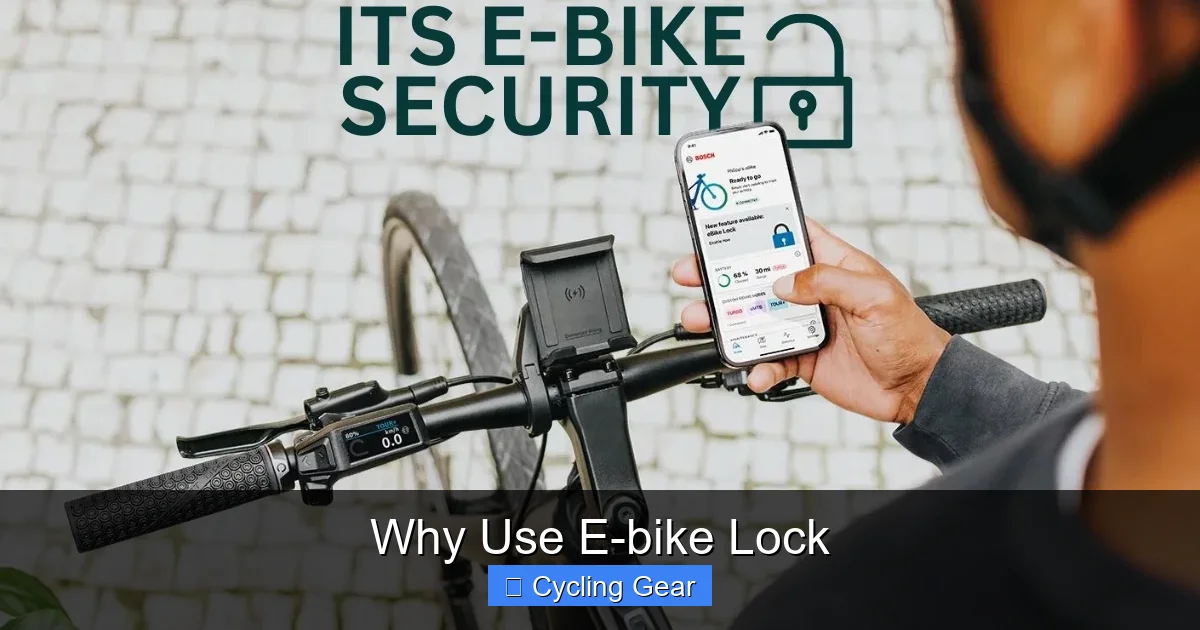
An e-bike lock matters because e-bikes are more valuable, more targeted, and often parked in higher-risk places. A strong lock helps protect the frame, battery, and accessories while discouraging quick theft.
If you ride an e-bike, a good lock is not optional. E-bikes cost more than many standard bikes, they carry valuable electronics, and they are often parked in places where theft can happen fast.
This guide explains why use e-bike lock, what it protects, and how to choose one that fits your routine. The goal is simple: help you reduce risk without making everyday riding a hassle.
- Higher value: E-bikes attract more theft attention than basic bikes.
- Better protection: Strong locks help secure the frame and key parts.
- Right fit: Choose the lock style that matches your commute and storage habits.
- Good habits matter: Locking technique can be as important as the lock itself.
Why E-Bike Theft Is a Bigger Problem in 2026
E-bike theft has become more appealing because an e-bike is more than a frame and two wheels. It is a rideable machine with a motor, battery, display, and often removable accessories that can be sold separately.
That makes the target more valuable, easier to resell, and sometimes easier to strip for parts. If you are comparing security options, it helps to think beyond “bike theft” and look at the full value of the whole system.
How e-bikes differ from regular bikes in theft risk
A standard bike may be stolen for quick resale or personal use. An e-bike can attract the same attention, but it also draws thieves who want the battery, controller, display, or other components.
Many e-bikes are heavier and more expensive, which can make them harder to carry away, but not harder to target. Thieves often look for short windows of opportunity, especially when a bike is left unattended in a predictable place.
Why higher battery and motor value attracts thieves
The battery and motor are major reasons e-bikes cost more, and they are also major reasons thieves care. Even when the frame is secure, a removable battery or display can still be vulnerable if it is left exposed.
That is why a lock should be part of a larger security plan, not the only step. Check the product manual, brand guidance, or a qualified professional if you are unsure how your battery or accessories should be secured.
Urban commuting, campus parking, and delivery use cases
E-bikes are often used where parking is frequent and repeated: city commutes, school campuses, apartment racks, and delivery routes. These are convenient places for riders, but they also create patterns that thieves can observe.
If you park in the same area every day, a stronger lock matters even more. Routine is helpful for commuting, but it also makes your bike easier to spot as a target.
What an E-Bike Lock Actually Protects You From
An e-bike lock is not magic, but it does change the effort required to steal your ride. The more time, noise, and tools a thief needs, the more likely they are to move on.
That is the real value of a lock: it raises the risk for the thief and lowers the chance of a quick theft.
Opportunistic grab-and-go theft
Many thefts are not planned with advanced tools. They happen when a bike is left unlocked, lightly secured, or parked in a spot where someone can act quickly.
A visible, well-chosen lock can stop that kind of theft before it starts. Even a few extra seconds can matter in busy public areas.
Parts theft: wheels, battery, display, and accessories
Some thieves do not take the whole bike. They remove the battery, front wheel, display, saddle, or lights if those parts are easy to reach.
This is why locking only the frame may not be enough for some setups. If your e-bike has quick-release parts, use the security features the manufacturer provides, and consider a second lock or a part-specific lock where appropriate.
Longer parking windows and overnight exposure
The longer your bike sits unattended, the more protection it needs. Overnight parking, work shifts, and long campus days all create more exposure than a quick coffee stop.
For longer parking windows, a stronger lock and a better parking spot both matter. If you must leave the bike for extended periods, review your lock choice and storage plan before you rely on it.
Why Use E-Bike Lock Instead of a Basic Bike Lock
Basic bike locks can help in low-risk situations, but e-bikes usually need more protection. The reason is simple: the bike is heavier, more expensive, and often more attractive to thieves.
A lock should match the value and risk level of what it is protecting. For many riders, that means stepping up from the cheapest option.
Strength, shackle thickness, and cut resistance
Higher-security locks usually use thicker materials and designs that are harder to cut or pry open. That does not make them theft-proof, but it can slow down common attack methods.
When comparing models, look at the lock body, shackle thickness, and overall build quality. Security ratings can help, but they are not the only factor, so check the product manual or brand guidance before buying.
Locking strategy for heavier frames and expensive components
E-bikes are often parked with more weight and more value concentrated in one place. That means the locking strategy should protect the frame and at least one wheel, not just a single easy-to-remove part.
Because the bike is heavier, riders sometimes assume it is harder to steal. In reality, a thief may only need enough time to remove a wheel, battery, or accessory and leave with part of the value.
When a cable lock is not enough
Cable locks are lightweight and easy to carry, but they are usually best as a secondary lock, not the main one. They can help secure accessories or act as a quick add-on in low-risk settings.
For higher-risk parking, a cable alone is usually not enough. If you use one, pair it with a stronger primary lock and make sure the full setup matches your route and parking habits.
How to Choose the Right E-Bike Lock for Your Riding Routine
The best lock is the one you will actually use every time. Security matters, but so does portability, ease of use, and compatibility with your frame and parking habits.
Think about where you ride, how long you park, and how much weight you are willing to carry. Those details matter more than a one-size-fits-all recommendation.
U-locks, chain locks, folding locks, and secondary locks compared
| Option | Best For | Note |
|---|---|---|
| U-lock | Daily commuting and urban parking | Strong and compact, but fit can be limiting |
| Chain lock | Flexible locking around larger objects | Heavier, but useful for awkward parking spots |
| Folding lock | Riders who want a balance of size and convenience | Often easier to carry, with varying security levels |
| Cable or secondary lock | Accessory protection or backup security | Usually not enough as the only lock |
Each style has trade-offs. U-locks are popular for strength, chain locks offer flexibility, and folding locks can be easier to transport, but exact performance depends on the model.
Matching lock type to commute, travel, and storage habits
If you commute daily in a city, a compact primary lock may be the easiest to live with. If you travel with your bike or park in awkward spaces, a chain or folding lock may fit better.
Home storage matters too. A rider who keeps the bike in a garage may want a different setup than someone who leaves it in a shared rack or apartment courtyard.
Weight, portability, and security rating considerations
Stronger locks often weigh more, and that can affect how often you carry them. For some riders, a slightly heavier lock is worth the added protection; for others, portability is the deciding factor.
Security ratings can be helpful, but they should be treated as guidance, not a guarantee. Always compare the rating with your actual parking risk and follow the product manual or ask a qualified professional if you are unsure.
Best Real-World Locking Practices for E-Bike Owners
The best lock still needs good habits. Smart locking technique can make a mid-range lock perform better than a poor setup with a premium lock.
These simple practices are practical, repeatable, and worth using every time you park.
Locking the frame and rear wheel to a fixed object
Whenever possible, secure the frame and rear wheel to a solid, immovable object. The rear wheel is often more valuable to protect because it is harder to remove quickly than the front wheel on many bikes.
Make sure the object itself is strong enough to resist lifting or cutting. A flimsy signpost or loose railing may look secure, but it may not actually hold the bike.
Using two locks for higher-risk areas
Two locks can create two different obstacles, which may discourage theft. For example, one lock can secure the frame while another protects a wheel or accessory.
This is especially useful in busy urban areas, near transit hubs, or anywhere the bike may sit for a long time. It is not necessary for every rider, but it can be smart in higher-risk zones.
Try to make the bike harder to steal than the one next to it. Thieves usually look for the easiest target first.
Securing removable batteries and accessories separately
If your battery comes off easily, remove it when practical and store it separately. The same idea applies to displays, lights, and other quick-release accessories.
That extra step can reduce the value left on the bike. Just be sure the battery and charging setup are used exactly as the manufacturer intended.
Parking position, visibility, and lighting tips
Park where people can see the bike, not where it is hidden. Good lighting and regular foot traffic can make theft less appealing.
Try to avoid leaving the bike in isolated corners or out of sight for long periods. A visible location is not a guarantee, but it is usually better than a dark, quiet one.
Common Mistakes That Make E-Bike Locks Less Effective
Many thefts happen because the lock is weak, but many others happen because the lock is used poorly. Small mistakes can create big openings for thieves.
Learning what not to do is just as important as choosing the right lock.
Leaving too much space inside the lock
Extra space inside a U-lock or chain setup can give thieves room to pry or insert tools. A snug fit is usually better because it limits movement.
Choose the smallest practical locking area for your frame and anchor point. If a lock fits loosely, consider a different size or style.
Using the wrong anchor point
A strong lock cannot make a weak object strong. If the bike is attached to something that can be lifted, cut, or loosened, the whole setup is weaker.
Look for fixed racks or solid structures that are difficult to move. If you are unsure whether an anchor point is suitable, pick a better one or ask a local cycling shop for guidance.
Relying on one lock in high-theft zones
One lock may be enough in a low-risk area, but it may not be enough in a place with repeated theft. High-theft zones call for better planning, not just better hope.
Using a second lock, a better parking spot, or indoor storage can make a real difference. The right choice depends on your routine and local conditions.
Ignoring battery removal and quick-release parts
Some riders focus only on the frame and forget the parts that can be removed in seconds. Batteries, displays, saddles, and wheels may need separate protection.
If your e-bike has quick-release features, review how they work before you rely on them. Check the product manual, brand guidance, or a qualified professional if the setup is unclear.
Do not assume a lock alone will protect every part of an e-bike. If your bike has a removable battery, unusual frame shape, or special mounting hardware, confirm the correct security method with the manufacturer or a qualified professional.
Cost vs. Protection: What a Good E-Bike Lock Is Worth in 2026
A lock is a small purchase compared with replacing an e-bike. That does not mean you need the most expensive model, but it does mean the cheapest option may not be enough.
The right question is not “How little can I spend?” but “How much protection do I need for how I ride?”
Comparing lock price to e-bike replacement cost
Even a modest e-bike can represent a major investment once you factor in the bike, battery, charger, and accessories. A stronger lock is often a fraction of that cost.
That makes the lock one of the most practical purchases you can make. It is not glamorous, but it can help protect a much larger investment.
Budget locks vs. mid-range and premium security options
Budget locks may work for very low-risk situations or as secondary protection. Mid-range and premium locks usually offer better materials, better fit, and better resistance to common attack methods.
The best choice depends on where you park and how long the bike is unattended. If you are unsure, compare options carefully and follow brand guidance or ask a qualified professional before choosing.
When insurance or theft coverage still depends on lock quality
Some policies, warranties, or coverage rules may expect reasonable security measures. That can include using a proper lock and storing the bike responsibly.
Because terms vary, always check the policy details and follow the product manual or ask a qualified professional if you are not sure what is required. A good lock may not prevent every loss, but it can support your claim and reduce avoidable risk.
Final Takeaway: Why Every E-Bike Owner Should Treat Locking as Essential
So, why use e-bike lock? Because e-bikes are valuable, theft-prone, and often parked in places where quick action matters. A strong lock helps protect the whole bike, not just the frame.
It also gives you a practical routine: park, secure, and walk away with more confidence. That is a small habit with a big payoff.
Quick recap of the main security benefits
A good e-bike lock helps deter grab-and-go theft, protects expensive components, and reduces risk during long parking windows. It also works best when paired with smart parking habits and, when needed, a second lock.
Simple next-step advice for choosing and using the right lock
Start by matching the lock to your commute, storage space, and theft risk. Then practice the same secure routine every time, and review the product manual or ask a qualified professional if your bike has special parts or locking needs.
Frequently Asked Questions
Why do e-bikes need stronger locks than regular bikes?
E-bikes usually cost more and include valuable parts like a battery and motor. That makes them more attractive to thieves and worth stronger protection.
Is a cable lock enough for an e-bike?
A cable lock is usually better as a secondary lock, not the main one. In higher-risk areas, a stronger primary lock is a safer choice.
What is the best type of lock for an e-bike?
There is no single best lock for every rider. U-locks, chain locks, and folding locks can all work well depending on your parking habits, bike size, and risk level.
Should I lock the battery separately?
If your battery is removable, securing it separately can reduce theft risk. Always follow the product manual or brand guidance for the correct method.
How many locks should I use on an e-bike?
One strong lock may be enough in low-risk settings, but two locks can help in higher-risk areas. The right setup depends on where you park and how long the bike is unattended.
What mistakes make e-bike locks less effective?
Common mistakes include leaving too much space in the lock, using a weak anchor point, and ignoring removable parts like batteries or wheels. Good placement matters as much as the lock itself.