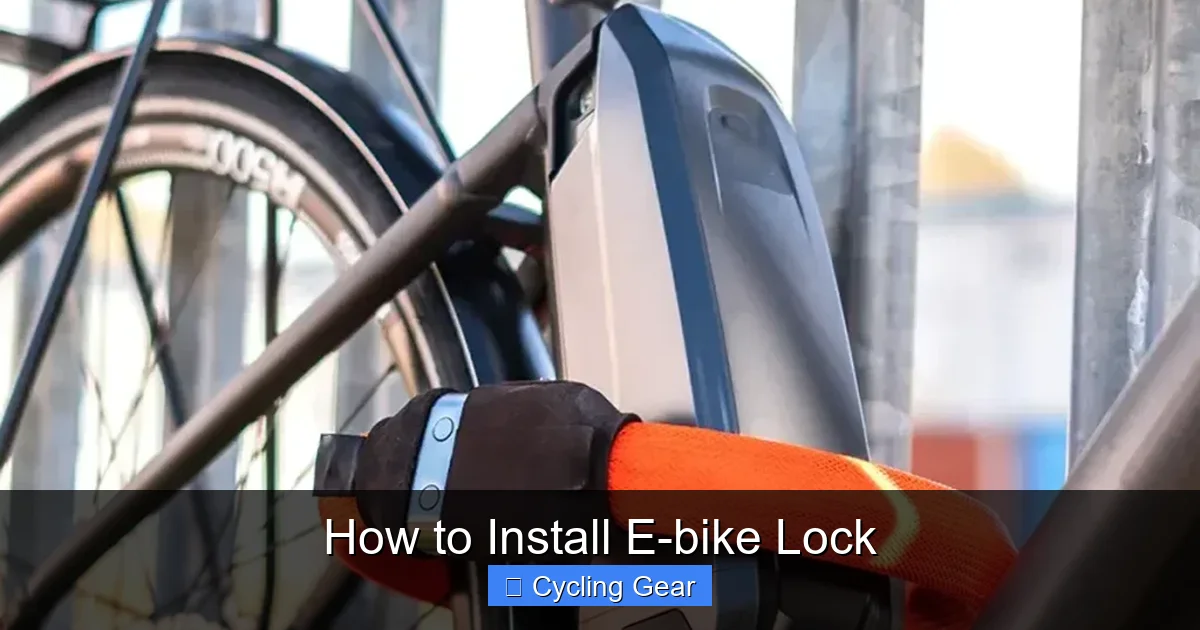
Install an e-bike lock by choosing a model that fits your frame, then mounting the bracket on a stable bottle-cage or rack point with the correct hardware. Make sure it clears the battery, motor, and pedals, and follow the product manual or ask a qualified professional if the fit is unusual.
Installing an e-bike lock the right way is about more than just fastening a bracket to the frame. A good setup should protect your bike, stay out of the way while you ride, and still be easy to use every day. If you are learning how to install e-bike lock hardware for the first time, the goal is simple: choose a lock that fits your bike and mount it in a spot that feels secure, stable, and practical.
This guide from ProKingsEdge walks through the main choices, the prep work, and the safest ways to mount a lock on common e-bike frames and racks. Because e-bikes vary widely by frame shape, battery location, and accessory mounts, always follow the product manual or ask a qualified professional if anything seems unclear.
- Fit first: Choose a lock that matches your frame and parking needs.
- Mount securely: Use the right bolts, tools, and torque.
- Check clearance: Keep the lock away from the battery, motor, and pedals.
- Use daily: Place the lock where it is easy to grab and quick to deploy.
- Add layers: Use a second security device for higher-risk parking.
Why Installing an E-bike Lock Correctly Matters in 2026
E-bikes are often more expensive than standard bikes, and that makes them a bigger target for theft. A lock that is poorly mounted, awkward to carry, or too easy to remove can leave your bike exposed even if the lock itself is strong.
Protecting high-value e-bikes, batteries, and accessories
Many riders now carry removable batteries, displays, lights, bags, and cargo accessories. If your lock setup blocks battery removal or forces you to leave accessories behind, you may end up using it less often. A clean installation helps you protect the full bike without creating daily friction.
It also helps reduce damage. A lock that swings against the frame, rubs paint, or rattles on rough roads can slowly wear down finishes and hardware. For premium bikes, that matters as much as theft protection.
How proper installation improves daily convenience and theft deterrence
A well-mounted lock is easier to grab, easier to remember, and faster to use. That matters for commuters, school riders, delivery cyclists, and anyone who stops multiple times a day.
Good installation also sends a message. A visible, well-positioned lock tells would-be thieves that the bike is not an easy target. While no lock makes a bike untouchable, correct placement and consistent use make theft much less convenient.
Choose the Right E-bike Lock Before You Install Anything
Before you mount anything, make sure the lock type matches your bike and your routine. The best choice depends on how you ride, where you park, and how much bulk you can carry.
U-locks vs. folding locks vs. chain locks for e-bikes
U-locks are usually compact and strong, which makes them a common choice for city riders. Folding locks are easier to store on the frame and can fit around awkward parking spots, while chain locks offer more flexibility but often weigh more.
| Option | Best For | Note |
|---|---|---|
| U-lock | Urban commuting | Strong and compact, but less flexible |
| Folding lock | Mixed parking situations | Good balance of portability and reach |
| Chain lock | Longer parking stops | Flexible, but heavier and bulkier |
Matching lock size to frame geometry, wheel clearance, and rack type
Not every lock fits every bike. Step-through frames, cargo bikes, fat-tire models, and bikes with large batteries may need more clearance than a standard commuter frame. Measure the space where the lock will sit, and check whether it can open fully without hitting the wheel, motor, fender, or battery housing.
Lock fit varies by frame design and accessory layout. If your e-bike has a nonstandard frame, check the product manual, brand guidance, or a qualified professional before drilling, clamping, or mounting hardware.
Cost and security trade-offs for urban, commuter, and cargo e-bikes
Higher security usually means more weight, more bulk, or more cost. A light commuter bike may do fine with a compact lock and a second security layer, while a cargo e-bike may need a larger lock or a stronger mounting system.
Think about where the bike will be parked most often. A short stop at a neighborhood store is different from all-day campus parking or street-side delivery use. Match the lock to the risk level, not just the price tag.
Tools and Prep Steps for a Clean Installation
Good prep makes the installation faster and reduces the risk of loose hardware or frame damage. Lay out everything first so you can confirm the parts fit before tightening anything down.
What you need: mounting bracket, bolts, hex keys, torque tool, thread locker
Most frame-mounted lock systems use a bracket, bolts, and basic hand tools. Depending on the model, you may also need a hex key set, a torque tool, and a small amount of thread locker to help keep bolts from loosening over time.
- Mounting bracket and included hardware
- Correct hex key or wrench size
- Torque tool if the brand recommends one
- Thread locker if approved by the manufacturer
- Soft cloth to protect the frame while you work
Checking your frame, rear rack, or seat tube for compatible mounting points
Look for bottle-cage bosses, accessory rails, or a rack mount that is designed to hold extra gear. Avoid attaching a lock to parts that were not meant to carry accessories unless the manufacturer says it is safe.
If your e-bike uses a removable battery or an integrated downtube battery, check that the lock will not interfere with removal, charging, or access to the power switch. The same advice applies to rear racks, especially on cargo bikes where the load area is already crowded.
Measuring clearance so the lock does not hit the motor, fender, or battery
Before tightening the bracket, test the full movement of the lock. Make sure it opens, closes, and rotates without clipping the motor cover, spokes, chainstay, or pannier bag.
Many lock problems are not about strength, but about fit. A lock that is hard to access or awkward to remove is more likely to be left at home, which lowers real-world security.
How to Install an E-bike Lock on the Frame or Rack
The exact steps depend on the lock design, but the process is usually straightforward. The key is to mount the bracket securely, check alignment, and test for movement before you ride.
Step-by-step placement for bottle-cage mounts and accessory rails
Select a spot with enough space for the bracket and enough room for the lock to slide in and out cleanly.
Hold it in place and confirm it will not block cables, battery access, or other accessories.
Thread them in by hand first so you do not cross-thread the holes, then tighten them gradually.
Slide the lock into the bracket and confirm it clicks or seats firmly according to the manual.
Securing the bracket without over-tightening or damaging the frame
Over-tightening can strip threads, crack plastic parts, or leave marks on painted and coated frames. Tighten only as much as the manufacturer recommends, and use a torque tool if the brand gives a specific setting.
Do not force bolts into place or use hardware that is not meant for your frame. If a mount feels unstable, stop and check the product manual, brand guidance, or a qualified professional.
Testing lock retention on rough roads and during vibration
After installation, shake the bike gently and roll it over a rough surface if safe to do so. The lock should stay put without rattling, slipping, or rotating into a position that could hit the frame.
If the lock shifts during normal riding, recheck the bracket, hardware, and spacing. Small movement now can become a bigger problem later, especially on bikes that see daily commuting or uneven pavement.
How to Install an E-bike Lock for Daily Use and Quick Locking
The best installation is one you will actually use. Daily convenience matters because a lock that is hard to reach or awkward to remove often becomes a skipped step.
Best carry positions for commuting, errands, and multi-stop rides
For many riders, the best position is one that keeps the lock low-profile and easy to grab with one hand. On commuter bikes, that often means a bottle-cage style mount or a rack-mounted bracket that does not interfere with bags.
For errand rides and multi-stop days, avoid positions that require you to remove cargo first. If you regularly carry groceries, work bags, or child gear, make sure the lock is still accessible when the bike is loaded.
Using the lock to secure frame plus rear wheel to fixed objects
A strong setup usually secures the frame and at least one wheel to a fixed object. That is especially important for e-bikes, where the frame, battery, and wheel components are all valuable.
Practical security guidance for everyday riders
If your lock is too short to reach a proper anchor point, it may not be the right size for your bike. In that case, choose a different lock or add a second device rather than settling for a weak position.
Practical examples for city parking, campus use, and delivery riding
In city parking, a frame-mounted lock should be quick enough for short stops and visible enough to discourage opportunistic theft. On campus, where bikes may sit for hours, many riders add a second lock or secure the bike in a more visible area.
Delivery riders often need the fastest setup of all, but speed should not replace security. A compact lock mounted on the frame can help, but it should still be paired with smart parking habits and a second layer when possible.
If you ride in more than one setting, choose a mount that works for your hardest parking situation, not your easiest one.
Common Installation Mistakes That Reduce Security
Most lock failures start with simple setup mistakes. Avoiding them is one of the easiest ways to make your e-bike safer without buying a more expensive lock.
Mounting the lock where it blocks pedaling, charging ports, or battery removal
Never install the lock in a place that makes the bike harder to ride or maintain. If it blocks your pedaling motion, charging access, or battery removal, you are more likely to stop using it or remove it in a hurry.
That can lead to scratches, loose hardware, or a lock that is left behind when you need it most. A good mount should support the bike, not complicate it.
Using weak bolts, loose brackets, or the wrong lock size
Cheap or mismatched hardware can undo the value of a strong lock. If the bracket wiggles, the bolts do not seat properly, or the lock is too large for the mount, the whole setup becomes less reliable.
- Stable mounting
- Faster daily use
- Less frame wear
- Loose hardware
- Poor lock access
- Higher chance of damage
Relying on the lock alone instead of layering security with a second device
Even a well-installed lock should not be your only defense in high-risk areas. A second lock, wheel lock, alarm, or smart parking habit can make theft much harder and less appealing.
Layered security matters most for expensive e-bikes, cargo bikes, and bikes parked outdoors for long periods. If you are unsure how much security you need, check the product manual, brand guidance, or a qualified professional for advice based on your setup.
Expert Safety Tips and When to Get Help
Some e-bike setups are simple enough for a careful home installation, but others deserve a professional look. That is especially true when the frame is unusual, the hardware is custom, or the bike is expensive enough that mistakes could be costly.
Warning signs that your e-bike frame, rack, or mounting hardware needs professional inspection
Get help if the frame has cracks, stripped threads, bent rack mounts, or signs of previous damage. You should also pause if the lock mount causes cable rub, battery interference, or unstable movement after tightening.
If riding, lifting, or handling your e-bike causes pain, numbness, or dizziness, stop and speak with a medical professional before continuing. Safe bike setup should never require you to strain or work through symptoms.
When to ask a bike shop to fit the lock on carbon frames, custom builds, or cargo bikes
Carbon frames and custom builds can be less forgiving than standard aluminum or steel frames. Cargo bikes may also have special racks, odd angles, or heavy accessories that make mounting more complicated.
A bike shop can usually help with fit, torque, and hardware selection. That is often worth it if the bike is premium, still under warranty, or used for daily transportation.
How to avoid voiding warranties or scratching premium finishes
Use protective tape or a soft cloth during installation if the manufacturer allows it, and never drill into a frame unless the brand explicitly says it is safe. Keep the original hardware organized in case you need to reverse the setup later.
When in doubt, stop and verify the mounting method before making permanent changes. A careful installation is better than a rushed one, especially on high-value bikes.
Final Recap: The Best Way to Install an E-bike Lock for Everyday Security
The best way to install e-bike lock hardware is to start with the right lock, mount it where it fits naturally, and make sure it stays secure during everyday riding. A good setup should protect the bike without blocking battery access, pedaling, or storage.
Key takeaways on fit, placement, and secure mounting
Measure first, mount carefully, and test the lock before relying on it. Use the correct bolts and tools, and do not over-tighten or force a bracket into an awkward position.
Choosing a setup that balances theft protection, convenience, and price
The ideal lock is the one you will use consistently in the places you actually park. If you balance security, fit, and convenience, you will end up with a setup that supports daily riding instead of getting in the way.
If your bike has unusual hardware or you are unsure about compatibility, check the product manual, brand guidance, or a qualified professional before final installation.
Frequently Asked Questions
What is the best place to mount an e-bike lock?
The best place is usually a frame or rack mount that keeps the lock easy to reach and out of the way while riding. It should not block the battery, pedaling, brakes, or charging port.
Can I install an e-bike lock on a carbon frame?
Sometimes, but carbon frames need extra care because they can be more sensitive to pressure and hardware changes. Check the product manual, brand guidance, or a qualified professional before mounting anything.
Do I need special tools to install an e-bike lock?
Many setups only need basic hex keys and the included hardware, but some models also recommend a torque tool or thread locker. Always follow the product manual for the exact tool list.
Should the lock be mounted on the frame or the rear rack?
Use whichever location gives the best fit and easiest access without blocking other parts of the bike. The right choice depends on your frame shape, rack design, and accessory layout.
How tight should the mounting bolts be?
Tight enough to keep the bracket stable, but not so tight that you damage threads or the frame. If the brand provides a torque value, use it or ask a qualified professional.
Can I use one lock for all e-bike parking situations?
One lock may be enough for low-risk stops, but higher-risk areas often call for a second security layer. Match the setup to where you park most often.