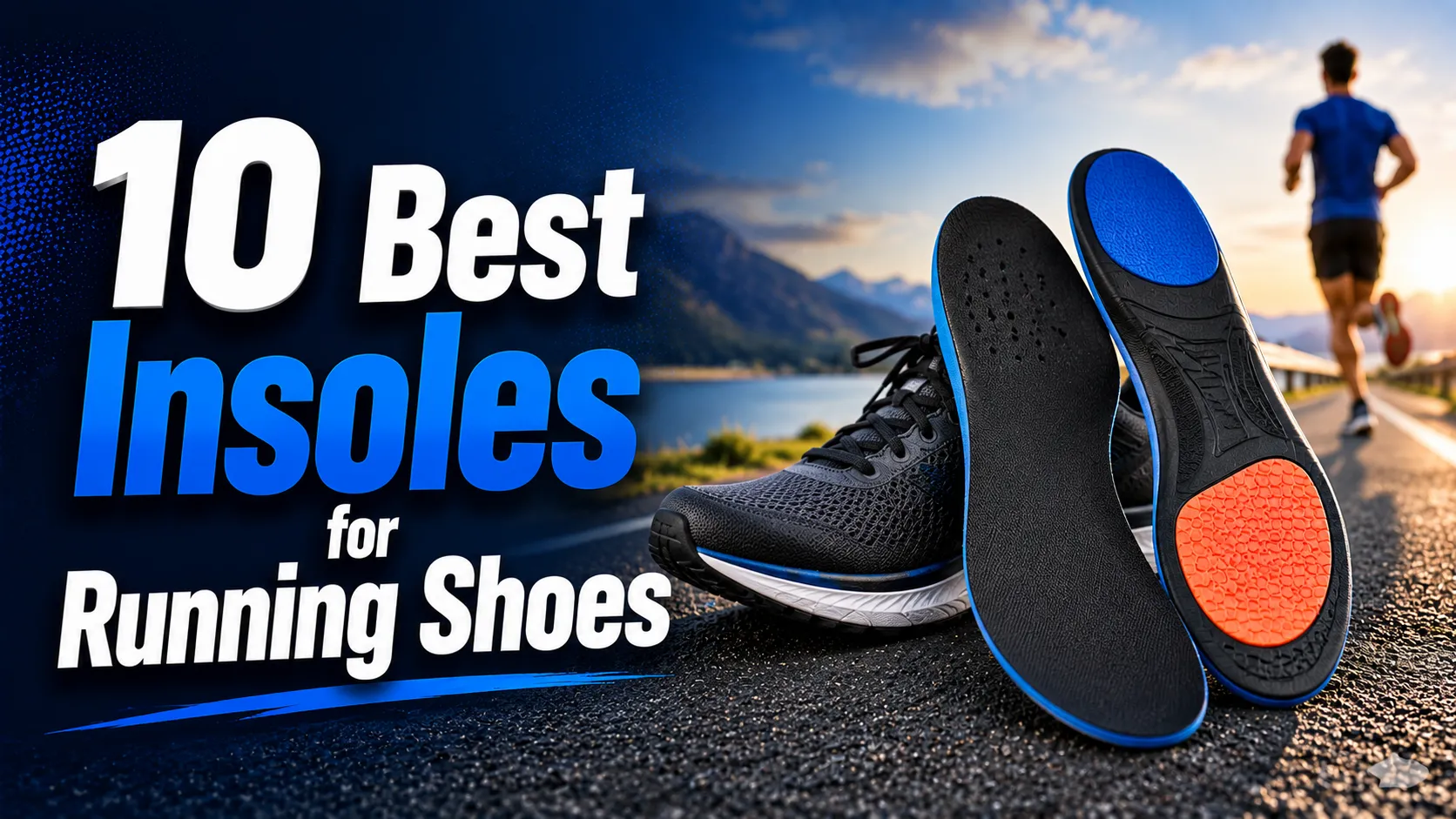
Insoles add cushioning, support, and shock absorption to running shoes, helping reduce pain and improve comfort on short jogs or long runs. They come in many styles—neutral foam pads, arch-support orthotics, and motion-control designs—so runners can match insoles to foot shape, gait, and training needs. The right insole can cut knee, heel, and arch pain while improving shoe fit and running comfort.
Choosing the best insole depends on arch height, pronation, and the shoe type. Runners should check material (foam for cushioning, gel for impact, rigid shells for support), thickness (fits inside the shoe without crowding), and sizing or trim lines. Durable materials and breathability matter for daily use; those with chronic pain may need custom or medical-grade orthotics. This guide tests popular insoles for comfort, support, and fit to help readers pick the best option for their running needs.
10 Best Insoles for Running Shoes
Below is the full list of the best insoles for running shoes. Each option offers support, cushioning, or motion control to help runners reduce pain, improve comfort, and protect their feet during runs.
Dr. Scholl’s Sport Insoles

They are a solid choice for runners who want firm arch support and shock absorption without extra plush cushioning.
Pros
- Reduces impact on feet and lower joints.
- Stable side-to-side support for quick moves.
- Works in many types of athletic shoes.
Cons
- Firmer feel may not suit runners who want soft cushioning.
- Cushioning can lose spring after extended use.
- May not fit every shoe type without trimming.
These insoles aim to cut stress on knees and lower back by adding shock-absorbing gel and built-in arch support. They suit runners who need structure more than a pillowy feel.
They hold up well for walking, gym sessions, and short runs, though some users report the cushioning softens after months of heavy use. The side-to-side support helps with agility and stability during quick directional changes.
They work best for runners who prefer firm support or who have higher arches. Shoppers who want plush comfort or who need custom orthotics might want to compare other options first.
Dr. Scholl’s Run Active Comfort Insoles

It is a good choice for runners who want extra cushioning and shock protection without replacing shoes.
Pros
- Adds cushioning and shock absorption for longer runs
- Reinforced arch support helps with smoother foot push-off
- Odor control keeps insoles feeling fresher longer
Cons
- May feel snug or tight in some shoe models
- Best for low arches, not ideal for high-arch needs
- Requires trimming to fit, which can be tricky for some users
These insoles focus on shock reduction and targeted support from heel to toe. They aim to ease common running pains like shin splints, runner’s knee, and plantar fasciitis by spreading impact and improving foot motion.
They include a molded arch section that changes weight transfer during stride. Many users find the extra padding helps them stay active longer, though the fit can feel snug in tighter shoes.
A built-in odor-control layer keeps the insole fresher during heavy use. Runners who need strong arch correction or have very high arches might prefer a more rigid orthotic instead.
CURREX RunPro Insoles (Medium Arch, L)

They are worth trying for runners who want firm, dynamic arch support and shock absorption to reduce fatigue and help prevent common running injuries.
Pros
- Strong arch support that adapts to motion
- Deep heel cup for better stability
- Good breathability and moisture control
Cons
- Higher price than basic insoles
- May need trimming for some shoes
- Fit can vary between sizes or batches
CURREX RunPro aims to add dynamic support and rebound cushioning that helps runners feel less tired. The insole uses a molded heel cup and a flex point so the foot can move naturally while staying supported.
They come in arch-specific profiles and a zero heel drop to fit most running shoes. Runners who switch between road and trail shoes may like the stability and propulsion cues these insoles offer.
Some buyers find the cost higher than generic inserts, and trimming may be required for a perfect fit. Those with unusual shoe shapes should check fit carefully before long runs.
Sof Sole Athlete Insoles

It’s a solid choice for runners who want lightweight cushioning and moisture control without changing shoe fit.
Pros
- Good heel and forefoot shock absorption
- Lightweight, won’t make shoes feel heavy
- Moisture-wicking keeps feet drier
Cons
- Cushioning can feel thin to some users
- Neutral arch may not suit severe pronation or high arches
- Sizing can be inconsistent across shoe models
These insoles pair gel zones with PU foam to soften impacts at the heel and forefoot. They aim to protect joints during running and other high-impact activities.
The design keeps weight low so shoes feel close to their original fit. Midfoot ventilation and Hydrologix moisture control help reduce heat and sweat during longer sessions.
They work well for many foot types thanks to a neutral arch and a stabilizing heel cup, but people with strong arch issues may need a more corrective insert. Check fit carefully before committing, as fit can vary by shoe.
4D Cloud Insoles (DWTWLE)

They offer soft memory-foam cushioning and arch support that can reduce foot fatigue for many runners, though sizing and durability vary by user.
Pros
- Soft, responsive cushioning that eases impact.
- Built-in arch support for medium arches.
- Breathable honeycomb design that helps dry feet.
Cons
- Some users find them thinner or less durable than expected.
- Sizing marks may not match every pair.
- May need a break-in period before feeling right.
These insoles use U-shaped memory foam in the heel plus a gel insert to absorb shock. That design aims to cut impact on the feet and knees during runs and long walks.
They include a honeycomb pattern to boost airflow and wick moisture. This can help reduce foot odor and keep shoes fresher on warm days.
Fit works for many standard running shoes and trims to shape, but people with wide feet or unusual sizes might find the markings off. A short transition period is often needed as feet adapt.
They rank well for comfort and budget value, yet some buyers report the insoles feel thin over time. Consider them as an affordable cushioning upgrade, especially for medium-arch runners seeking softer support.
Risctrre Comfort Insoles (L)

It is a good, affordable choice for runners who want extra cushioning and basic arch support without a big price tag.
Pros
- Breathable design that helps reduce sweat and odor
- Noticeable shock absorption for heel and forefoot
- Trim-to-fit shape works for many shoe types
Cons
- May feel bulky in very snug shoes
- Not ideal for high-arch support needs
- Gel layer can shift if not trimmed or fitted well
The insoles use layered foam and a gel heel to cushion steps and reduce impact. They have a honeycomb perforated surface that promotes airflow and dries fairly quickly.
They come with cut lines for trimming to size so they fit many running shoes, sneakers, and boots. The U-shaped heel cup aims to keep the foot aligned and reduce friction inside the shoe.
Reviews show users found better comfort and more usable shoe life, while some said the fit can feel thick in tight shoes. People who need strong corrective support for serious foot issues may want a medical-grade orthotic instead.
Dr. Scholl’s Work All-Day Insoles
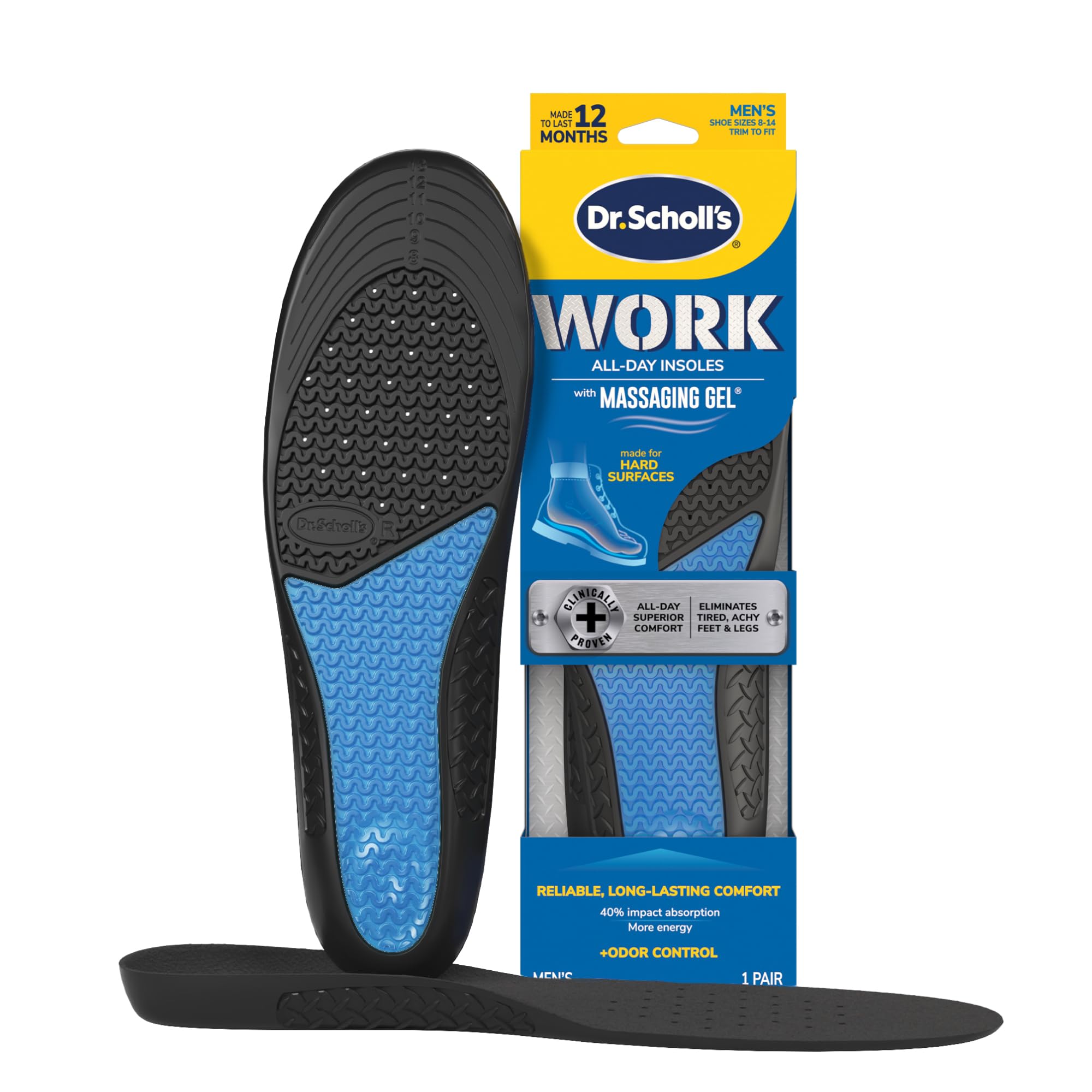
They are a solid choice for people who spend long hours on their feet and want extra cushioning and odor control.
Pros
- Strong shock absorption that eases heel and arch pressure.
- Trim-to-fit design works in many shoes and boots.
- Odor-control layer helps feet stay fresher during long shifts.
Cons
- May compress over long-term heavy use and lose some cushioning.
- Not a cure for serious foot conditions that need medical support.
- Fit and comfort can vary by shoe type and foot shape.
Many users report real relief from standing and walking on hard surfaces. The gel padding targets heels and arches to reduce impact and give a softer step.
The insoles suit work boots, sneakers, and many everyday shoes because they trim down to size. People note they keep feet feeling less tired and control smell better than plain insoles.
Some buyers say the cushioning fades after long use, so replacements may be needed over time. Those with specific injuries should consider professional orthotics instead of over-the-counter insoles.
Spenco Polysorb Cross Trainer Insoles

These insoles are a solid pick for runners who want extra cushioning and steady support during walks and workouts.
Pros
- Good shock absorption at heel and forefoot
- Soft arch support without feeling stiff
- Low-friction top layer helps reduce odor and rubbing
Cons
- May feel too soft for runners who need firm stability
- Sizing can require trimming for some shoes
- Not a full corrective support for severe foot conditions
The foam and SpenCore pads focus cushioning where runners hit hardest. The deep heel cup helps center the foot and can improve step control for many users.
They suit everyday runs, gym sessions, and long walks by reducing impact on joints. The big toe cut-out aims to keep toe motion close to natural for smoother toe-offs.
These insoles carry the APMA seal and aim to fit most shoe lasts; people should trim for a custom fit. They work best for mild-to-moderate support needs rather than major corrective treatment.
PowerStep Pulse Insoles
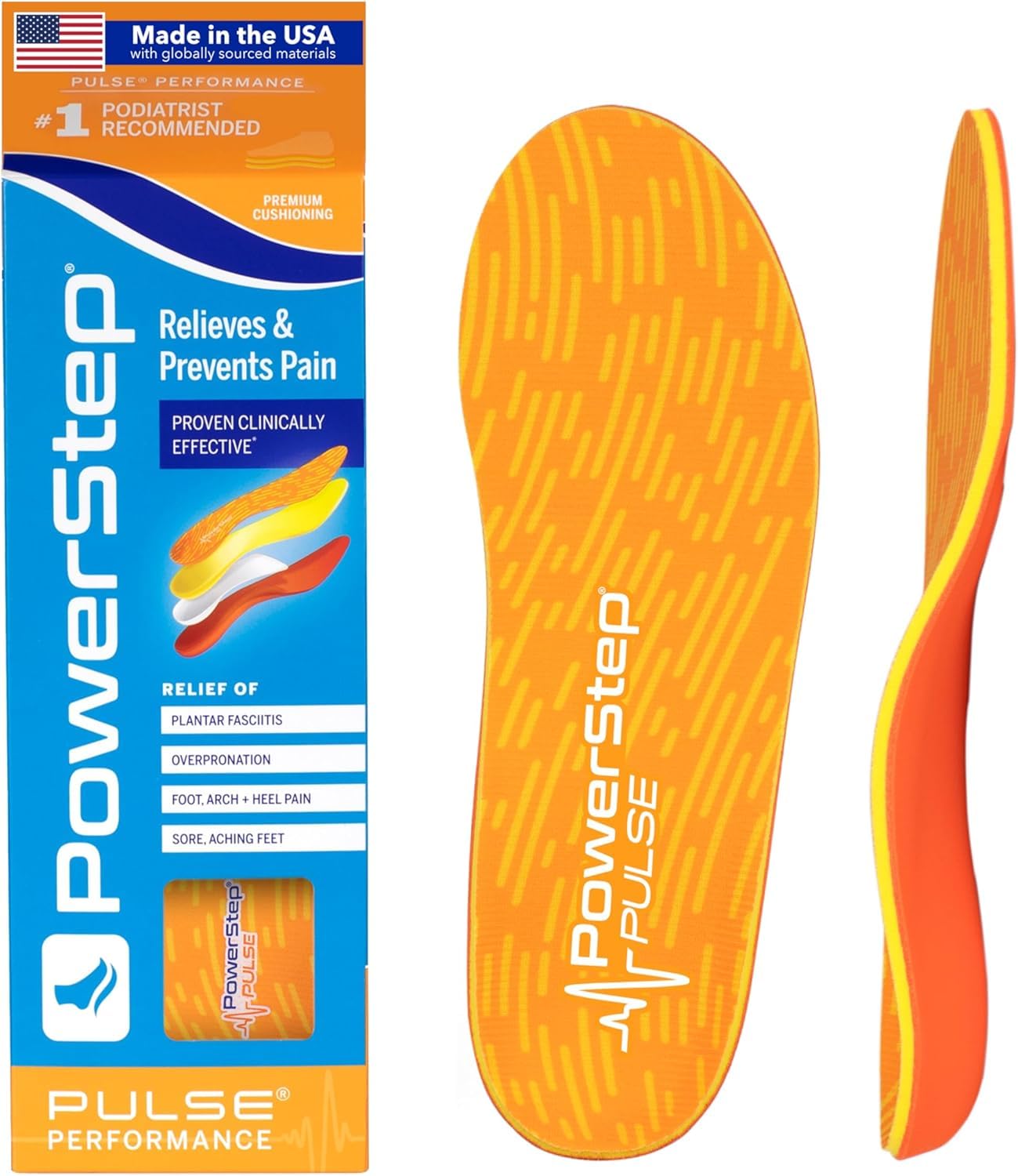
These are a strong pick for runners who want firm arch support and shock absorption in a full-length insole.
Pros
- Firm, full-length arch support for steady alignment
- Dual-layer foam gives noticeable cushioning and bounce
- Odor-control fabric and workout-friendly design
Cons
- Feels firm and may take break-in time for some users
- May not suit very high arches or custom orthotic needs
- Some units arrive without original packaging or show wear
PowerStep Pulse aims to support the whole foot with a firm but flexible arch. It combines a stiff internal arch with layered foam to reduce stress on feet and joints during runs.
The metatarsal pad and full-length cushion help with forefoot pressure and trail fatigue. The fabric also fights odor and friction during sweaty workouts.
Buyers get a 60-day guarantee and a lifetime warranty on the plastic arch support against breakage. They are made in the USA and often praised for helping mild-to-moderate plantar pain.
EASYFEET Flame Boost Insoles

They are a solid budget-friendly option for runners who want firmer arch support and extra shock absorption without buying specialty orthotics.
Pros
- Firm support that molds over time
- Good shock absorption for high-impact sports
- Lightweight and breathable design
Cons
- Feels stiff until broken in
- May not suit severe foot issues or custom needs
- Sizing may need trimming for a perfect fit
The insoles target runners and athletes who need added cushioning and medium-low arch support. They aim to return energy and reduce leg fatigue during high-intensity workouts.
Users report the padding helps with impact and can extend the life of pricier shoes. The top layer manages sweat and the heel and forefoot pads focus on shock control.
Expect a firm first week as the materials soften and shape to the foot. They work best for general athletic use, not as a medical orthotic for specific biomechanical problems.
Buying Guide
Choosing the right insole starts with knowing foot type and goals. They should match arch shape, running distance, and any pain issues. A simple foot test or a visit to a specialist can help identify pronation or high arches.
Look for cushioning and support balance. Thicker cushioning helps shock absorption, while firmer support controls motion. Insoles often combine foam layers with a stiffer arch piece.
Focus on material and durability. EVA foam is light and forgiving. Gel gives targeted shock relief. Thermoplastic or carbon components add long-term stability.
Pay attention to fit and sizing. Insoles must trim or match shoe size and sit flat without bunching. Some need cutting; others come in standard sizes.
Check breathability and moisture control. Perforations and moisture-wicking tops reduce sweat and odor. This matters for long runs and hot conditions.
Consider foot conditions and orthotic needs. People with plantar fasciitis, knee pain, or flat feet may need firmer arch support. A healthcare professional can recommend the right stiffness and contour.
Evaluate weight and stack height. Heavy or thick insoles can change shoe fit and stride. Runners should choose low-profile options if shoe space is tight.
Compare warranty and return policies. Trial periods let runners test comfort during runs. A good policy helps when an insole does not work as expected.
Possible features to weigh:
- Arch level: low, medium, high
- Cushion type: foam, gel, polyurethane
- Support: neutral, stability, motion control
- Fit: trim-to-fit, size-specific
- Breathability: perforations, moisture-wicking top layer
Editor’s Choice
They pick the SuperSupport Pro as the top insole for most runners. It blends firm arch support with a soft heel cup to reduce impact without feeling stiff.
The insole uses a layered foam design. The top layer wicks moisture and resists odor, while the middle layer cushions and the bottom layer stabilizes the foot.
Key features:
- Arch type: Medium and high arches supported.
- Materials: Breathable fabric, EVA foam, TPU stabilizer.
- Best for: Daily training, long runs, and mild overpronation.
Fit notes: It trims easily to fit most running shoes. Runners with very low arches or custom orthotics may need a specialist option instead.
They rate durability highly. The foam keeps shape through 300+ miles for many users, and the breathable cover limits sweat buildup.
Price and value: It sits in the mid-price range but often outperforms cheaper gel-only insoles. The blend of support, cushioning, and breathability makes it worth the cost for serious runners.
FAQS
What do insoles do for runners?
Insoles add cushioning, support arches, and reduce pressure on the feet. They can help with comfort and lower the risk of some injuries.
How long do running insoles last?
Most run insoles last 6–12 months depending on use and weight. Heavier runners or daily mileage will wear them faster.
Are custom insoles worth it?
Custom insoles help people with specific foot problems like severe pronation or chronic pain. For general comfort and mild issues, high-quality over-the-counter insoles often work well.
Can insoles fix running pain?
Insoles can reduce pain from plantar fasciitis, shin splints, or knee strain by improving alignment and shock absorption. They are not a cure; rest, stretching, and medical advice may still be needed.
How should insoles fit shoes?
They should sit flat inside the shoe without lifting the heel or crowding toes. Trim them only along marked lines and check fit before long runs.
Do insoles change shoe size?
They can make a shoe feel tighter, usually about half a size. If shoes feel too tight, try a thinner insole or a larger shoe.
How to choose the right insole?
Match the insole to foot type (flat, neutral, high-arched) and running needs (road, trail, speed). Look for proper cushioning, arch support, and durable materials.
Can anyone use running insoles?
Most people can try them safely. Those with severe foot conditions should consult a podiatrist before switching insoles.
Conclusion
Choosing the right insole helps runners stay comfortable and reduce injury risk. They should match the runner’s foot shape, support needs, and shoe type.
Firm, molded insoles suit people who need arch support and stability. Soft, cushioned insoles help those who want shock absorption and comfort on long runs.
Custom orthotics work best for specific foot problems but cost more. Over-the-counter insoles offer good value and are easy to try first.
Try insoles for at least two weeks to judge comfort and fit. Replace them when cushioning breaks down or support fades.
Key points to remember:
- Match the insole to foot type and running style.
- Test in real runs, not just short walks.
- Replace worn insoles to keep support and protection.
Runners who pick the right insole can run with less pain and better form. Regular checks and sensible replacement keep shoes performing well.