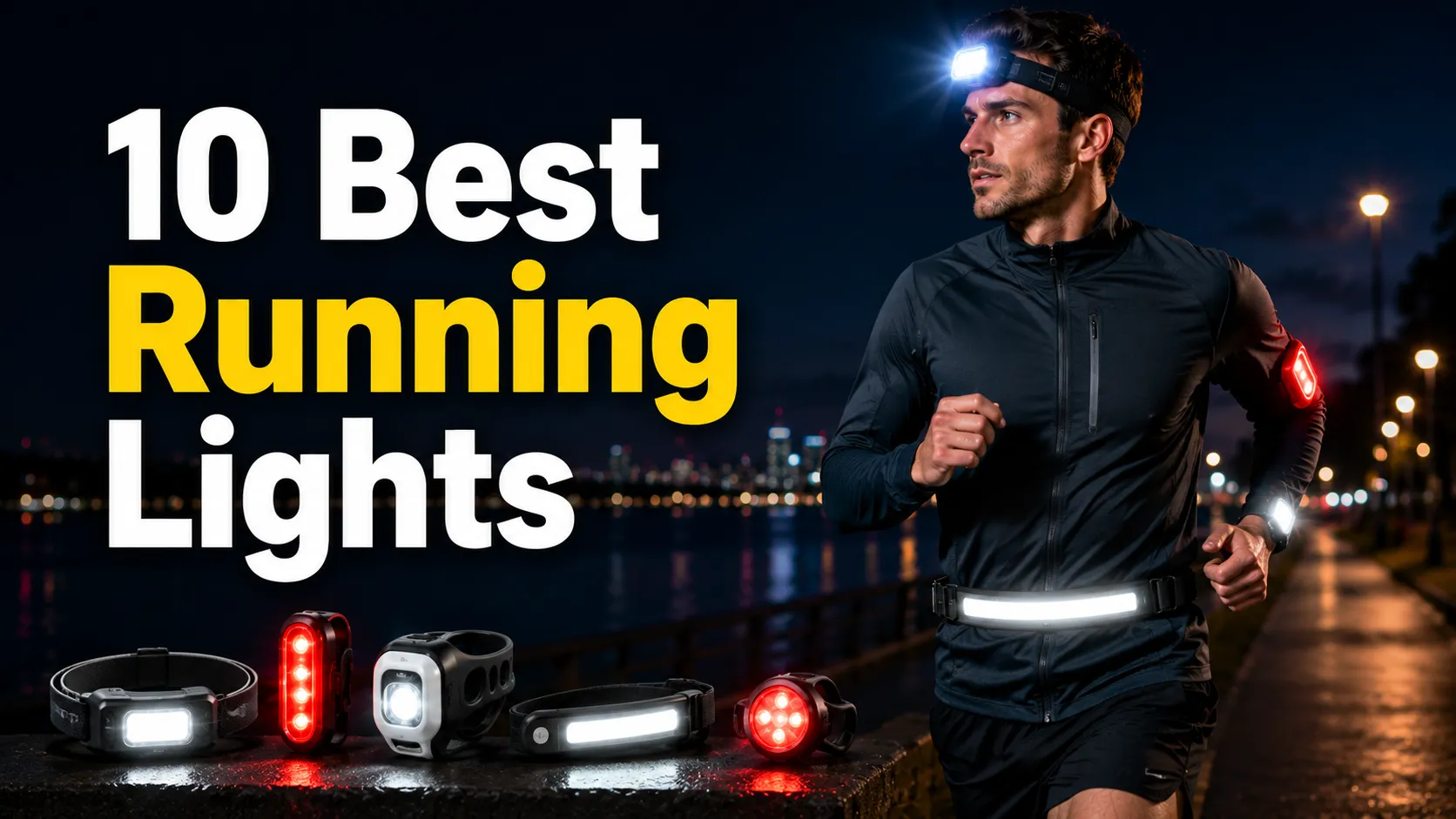
Running lights help people stay visible and safe when they run in low light. They come as clip-on lights, headlamps, or wearable bands and aim to make runners more visible to drivers, cyclists, and other pedestrians while keeping hands free and motion natural.
Buyers should focus on brightness, beam pattern, battery life, and comfort. Brightness and how the light spreads are the most important factors because they determine how well a runner can be seen and how comfortable the light feels while moving. Battery life, mounting options, and waterproofing also matter depending on how and when someone runs.
This guide tests and compares popular running lights to find reliable, easy-to-use options and explains what to look for when choosing one.
10 Best Running Lights
Below is the list of the best running lights selected for brightness, battery life, comfort, and visibility. It helps runners pick a light that fits their route, pace, and safety needs.
GOANDO Running Lights (2-Pack)

It is a solid, affordable option for runners who want bright, rechargeable lights that attach by strong magnets for visibility and hands-free use.
Pros
- Very bright and easy to see from a distance
- Strong magnetic clip for quick attachment
- USB rechargeable—no need for spare batteries
Cons
- Magnets may not suit all fabrics or thin gear
- Some users report limited long-term durability
- Silicone cover can pick up dirt over time
The lights put out a wide, clear beam that helps runners see the path and be seen by drivers and cyclists. Multiple modes let users choose full white, half white, red, or a red strobe for different visibility needs.
They come in a silicone sleeve and include a USB cable, so charging is simple and portable. The magnetic mount works well on hats, belts, vests, and metal surfaces, which adds versatility for night runs and other outdoor tasks.
Battery life and build quality get mixed feedback. Many buyers praise the brightness and value, while some note the units may stop holding a charge after heavy use.
Viccux 500LM Running Light Vest
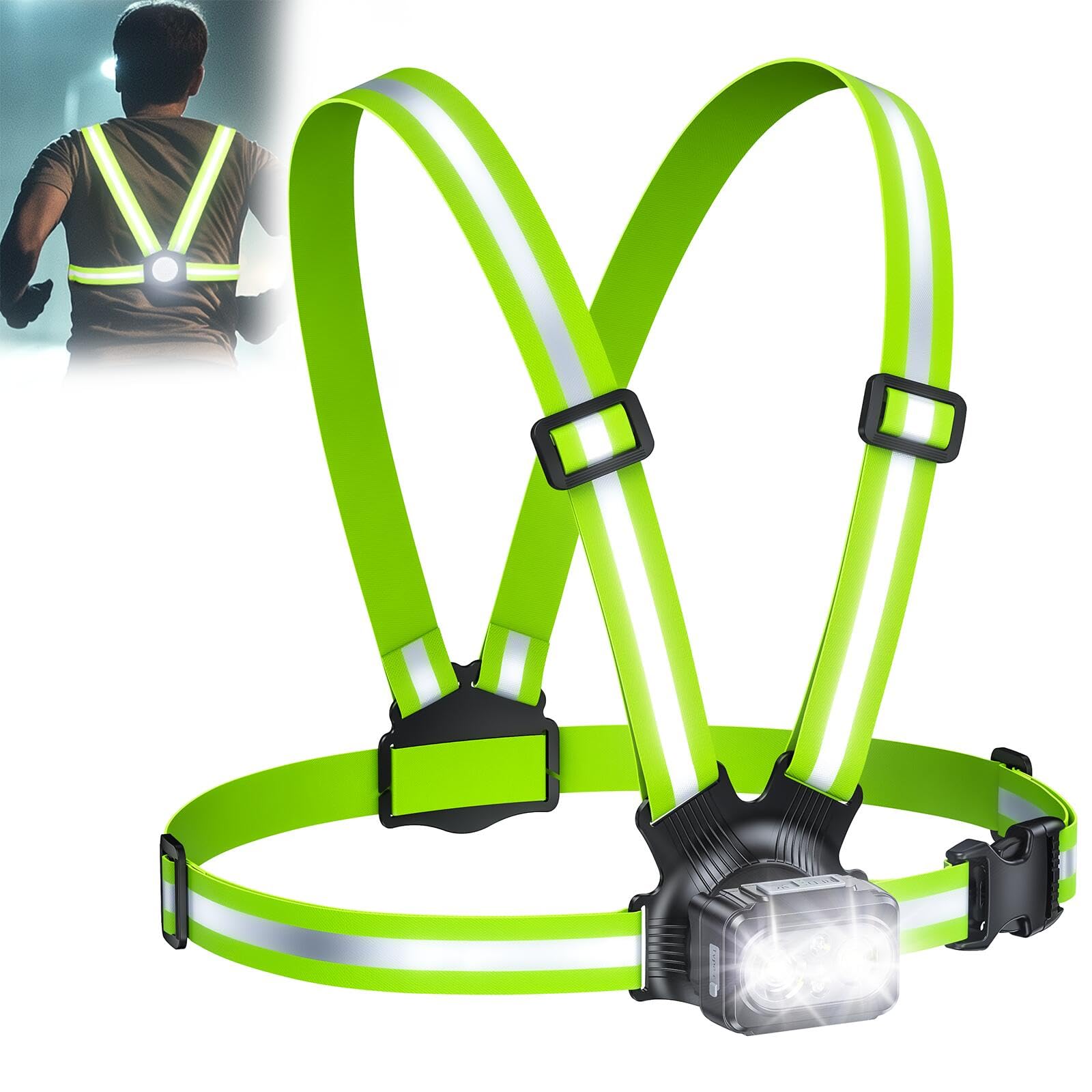
It is a solid choice for runners who want strong front illumination plus 360° passive reflectivity for safer night runs.
Pros
- Very bright front light with adjustable beam and multiple modes.
- Reflective board and straps give visibility without using battery power.
- Long runtime and washable, adjustable harness for comfort.
Cons
- Chest mount can twist and takes time to fit right.
- No dedicated rear light—relies on reflectors for back visibility.
- Plastic parts may feel less durable to some users.
The vest puts a powerful 500-lumen light on the chest so users can see the trail ahead and be seen by drivers. The light angle adjusts, and seven modes let runners pick steady or flashing patterns.
Reflective panels wrap around the body to give 360° visibility without draining the battery. That passive visibility helps in low-light conditions and in short bursts of light from headlights.
Straps stretch to fit a wide range of sizes and the dual-shoulder design spreads weight to reduce headlamp fatigue. Some users find the harness needs fiddling to stop twisting, so pair it with a quick fit check before running.
Battery life spans several hours depending on mode, and the IPX4 rating holds up in light rain or sweat. Those who want a rear LED might prefer an additional clip-on light, since the vest emphasizes reflectivity rather than a back beam.
ISEYOU Running Light
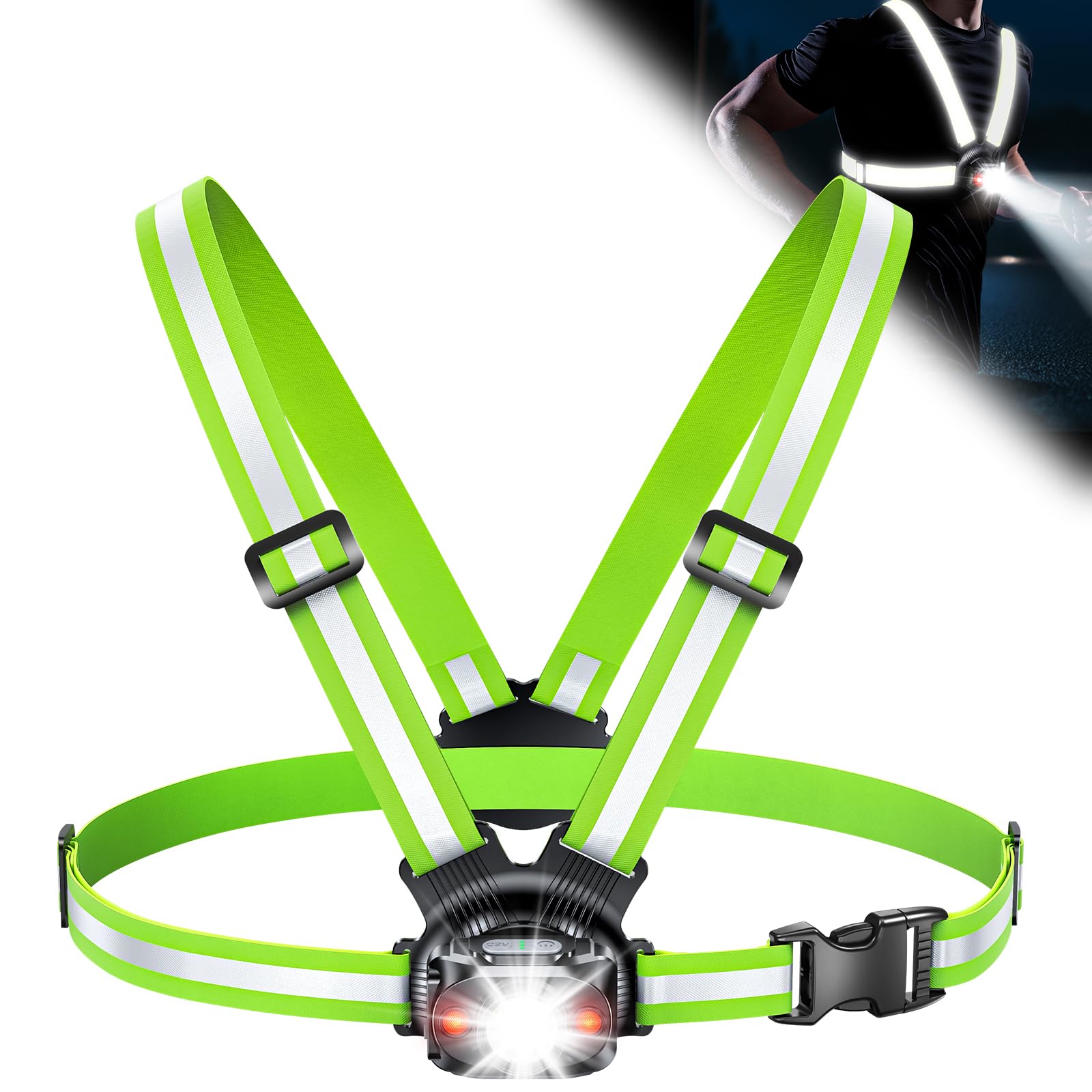
It is a solid choice for runners who want a bright, hands-free light with reflective straps for added visibility.
Pros
- Very bright beam with adjustable angle.
- Stable dual-strap fit and 360° reflectivity.
- Long battery modes and USB-C charging.
Cons
- Shoulder straps can shift for some body shapes.
- Not fully waterproof for heavy downpours (IPX4).
- Single light source may not spread light as widely as multi-LED units.
This chest-mounted light gives a strong, focused beam that helps runners see the path ahead and be seen by others. The tilt feature aims the beam where it matters most without needing to move the head.
The dual-strap design spreads weight and keeps the light stable for many users. Reflective straps and a back warning board help increase visibility from all directions during low-light runs.
Battery life covers short to long outings depending on mode, and charging via USB-C is convenient. The light is bright but uses one main LED, so it throws a focused beam rather than a wide flood of light.
Nomad Clip-On Light
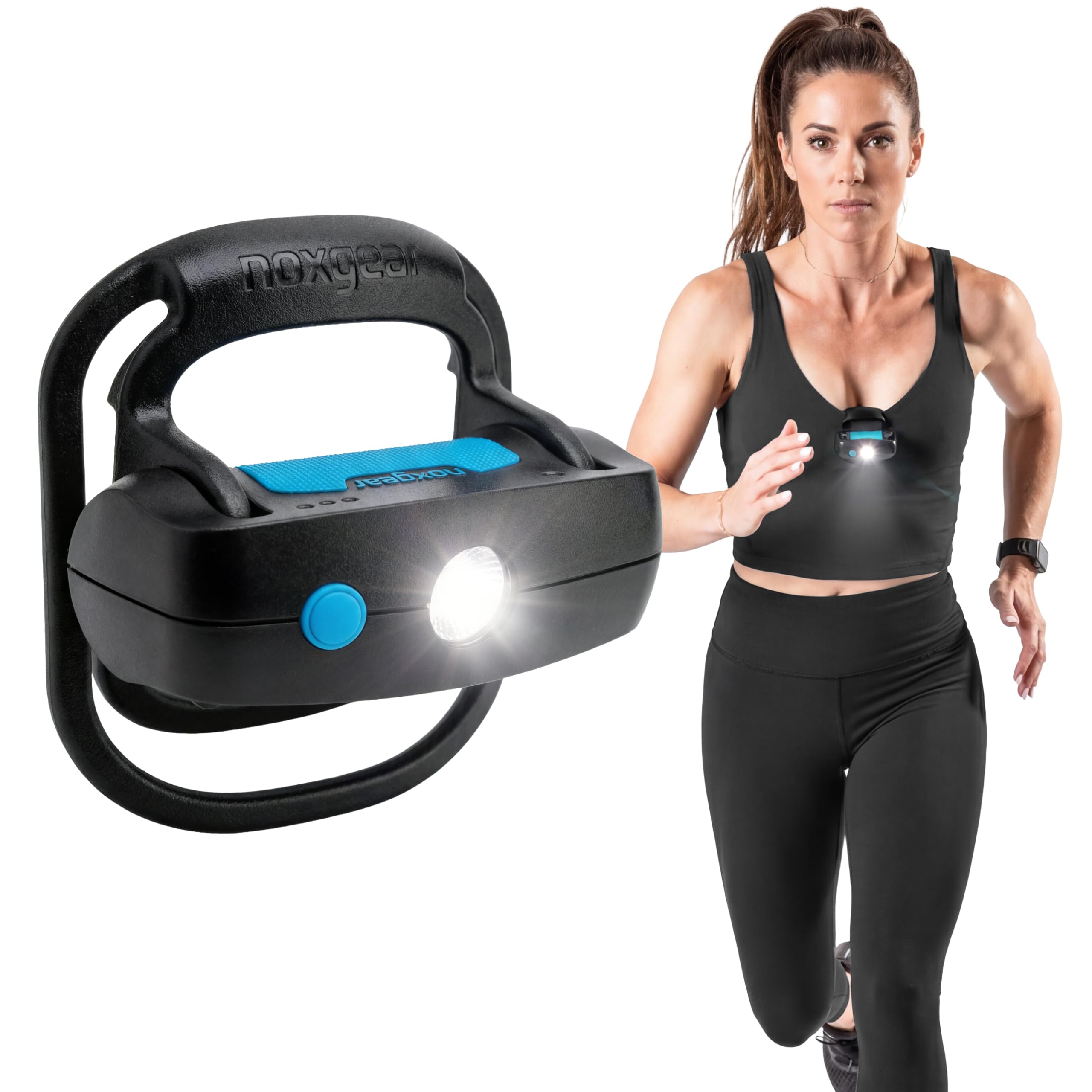
It is a strong option for runners who want a lightweight, hands-free light that stays put and casts a wide, bright beam.
Pros
- Bright 500-lumen beam lights the path and surroundings.
- Rigid clip stays secure and reduces bounce.
- USB-C recharge makes charging simple and fast.
Cons
- Clip can be hard to attach to thin or stretchy fabrics.
- Runtime may be limited on higher brightness settings.
- Not ideal for users who want a headlamp-style beam.
This compact light focuses on steady, hands-free illumination. It clips to a chest strap, waist, pack, or belt so runners can keep their hands free and see the ground ahead.
The beam is wide enough to show footing and nearby obstacles while still letting runners notice surroundings. The clip’s firm hold helps keep the light stable on most gear during movement.
Battery life varies by mode, so heavy users should plan charging around outings. The Nomad works well for early morning runs, dog walks, and trail approaches where a stable, bright clip-on light feels most useful.
Blitzu T2 4-Pack Safety Lights

It is a solid, low-cost option for runners who want simple, clip-on visibility in low light.
Pros
- Bright and easy to see from a distance
- Includes extra batteries and mounting straps
- Lightweight and simple to attach
Cons
- Clip or strap can loosen in some uses
- Plastic build may feel cheap to some users
- Not a high-tech or rechargeable solution
These small lights give clear visibility with three modes: steady, flash, and strobe. They come ready to use with batteries installed and extras included, so they work right out of the box.
They weigh very little and attach to gear, clothing, or pet collars. That makes them handy for short runs, early-morning walks, or adding a rear marker on a bike or scooter.
Some users report the clip slips in certain positions or the strap needs occasional tightening. Buyers should expect basic, no-frills construction rather than rugged hardware.
Overall, the set offers good value for people who want inexpensive, easy-to-use lights for casual outdoor visibility.
noxgear Tracer2 Vest
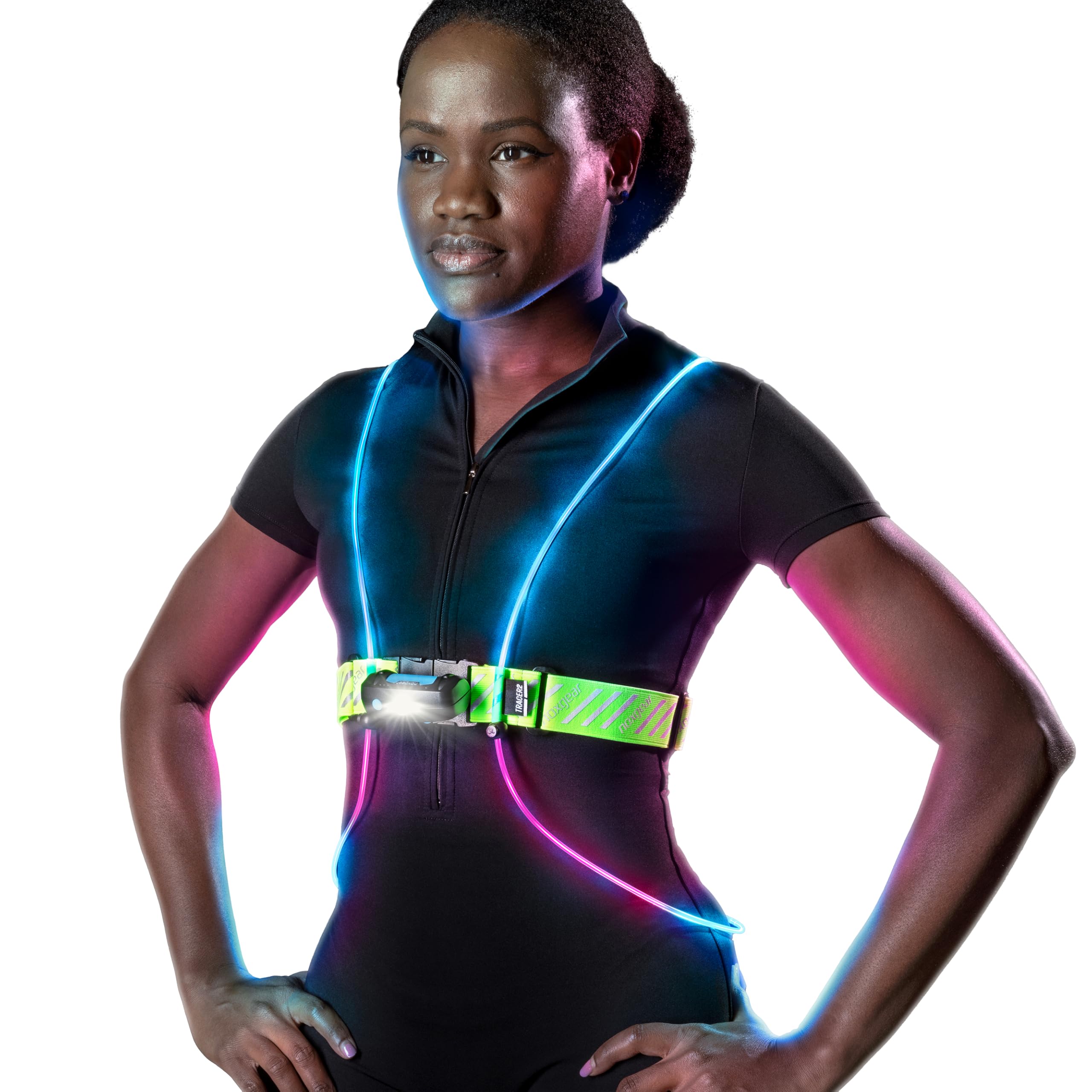
It’s a strong pick for runners who want very high visibility in low light because it pairs bright multicolor lights with a reflective vest design.
Pros
- Very bright, visible from many angles
- Multiple color and flashing modes for attention
- Lightweight and adjustable for different layers
Cons
- May draw a lot of attention in crowded areas
- Pricier than basic reflective gear
- Needs recharging after heavy use
The Tracer2 uses fiber optic cables and LED lights that wrap around the torso for near 360-degree visibility. The X-shaped light layout aims to make the wearer visible from over a quarter mile in all directions.
Its fabric is light and breathable so it sits comfortably over T‑shirts or over winter jackets. The elastic straps let users tighten the fit to reduce bounce during runs.
The vest offers many solid colors and several flashing patterns that are easy to change with a button. That versatility helps signal drivers and other people in traffic situations.
Some users will like the attention it brings, while others may find the brightness too much for crowded sidewalks. It charges via USB and needs topping up if used nightly for long sessions.
Find it on Amazon: noxgear Tracer2 Multicolor Light Up and Reflective Running Vest
Fenix HL18R-T V2.0

It is a strong, lightweight running headlamp that fits trails and long runs thanks to high brightness, multiple light tones, and flexible power options.
Pros
- Very bright with white and warm beams.
- Lightweight and stable on the head.
- Rechargeable via USB-C or run on AAA batteries.
Cons
- High output can drain battery faster on max modes.
- Multiple modes add complexity for some users.
- Not fully submersible despite good water resistance.
The lamp gives runners lots of light choices. White modes help see far ahead and warm white feels gentler on the eyes at dawn or dusk.
Its weight and secure fit suit moving fast on trails. The tightening dial keeps the beam steady and the headband stays comfortable during long runs.
Battery options make it flexible for travel and events. A built-in USB-C recharge works for regular use while AAA compatibility helps when swapping cells on remote outings.
Overall, it balances power, weight, and durability for trail runners who want a versatile headlamp without carrying extra gear.
Apace Vision Compact Safety Lights (2-Pack)

It is a solid buy for runners or dog walkers who want lightweight, very visible lights that clip on easily and run for many hours on replaceable batteries.
Pros
- Extremely lightweight and small, easy to wear without feeling bulky.
- Very bright with three modes (steady, slow flash, fast flash) so drivers notice the user.
- Comes with extra batteries and simple mounting extras for multiple uses.
Cons
- Not rechargeable — requires CR2032 batteries that must be replaced.
- Clip or mount can feel basic on rough gear and might shift with heavy movement.
- Plastic housing is thin; may show wear if dropped often.
The lights are tiny and light enough that most users barely notice them while running. They offer clear, bright output in multiple modes so a person can pick steady or flashing to match the situation.
The package includes spare batteries and basic straps, which helps when using the lights on shoes, belts, backpacks, or pet collars. The long battery life listed makes them practical for regular evening runs or walks.
These are not USB rechargeable, so buyers should plan to keep spare CR2032 cells on hand. The case and clip are adequate for routine use but could wear if frequently yanked or dropped.
FlipBelt Night Running Light

It is a good pick for runners who want a hands-free, waist-level light that shines on the ground and stays steady while moving.
Pros
- Sits on the hips to reduce bounce and glare.
- Bright output with multiple modes and long runtime.
- Waterproof casing and USB recharge make it low-maintenance.
Cons
- Designed mainly for FlipBelt pockets, so fit may be limited.
- Higher price than some basic clip-on lights.
- Limited to three simple light modes (no advanced beam controls).
The FlipBelt Night Running Light aims to solve two common problems: bouncing headlamps and blinding reflections. It mounts into FlipBelt pockets to cast light down the trail, which helps runners see roots and cracks more clearly.
It delivers strong output and several run-time hours on a charge, so users can finish long early-morning or evening sessions without swapping batteries. The IPX6 shell also helps if a sudden shower hits.
This light works best for people who already use a FlipBelt or who prefer a waist-mounted solution over a headlamp. It trades some mounting flexibility for steady, low-angle illumination that keeps glare out of the eyes.
More details and current price on Amazon: FlipBelt Night Running Light
Faxins Clip-On Running Light

It is a solid, budget-friendly clip light for runners who need a bright, lightweight option for visibility and short outings.
Pros
- Very bright for its size.
- Lightweight and easy to clip on.
- USB rechargeable with multiple modes.
Cons
- Battery life can drop after months of use.
- Some users report one unit failing sooner than expected.
- Small size means beam is focused, not wide.
This clip-on light gives clear visibility for early morning or evening runs. It works as a chest, hat, or belt light and fits many outdoor uses like dog walks and bike rides.
The five light modes, including high beam, low beam, flashing colors, and SOS, let users customize how they want to be seen. The 450-lumen peak is strong for a tiny lamp, though the beam stays narrow.
It weighs nearly nothing and clips securely, which makes it easy to forget it is there. Recharge time is short, but long-term battery performance varies between units.
Some buyers liked having a spare or two because one light can lose charge over time. The IPX6 splash protection helps in rain, but heavy submersion is not advised.
Buy the Faxins Clip-On Running Light
Buying Guide
Choosing the right running light starts with where and when it will be used. Consider visibility needs for dawn, dusk, night, and poor weather. Think about the running route—urban or trail—because each needs different beam patterns.
Look for brightness measured in lumens and beam type. Higher lumens mean more light, but beam shape (wide for close visibility, focused for distance) matters too. Check runtime and battery type; longer runtime suits long runs, while rechargeable batteries cut waste and cost.
Weight and comfort affect wearability. Lighter lights are easier to forget on longer runs. Mounting options—headbands, clips, or wearable bands—should stay secure and not bounce.
Durability and weather resistance reduce failure risk. Choose lights with solid housing and an IP rating for rain protection. Easy-to-use controls make mid-run adjustments simpler and safer.
Consider extra features that match needs. Multiple modes (steady, flash, low) save battery and improve visibility in groups. Red or rear-facing lights help with being seen from behind. Quick charging or spare battery availability adds convenience.
Compare cost against expected use and features. Higher cost can mean better build, brighter output, and longer life, but basic models may suffice for casual runners. Read clear spec sheets and test fit when possible.
Editor’s Choice
The Editor’s Choice picks a light that balances brightness, battery life, and comfort. It shines well for early morning and evening runs while staying lightweight on the head or arm.
It offers multiple beam modes and a reliable rechargeable battery. Runners can switch from a wide flood to a focused beam depending on trail or road use.
Build quality is solid and the strap fits securely without rubbing. The light is water-resistant and survives light rain.
Pros:
- Bright and even beam
- Long battery life
- Comfortable fit
Cons:
- A bit heavier than minimal models
- Higher price than basic lights
Testers praised the simple controls and consistent output over long runs. They also noted the USB-C charging port and quick charging time as helpful features.
FAQS
What brightness is best for running lights?
Most runners choose 150–300 lumens for city routes and 300–800 lumens for dim trails. Higher lumens improve visibility but use more battery power.
How long should battery life be?
Aim for at least 4–6 hours on a steady setting for regular runs. Rechargeable lights often list multiple modes; lower modes extend runtime.
Should the light be worn or attached to the bike/vest?
Wearable lights (headlamps or clip-on) keep light aligned with the runner’s view. Bike or vest mounts work well for group runs or when extra reach is needed.
Are flashing modes useful?
Yes. Flashing increases visibility to drivers and cyclists. Use steady beam for seeing the path and flashing for being seen from a distance.
How waterproof must a running light be?
Look for IPX4 or higher for reliable rain protection. IPX7 or IP68 offers full protection for heavy rain or brief submersion.
What features matter most?
Prioritize fit, beam pattern, battery life, and weight. Secondary features include red rear lights, multiple modes, and quick-release mounts.
How to care for a running light?
Keep contacts dry and clean, charge regularly, and store in a cool place. Replace worn straps and check seals after knocks or long use.
Conclusion
Choosing the best running light comes down to safety, comfort, and battery life. Runners should pick a light that fits their typical routes, weather, and how long they run.
A bright beam with a wide spread helps see obstacles. A steady or flashing rear light makes them visible to drivers and cyclists.
Comfort matters for long runs. Lightweight, secure mounts and adjustable straps keep the light from bouncing or rubbing.
Battery life and charging ease affect reliability. Rechargeable lights save money over time, while spare batteries work for long trips.
They should balance brightness with runtime. Higher lumens give more visibility but drain the battery faster.
Here are quick tips to compare options:
- Brightness: choose 100–500+ lumens for trails, 50–200 for roads.
- Beam shape: wide beam for close obstacles, narrow for distance.
- Mount: head, chest, or shoe depending on need.
- Durability: water resistance and solid construction matter.
- Extras: multiple modes and cut-off timers add flexibility.
If budget or features are a concern, prioritize visibility first, then comfort and battery. This order keeps runs safer and more enjoyable.