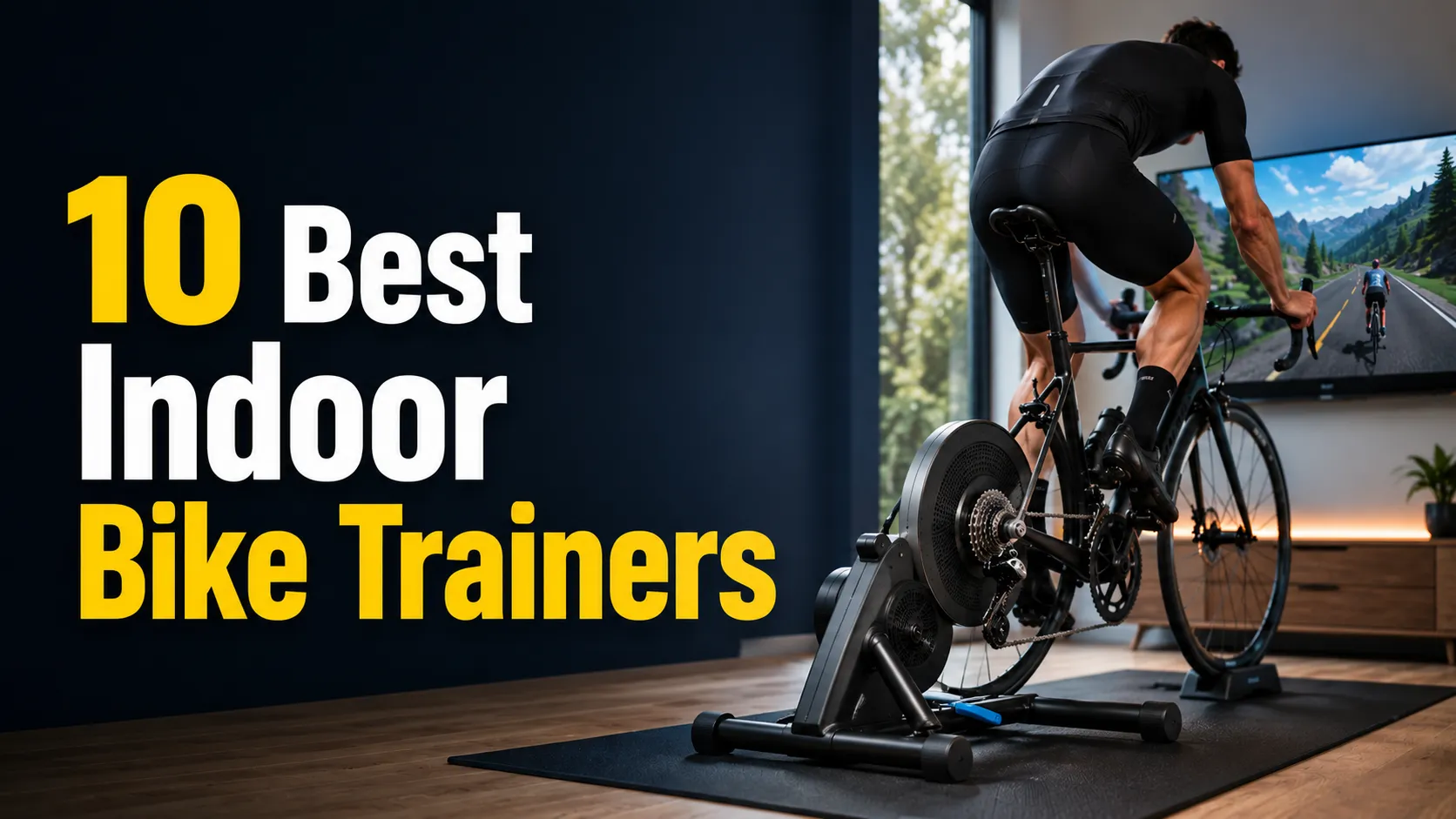
Indoor bike trainers let people ride a real bike inside, turning any road or gravel bike into a stationary workout machine. They range from simple magnetic units that offer steady resistance to smart direct-drive trainers that connect to apps and change resistance automatically. Riders use them for steady cardio, interval sessions, or structured training when weather or time makes outdoor riding hard.
Affiliate disclosure: As an Amazon Associate, ProKingsEdge earns from qualifying purchases. This does not affect the price you pay.
Choosing the right trainer depends on bike compatibility, resistance type, noise level, and smart features. Direct-drive trainers are quieter and more accurate but need removing the bike’s rear wheel, while wheel-on trainers are simpler and cheaper but can be louder and less consistent. Match the trainer to the bike, training goals, and home setup to get the best mix of accuracy, noise, and convenience.
10 Best Indoor Bike Trainers
Below is the full list of the best indoor bike trainers. It covers smart and basic models that fit different budgets and training needs, so readers can pick the right trainer for their goals.
Sportneer Turbo Trainer

It is a solid, budget-friendly trainer that fits most road and mountain bikes and offers quiet, adjustable resistance for easy home workouts.
Pros
- Fits many wheel sizes and has a quick-release skewer for fast setup.
- Six resistance levels let users change workout intensity quickly.
- Stable frame with anti-slip feet keeps the bike steady during rides.
Cons
- Can be louder with knobby or mountain tires than with slick road tires.
- Assembly instructions are basic and may require some patience.
- Not as smooth or feature-rich as expensive smart trainers.
This trainer works well for riders who want a simple, reliable stand without smart features. It suits people who need a sturdy platform for steady indoor rides and basic interval work.
The resistance remote mounts on the bar for quick changes, which helps keep workouts flowing. The wide base and adjustable feet reduce wobble on uneven floors and improve rider confidence.
Users should swap to slick road tires for a quieter ride and better feel. It does not connect to apps or change resistance automatically, so expect manual control only.
CXWXC Bike Trainer

It is a solid budget trainer for basic indoor rides but it can be noisy and not as smooth as pricier smart trainers.
Pros
- Good value for money and fits many wheel sizes.
- Sturdy, foldable frame that stores easily.
- Six resistance levels with remote cable control.
Cons
- Can be loud, especially with knobby tires.
- Resistance and feel are basic compared to smart trainers.
- Some units may need minor adjustment for perfect alignment.
The trainer works with 26–29″ and 700C wheels and comes with a quick release skewer and riser block. It folds for storage and claims a strong frame that supports heavier riders.
Users note it gives a solid workout and is easy to set up from the included guide and tools. The magnetic resistance offers six quick settings, but it does not simulate road feel the way high-end smart trainers do.
Noise can be an issue, especially with mountain bike tires; swapping to smoother tires or placing a mat underneath reduces sound. Customer support is available by email for setup help and problems.
ThinkRider X2Max

It is a solid budget smart trainer for riders who want quiet, accurate power and software compatibility without a lot of extras.
Pros
- Quiet operation that won’t bother nearby rooms.
- Strong software compatibility (BLE and ANT+).
- Accurate power readings with low error margin.
Cons
- Documentation and app support can be sparse.
- May need a bike shop for tricky setups or certain bikes.
- Heavier than some compact trainers.
The X2Max uses electromagnetic resistance and a sturdy I-beam frame to keep the bike stable during hard efforts. It simulates up to an 18% grade and links to Zwift, Rouvy, and other platforms, so virtual climbs feel closer to real riding.
Riders who value measured power and low noise will like this trainer. Reviews mention smooth Bluetooth pairing and steady operation after setup, though some buyers found the instructions thin or needed help mounting certain bikes.
This model aims for reliable indoor training at a lower price than many direct-drive units. It suits road and mountain bikes and supports steady, long-term use without loud fan or wheel noise.
Wahoo KICKR CORE 2
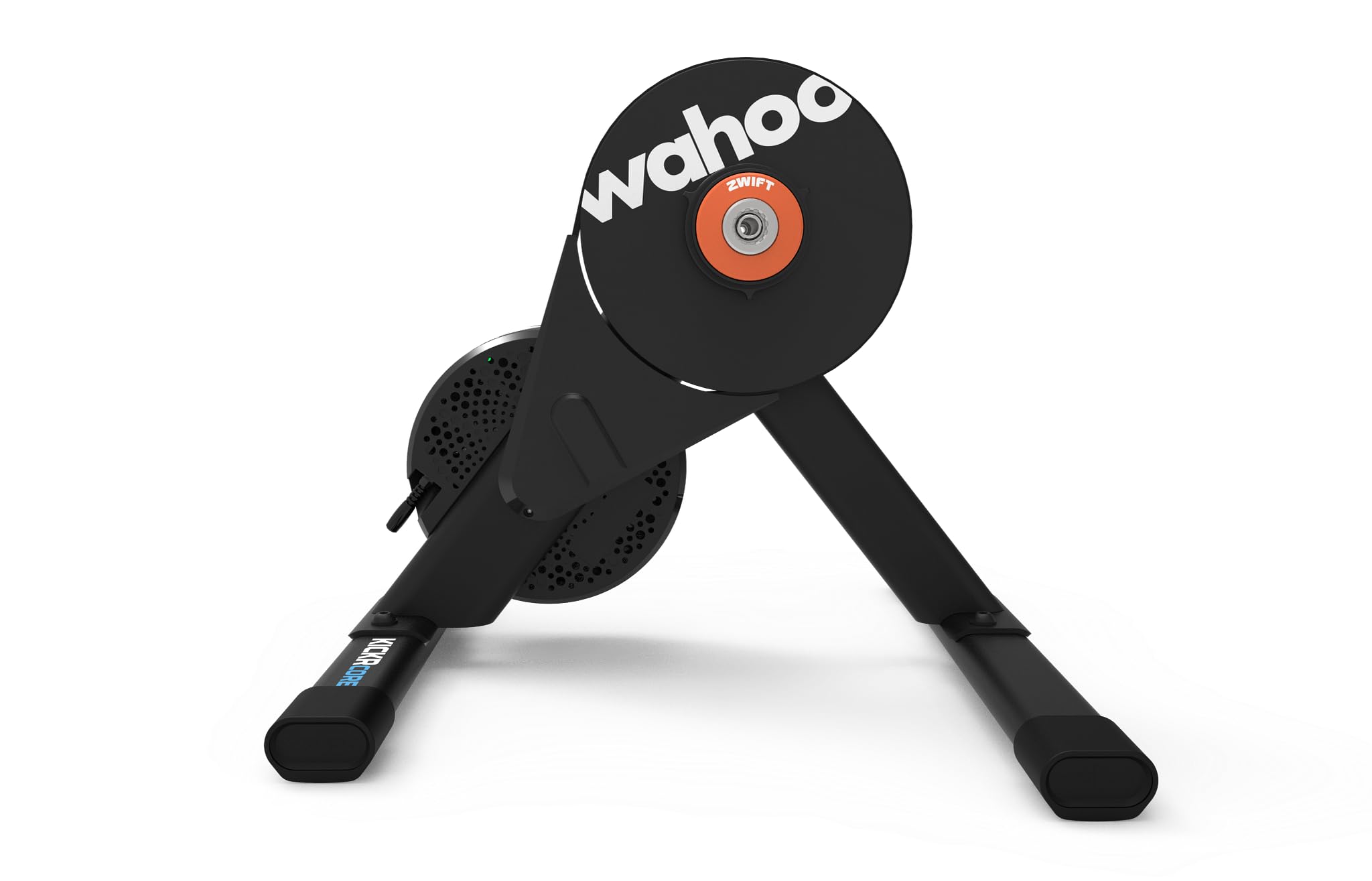
It is a strong choice for riders who want a stable, smart trainer that links well with Zwift and other apps.
Pros
- Smooth, road-like resistance for realistic rides.
- Simple setup and stable frame that stays steady during hard efforts.
- Built-in WiFi and smart features for easy app pairing and updates.
Cons
- Virtual shifting and some app controllers can feel awkward at first.
- Only supports 2.4 GHz WiFi which may limit some home networks.
- Heavier and bulkier than basic trainers, so less portable.
The KICKR CORE 2 focuses on giving a consistent ride feel and reliable resistance. It aims to match the road sensation during intervals and steady workouts without adding extra noise.
Connectivity improves with integrated WiFi and app-driven updates, so pairing with Zwift and using the included Cog + Click features works smoothly for most users. Some riders report that virtual shifting takes practice and that certain third-party apps need extra setup.
It comes with adapters and extras to fit many bikes and offers a sturdy platform for serious indoor sessions. The weight and size make it better for a fixed home setup than for frequent moving.
Wahoo KICKR CORE 2
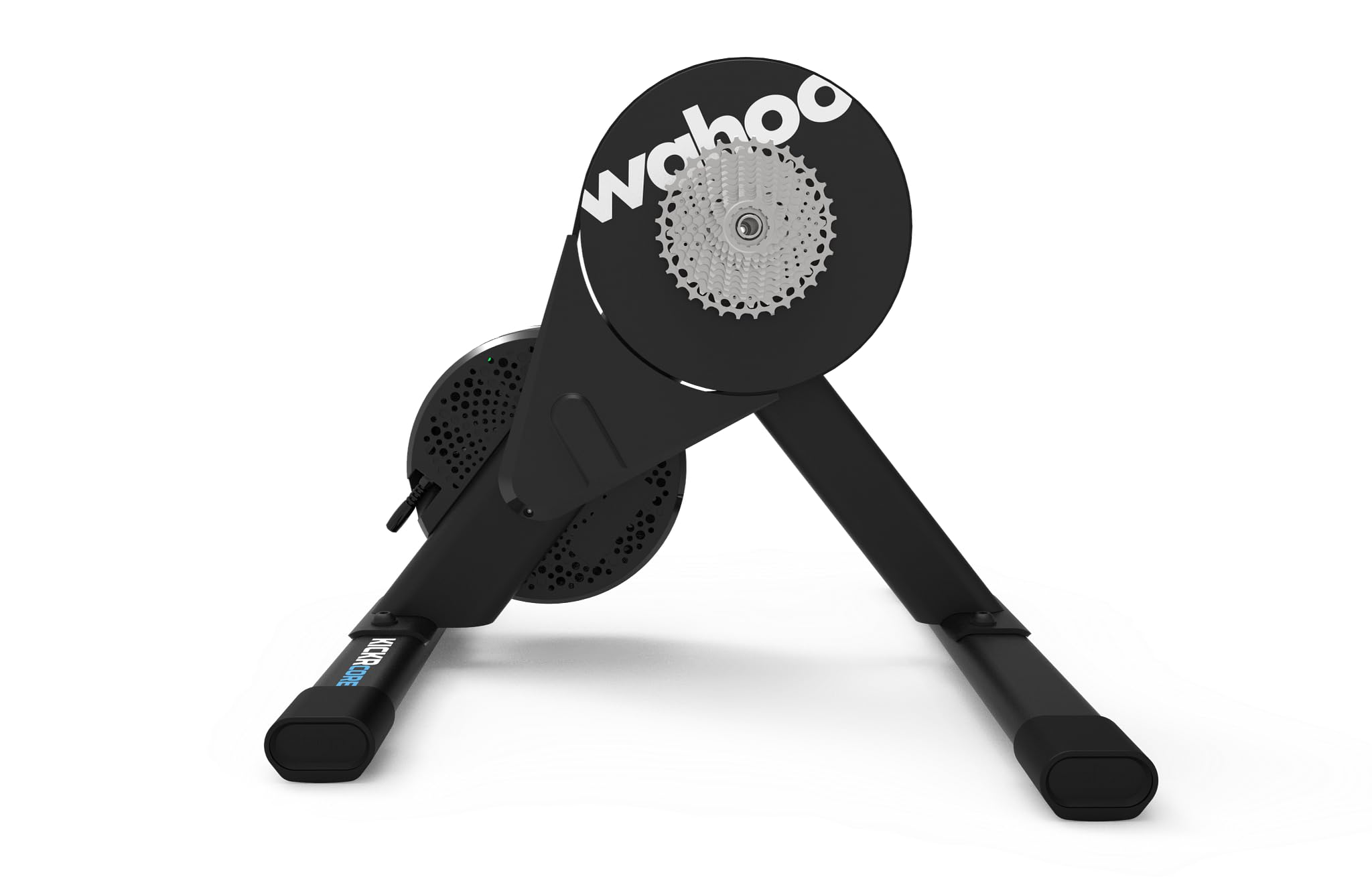
It is a strong choice for riders who want a stable, smart trainer with realistic resistance and easy connectivity.
Pros
- Smooth, road-like resistance for structured workouts
- Faster setup and stronger wireless connections
- Stable frame that handles hard efforts
Cons
- Heavier and bulkier than simple wheel-on trainers
- Higher price than basic models
- May need a different cassette for older bikes
The KICKR CORE 2 focuses on reliable power delivery and a realistic ride feel. It uses a heavy flywheel and magnetic resistance to mimic outdoor riding, which helps with interval training and simulated climbs.
Connectivity is a clear plus. Built-in Wi‑Fi and Bluetooth let apps pair quickly and receive updates, so it works well with Zwift, Rouvy, and other training platforms.
Setup aims to be simpler than past models, but some riders still report getting help for initial installation. It comes with an 11-speed cassette version, so users with different drivetrains should check compatibility before ordering.
Garmin Antares Rollers

It is a solid choice for riders who want a simple, no-power rollers setup that improves balance and cadence.
Pros
- Keeps the bike centered for stable riding.
- No power or plugs needed; low upkeep.
- Folds small for easier storage.
Cons
- Rollers require more skill than a trainer.
- No electronic resistance or power data.
- May feel less realistic for high-intensity efforts.
These rollers focus on smooth spinning and natural pedal feel. The tapered rollers help keep the wheel aligned so the rider can work on balance and cadence without constant corrections.
It folds down flat, which helps when space is tight. Riders who want simple, low-maintenance gear will like that no electricity or regular servicing is needed.
Expect a basic, durable frame that fits a wide range of wheel sizes. Those who need structured workouts, power metrics, or smart trainer features may prefer a different model.
Wahoo KICKR Desk V2
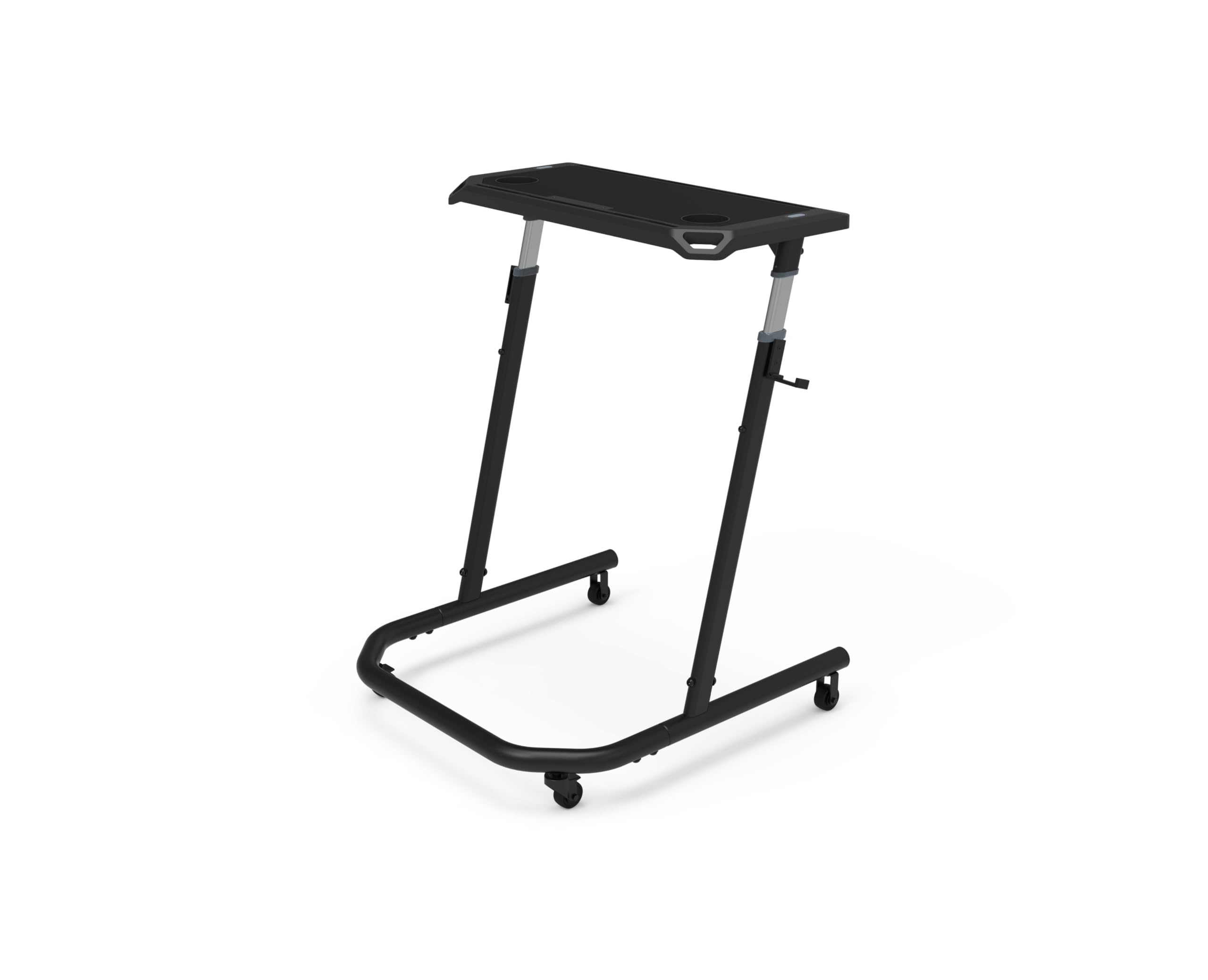
It is a solid, adjustable desk that fits indoor bike trainers and helps keep devices and bottles close while riding.
Pros
- Sturdy steel frame keeps the desk stable.
- Height adjusts easily for sitting, standing, or riding.
- Built-in slots and cable holes keep tech organized.
Cons
- Wheels do not lock, so it can roll when bumped.
- Tablet and phone slots may not fit thicker cases.
- Higher price than basic trainer desks.
This desk suits riders who want a strong, simple platform for a tablet, phone, or bottle while training indoors. It focuses on stability and easy height changes rather than fancy extras.
The steel frame feels rigid and the rubber top helps items stay put during hard efforts. Riders liked moving the desk around doorways and adjusting height without stopping.
Some users noted the wheels lack locks and the device slots can be tight with bulky cases. Buyers should expect a durable, no-frills desk that costs more than cheap alternatives.
Wahoo Kickr Rollr

It is a solid choice for riders who want fast bike swaps and a stable, wheel-on roller trainer for indoor sessions.
Pros
- Very quick to set up and switch bikes.
- Stable and heavy, so it stays put during hard efforts.
- Works with many bikes without removing the wheel.
Cons
- Built-in power and cadence readings can be unreliable.
- Heavier than compact rollers, so harder to move.
- May need an extra speed or cadence sensor for accurate metrics.
The Rollr focuses on ease. Riders report simple setup and fast transitions between bikes, which suits households with multiple bikes or riders who want to jump on quickly.
It feels very stable under load, so it handles sprints and out-of-the-saddle efforts well. That weight helps stability but lowers portability for users who move trainers often.
Accuracy issues with the built-in power and cadence mean buyers who need precise data should plan to add external sensors. Overall, it fits riders who want a durable, user-friendly roller and who accept adding small sensors for exact metrics.
Schwinn IC4

It is a solid mid-range indoor bike for people who want app compatibility and many resistance levels without a big built-in screen.
Pros
- Smooth, quiet ride with many resistance steps
- Works with popular apps like Peloton and Zwift
- Sturdy frame and adjustable seating for different riders
Cons
- Electronic resistance can be glitchy for some users
- No large integrated touchscreen included
- Assembly and some customer support issues reported
The Schwinn IC4 gives a gym-style feel with a compact footprint. It pairs with phones and tablets so riders can use their preferred training apps and virtual courses.
They will like the fine resistance control and the dual-sided pedals that suit both clip-in shoes and regular sneakers. The console shows basic workout stats, and the bike includes small conveniences like a water bottle holder and tablet cradle.
Some buyers reported electronic resistance failures or loose adjustment over time. Others found assembly and warranty support frustrating, so shoppers should weigh the risk if they want a hassle-free, long-term device.
For riders who want app flexibility and a solid build at a fair price, this bike makes sense; those who want a built-in screen or fully mechanical controls might look elsewhere.
Alpcour Trainer Stand

This trainer is a solid buy for someone who wants a simple, quiet, and foldable way to turn a road or mountain bike into an indoor trainer.
Pros
- Quiet magnetic resistance that mimics real riding.
- Folds small and includes a carry bag for storage or travel.
- Stable frame with anti-slip pads and a front wheel riser.
Cons
- Resistance is fixed to six set levels, not fully interactive.
- Some bikes need a different skewer or slight adjustments to fit.
- Can make noise with certain tire types or setups.
The Alpcour stand uses a magnetic flywheel that presses on the rear tire to give six resistance settings. It aims to be quiet and low friction, so the bike and trainer last longer.
Assembly and setup work quickly and without tools thanks to a quick-release lever. The wide base and rubber feet help keep the bike steady during sprints and climbs.
This trainer suits riders who want a low-cost, portable option for indoor workouts. It lacks smart connectivity for apps but covers basic training needs well.
Buying Guide
Choose a trainer that fits the rider’s goals and space. Consider how often they will ride and what type of workouts they want.
Look at resistance type first. Direct-drive offers quieter, smoother rides and accurate power. Wheel-on is cheaper and easier to set up, but it can be louder and less precise.
Check connectivity and compatibility. Ensure the trainer supports common protocols like ANT+ and Bluetooth. Verify the trainer mounts the bike type and cassette size the rider owns.
Evaluate power and accuracy. Higher-rated power and a low error margin give better training data. For interval work, quick response to changes in power matters.
Consider noise and durability. Noise level affects indoor use; heavier, higher-quality units often run quieter. Durable construction reduces maintenance and long-term cost.
Look for smart features and software options. Ability to simulate gradients, ERG mode, and integration with training apps improves training variety. Confirm firmware updates and customer support availability.
Think about portability and storage. Foldable or lighter models suit small spaces. Weight and footprint affect where the trainer can be stored and used.
Compare price versus features. Decide which features are essential and which are optional. Balance budget with the trainer’s accuracy, connectivity, and build quality.
Use a checklist when shopping:
- Resistance type: direct-drive or wheel-on
- Connectivity: ANT+, Bluetooth
- Power accuracy and response
- Noise level and build quality
- Smart features and app compatibility
- Portability and footprint
- Price versus needs
Editor’s Choice
They picked the Tacx Neo 2T as the Editor’s Choice. It balances power accuracy, quiet operation, and smart features that work with most training apps.
The Neo 2T measures power within 1% and simulates road feel well. It stays quiet during intense intervals, which helps when others are home.
It fits both quick-release and thru-axle bikes. Setup is simple, and it auto-calibrates, so riders spend less time fiddling and more time training.
Key features:
- Power accuracy: ±1%
- Noise: Very low at typical training speeds
- Connectivity: ANT+ and Bluetooth for multiple apps
- Compatibility: Quick-release and thru-axle bikes
The unit costs more than basic trainers, but it reduces the need for extra accessories. For cyclists who value precise data and a realistic ride, it offers solid long-term value.
FAQs
What is an indoor bike trainer?
An indoor bike trainer holds a bicycle steady and provides resistance for indoor riding. It lets a rider train at home when outdoor riding is not possible.
How to choose the right trainer?
They should look at resistance type (wheel-on, direct-drive, or smart), noise level, and compatibility with their bike. Budget and training goals also matter.
Are smart trainers worth it?
Smart trainers connect to apps and adjust resistance automatically. They cost more but give more accurate power, structured workouts, and interactive rides.
Is a wheel-on trainer good for beginners?
Yes. Wheel-on trainers are cheaper and simple to set up. They are louder and less accurate than direct-drive models.
How loud are trainers?
Noise depends on type and turf. Direct-drive trainers are typically quieter than wheel-on or fluid trainers. Adding a mat and using a fan reduces noise and heat.
Do they measure power?
Some trainers measure power. Smart and direct-drive trainers usually provide accurate power data. Wheel-on models may estimate power and be less precise.
Do trainers fit all bikes?
Most trainers fit road and mountain bikes with common axle sizes. Adapters may be needed for thru-axles or unusual hubs.
How to maintain a trainer?
Wipe it down after use, check bolts, and keep firmware updated for smart models. Replace worn rollers or tires as needed.
What accessories help?
A trainer mat, front-wheel riser, dedicated trainer tire, cooling fan, and cadence or power meter improve comfort and accuracy.
Conclusion
Choosing the right indoor bike trainer depends on goals, budget, and space. Riders who want quiet, accurate training should pick a smart direct-drive model. Those who need a low-cost option may prefer wheel-on or simple fluid trainers.
Power accuracy and ride feel matter most for serious training. Casual cyclists can focus on ease of use and portability. Compatibility with the rider’s bike and apps reduces setup time and frustration.
Durability and warranty provide peace of mind. A longer warranty often signals better build quality. Serviceable parts and available customer support make maintenance easier.
Consider these quick tips:
- Budget: Wheel-on for low cost; direct-drive for performance.
- Noise: Direct-drive and magnetic trainers are quieter.
- Accuracy: Smart trainers offer the best power data.
- Space: Foldable or compact designs fit small homes.
They should test fit and setup before buying when possible. Retail demos or local bike shops can help confirm fit and noise levels. Prioritizing the features that matter most to the rider will lead to better training and more consistent use.