
Hydration vests help runners carry water, snacks, and essentials without bouncing or weighing them down. They sit close to the body, use soft bottles or reservoirs, and spread weight across the torso so runners can stay hydrated on long runs, trail races, or hot days. A good hydration vest balances storage, comfort, and stability so a runner can carry enough fluid and gear without chafing or sloshing.
Sizes, fit, and storage options vary a lot, so pick a vest that matches the runner’s torso length, typical mileages, and bottle or bladder preference. Look for adjustable straps, breathable fabric, and secure pockets for a phone and snacks. Pay attention to capacity (liters), bottle vs. bladder layout, and how the pack sits while running, because these factors determine comfort and access during a run.
This article tests and compares popular hydration vests on fit, carry options, and stability to find the best choices for different needs.
10 Best Hydration Vests for Running
Below is a curated list of the best hydration vests for running. It helps runners find vests that balance comfort, storage, and easy access to fluids for short runs to long trail outings.
SwiftVest Hydration Running Vest

It is a solid, budget-friendly running vest that keeps essentials handy and stays comfortable on the move.
Pros
- Lots of pockets for phone, gels, and small items.
- Lightweight, breathable fit with reflective details.
- Includes a 500ml soft flask and adjustable straps for a snug fit.
Cons
- Bottle pocket can sag as the flask empties.
- Some buyers reported missing the included flask.
- Limited water capacity for very long runs.
The vest offers six easy-access pockets and a waterproof phone pouch, which helps runners keep gear secure and dry while training. Reflective trim improves visibility for early morning or evening runs without adding much weight.
Materials aim for breathability and low bounce, so it moves with the runner rather than against them. Neoprene padding and adjustable front and side straps help reduce chafing and keep the vest snug.
This works well for 5Ks up to marathon training when a small, light hydration option and organized storage matter more than large water capacity. It suits runners who want simple weather protection and many pockets at a reasonable price.
Zelvot Hydration Vest (Medium-Large)
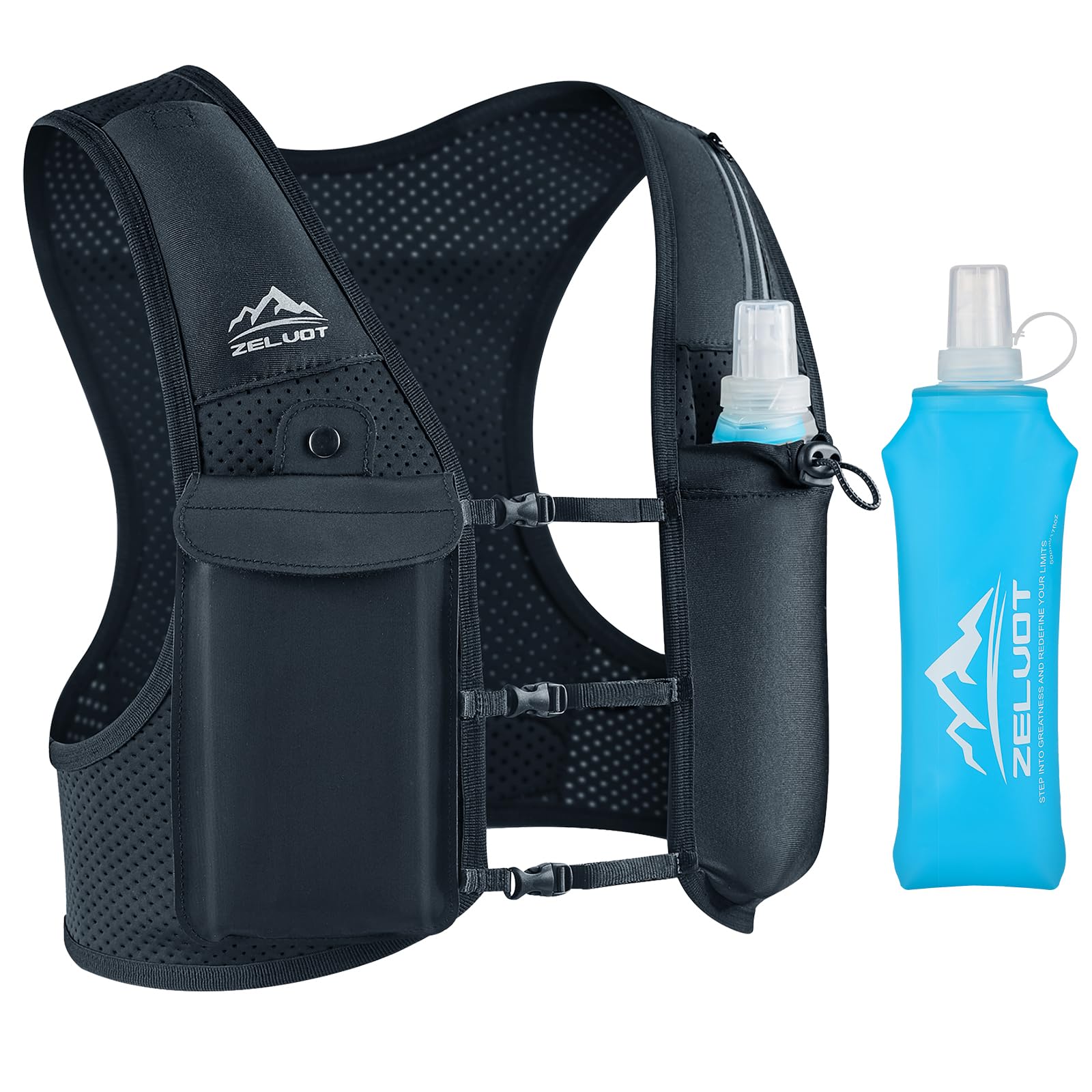
This vest is a solid pick for runners who want a lightweight, hands-free way to carry water and essentials without extra bulk.
Pros
- Very light and breathable, so it stays comfortable on long runs.
- Built-in 500ml soft flask that reduces slosh as you drink.
- Multiple pockets including a waterproof touch phone sleeve for quick access.
Cons
- Limited water capacity for very long runs or hot conditions.
- Some users report occasional quality-control issues with included flask.
- Fit can feel tight for larger chests unless properly adjusted.
It uses thin neoprene with extra ventilation holes to cut weight and wick sweat. The reflective strip adds visibility for early-morning or evening runs.
The front shoulder pockets hold small items and gels within reach, while the rear mesh pocket stores light extras. The phone sleeve lets users operate a touchscreen without removing the device.
Three adjustable chest straps help keep the vest snug and reduce bounce, but sizing matters—pick the right size and tweak the straps before a long run. The 500ml soft flask works for shorter sessions or races where aid stations are frequent.
Osprey Duro 1.5L Hydration Vest — Blue Sky

It is a strong choice for runners who want a snug, well-organized vest with an included 1.5L reservoir.
Pros
- Comfortable, stable fit for long runs
- Lots of accessible pockets for gels, phone, and small gear
- Built-in Hydraulics reservoir with easy access sleeve
Cons
- Reservoir can have a taste that some find off-putting
- Slightly heavier than the lightest competitors
- Soft flasks not included, despite front pockets sized for them
The vest fits close to the body and stays put on technical trail miles and road runs. It offers a tidy layout of pockets so runners can reach nutrition and a phone without stopping.
Pockets sit on the front and sides for quick grabs, and a zippered harness pocket keeps valuables safe. The reservoir sleeve lets users load and route the hose fast, which many will like for refill stops.
Straps include snap-in adjustable chest pieces that add stability without pinching. The pack also has a whistle and attachments for poles if someone needs them for long outings.
Overall, it looks built to last and work well for runs up to a half marathon or longer when paired with extra soft flasks. The 1.5L bladder suits many runners, but those who sweat a lot might want extra bottles.
Osprey Duro 6L
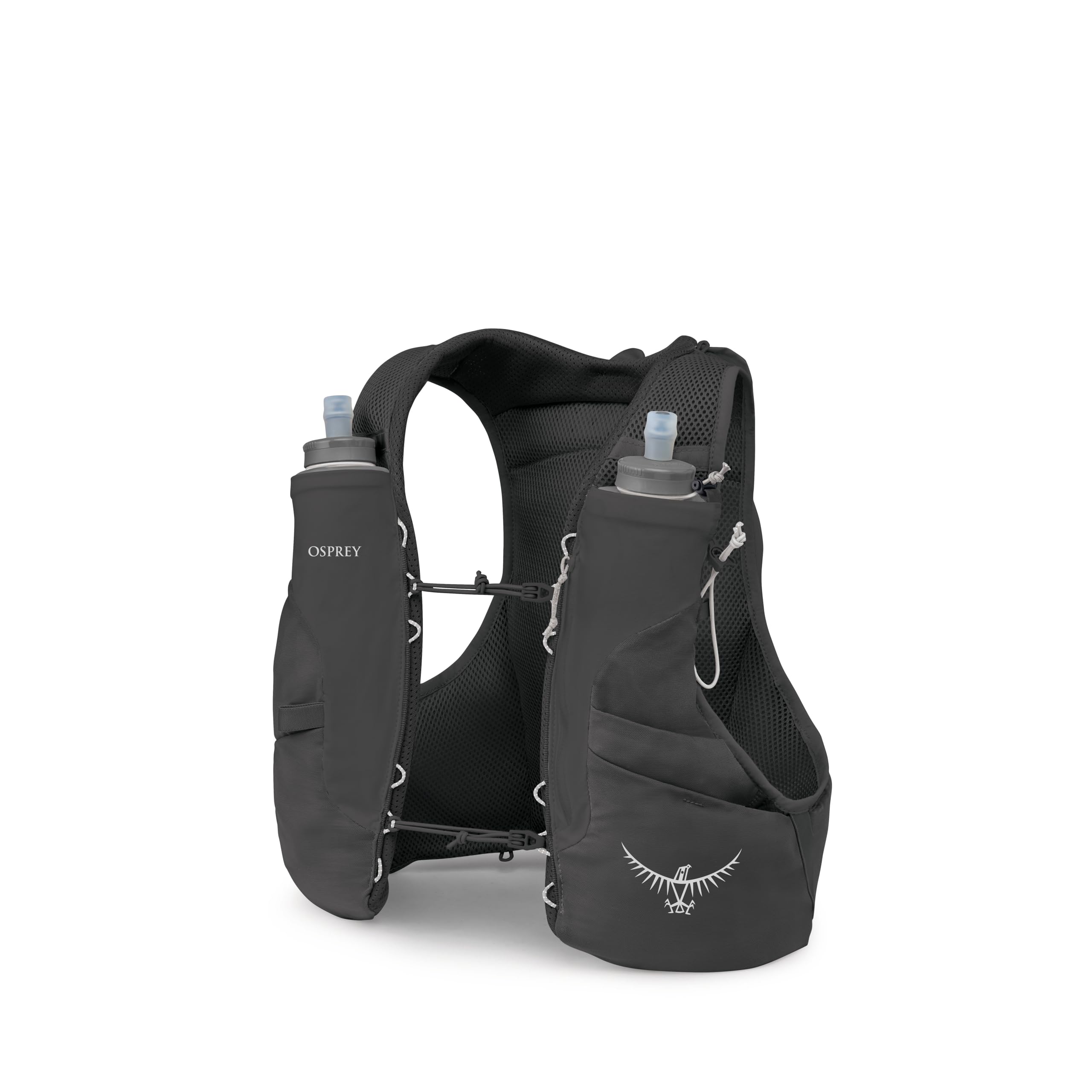
It is a strong option for runners who want a light, stable vest with included soft flasks and organized storage.
Pros
- Lightweight and low-profile for fast runs.
- Built-in soft flasks make hydration easy from the start.
- Multiple pockets and pole carry keep gear tidy.
Cons
- Men’s cut may not fit all body shapes comfortably.
- Reservoir not included for those who want a bladder.
- Small capacity limits long ultramarathon use.
The Duro 6L focuses on a bounce-free fit and quick access to fluids. It uses stretch panels and multiple anchors to hold the flasks snug at the chest, which helps reduce movement on fast trails.
Storage aims to balance weight and function. Front stretch pockets and rear compartments let runners place fuel and layers where they can reach them without taking the vest off. The vertical zip pocket gives a secure spot for small items.
Materials and construction emphasize light weight and durability. The vest meets bluesign product standards, so the fabric choices follow stricter environmental and social criteria during production.
For runners who want a ready-to-use hydration setup with low weight and good pocket organization, the Duro 6L is worth considering. Find it on Amazon: Osprey Duro 6L Men’s Running Hydration Vest with Hydraulics Soft Flasks Medium Black.
Nathan Pinnacle Breeze Vest (Women)
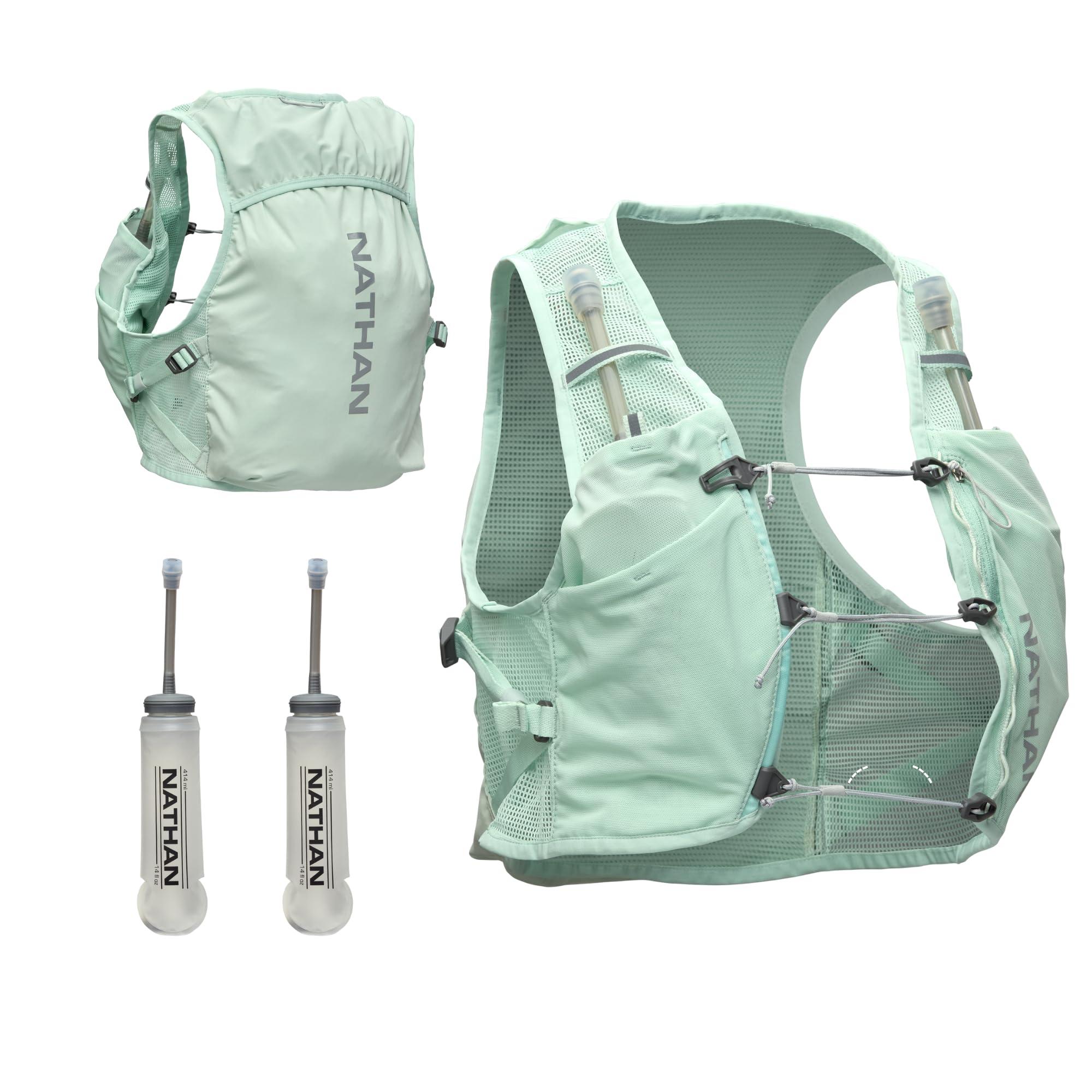
It is a solid choice for runners who want a light, breathable vest with easy-access flasks and a snug, adjustable fit.
Pros
- Very breathable, feels lightweight during runs.
- Includes two soft flasks and room for a small bladder.
- Quick-Fit adjustments help reduce bounce.
Cons
- Back pocket can be hard to reach while wearing.
- Front pockets may feel shallow for larger items.
- Sweat can make items in the rear pocket damp.
The vest uses single-layer mesh and a compression fit to stay close to the body. That design keeps airflow high and cuts bulk, which helps on warm days or long runs.
Two 14oz soft flasks come with the vest and sit in the front pockets for easy sipping. Front access makes fueling simple, but runners who carry larger phones or thick cases might find the pockets snug.
Adjustable sternum sliders and the Quick-Fit system let users micro-tune the fit to reduce bounce. The back pocket fits a small bladder, though reaching items there while moving can be awkward.
Reflective details add visibility for low-light outings. The overall feel aims for a second-skin fit, making it a good pick for fast training runs and shorter trail efforts.
INOXTO Running Hydration Vest

It can be a smart buy for runners who want a very light pack that holds a small bladder and a few essentials.
Pros
- Very lightweight and low-bulk design.
- Multiple pockets for easy access to gels, phone, and small items.
- Adjustable straps and reflective trim for a safer fit.
Cons
- Only 1.5 L main capacity may be small for long runs.
- Some buyers report basic packaging and tangled tube on arrival.
- Minimal padding might feel thin for those who want extra support.
The vest focuses on keeping weight down. Breathable mesh and a slim profile aim to reduce bounce and hot spots during runs.
Storage sits mainly up front and center, so gels and a phone stay within reach. The included 1.5 L bladder covers short to medium outings, and side bottle pockets add flexibility.
This model suits runners who value light gear and simple storage over large water capacity. Those planning very long runs or multi-hour races may prefer a larger pack.
Osprey Duro 1.5L
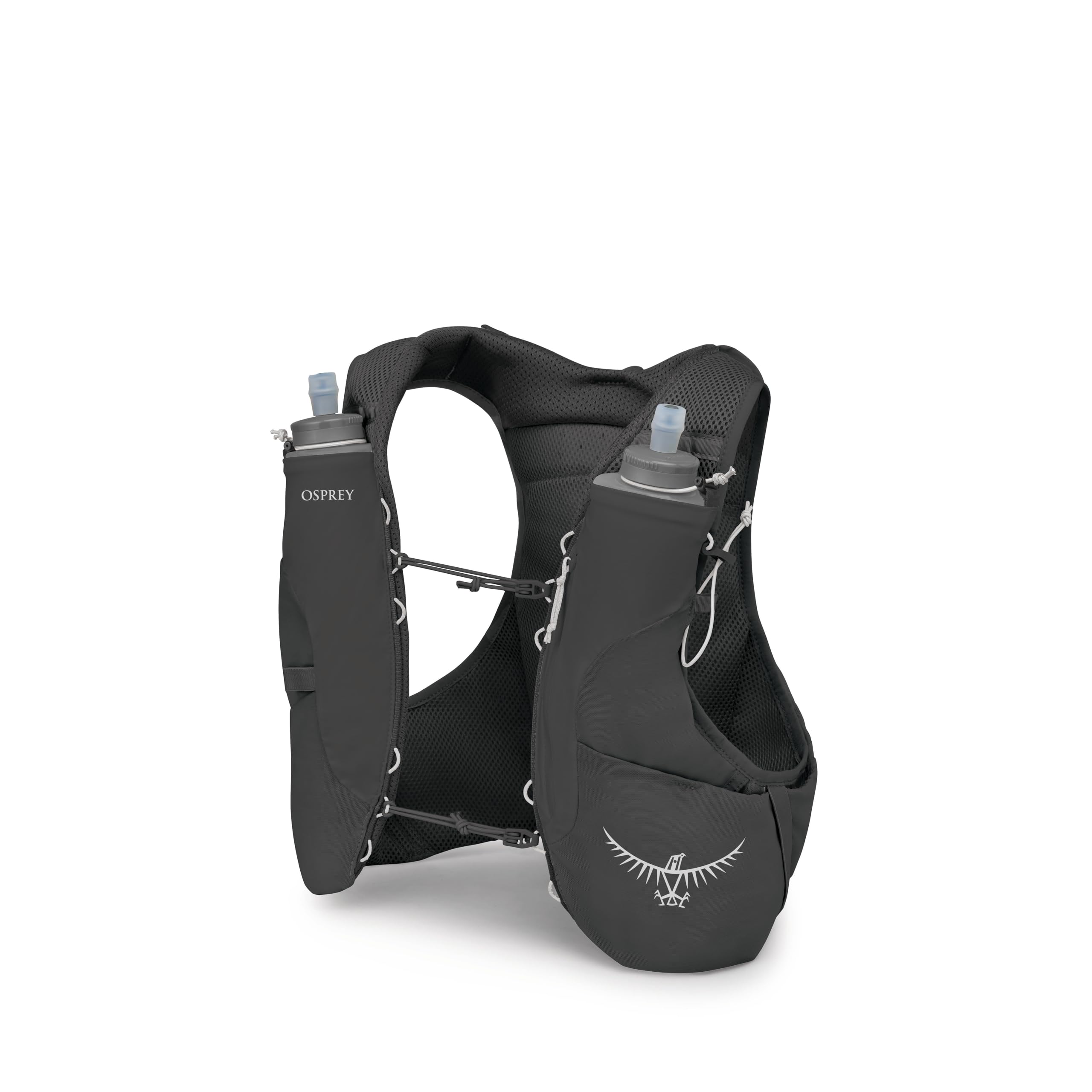
It is a solid choice for runners who want a light, stable vest with included soft flasks for short to medium runs.
Pros
- Lightweight and low-bounce design
- Includes two soft flasks so you can start running right away
- Multiple stretch pockets for easy access to snacks and gels
Cons
- Men’s cut only — may not fit all body shapes
- Limited total fluid capacity for very long runs
- Some runners may prefer a larger main compartment
The Duro 1.5L aims for simple, fast-paced runs. It uses a 360-degree stretch backpanel and dual sternum straps to cut down on bounce. The included 500 mL soft flasks sit in front pockets with stabilizers to keep them steady.
Storage focuses on quick access. Five stretch pockets on the front hold food and supplies, while a vertical-zip pocket stores small items. A zippered rear compartment can take a reservoir if the runner wants to swap flasks for a bladder.
Materials lean toward breathability and light weight. The vest meets bluesign product standards, which shows some attention to material sourcing. Sizing is based on chest measurements, so buyers should check the size chart to find the best fit.
Osprey Dyna 1.5L (Women’s)
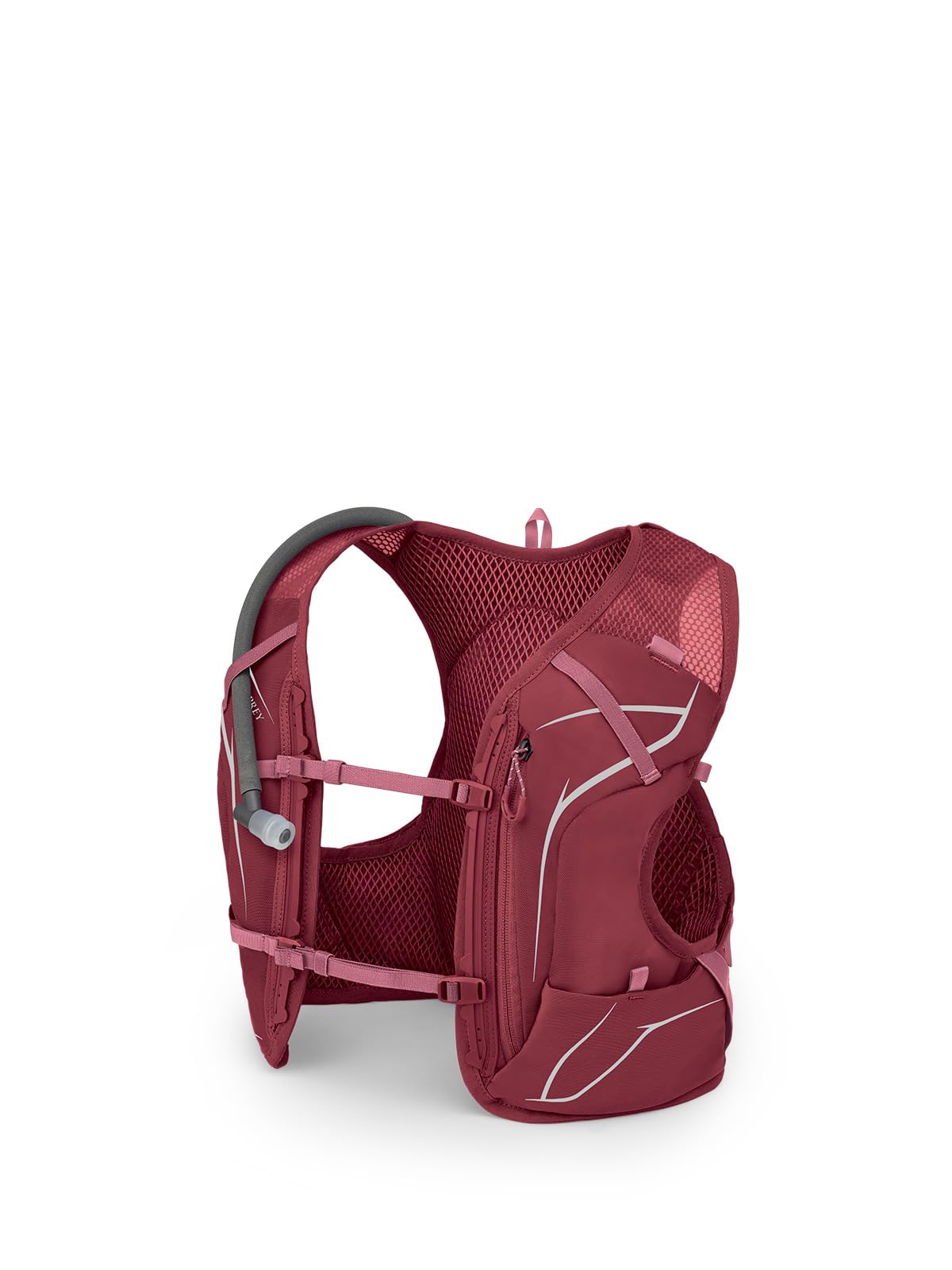
This vest is a solid choice for runners who want a snug, low-bounce fit with included hydration for short to medium runs.
Pros
- Close, stable fit that minimizes bouncing.
- Good pocket layout for gels, phone, and small gear.
- Built-in 1.5L reservoir so hydration is ready to go.
Cons
- Chest straps can feel awkward for some body shapes.
- Reservoir or bladder may develop leaks over time.
- Slight plastic taste reported by a few users.
The Dyna aims for a tight, run-focused fit that keeps weight close to the body. It suits runners who dislike bounce and want easy access to essentials while moving.
Small pockets and a whistle clip help keep gels, keys, and a phone organized. Reflective graphics add visibility for early morning or evening runs.
Sizing can be tricky; some wearers find chest straps sit oddly, so try different adjustments or sizes. A few reviews mention bladder issues after months of use, so check the reservoir and seams before long outings.
Overall, it fits runners who prioritize stability and practical pocketing over a roomy carry capacity. Consider sizing up if planning to layer or if chest strap fit feels tight.
Osprey Dyna 6L (Women) — Kakio Pink
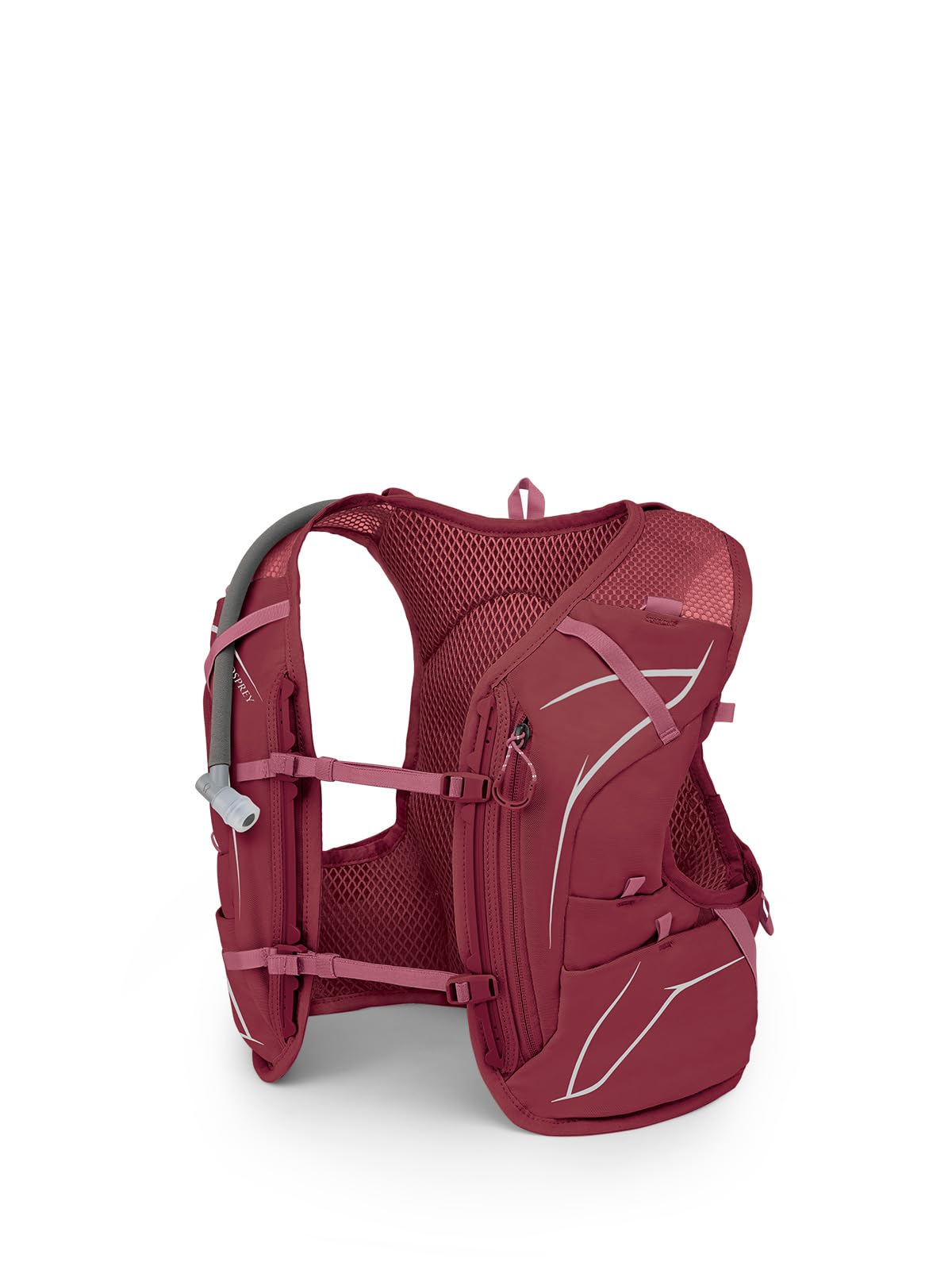
It’s a strong choice for runners who want a light, close-fitting vest with an included 1.5 L reservoir and smart pocketing.
Pros
- Secure, bounce-free fit for steady running
- Good pocket layout for gels, phone, and small gear
- Includes Hydraulics reservoir so it’s ready to go
Cons
- Fit can feel high on the torso for some users
- Limited shoulder adjustment may affect fit for certain bodies
- Back pockets are breathable, not waterproof
The Dyna looks and feels like a purpose-built running vest. It hugs the body to reduce bounce and keeps weight close to the spine. Reflective graphics add visibility for low-light outings.
Storage focuses on small, fast-access items. Front pockets let runners grab gels or a phone without stopping. The rear stash can hold extra layers and the included 1.5 L reservoir covers most day runs.
Comfort generally rates well across reviews, with many noting low chafe and light weight. Size can run a bit small and the fit may sit higher than some expect, so checking sizing before buying helps.
Osprey Dyna 6L Women’s Running Hydration Vest with Hydraulics Reservoir Large Kakio Pink
Zelvot Running Vest (M/L)
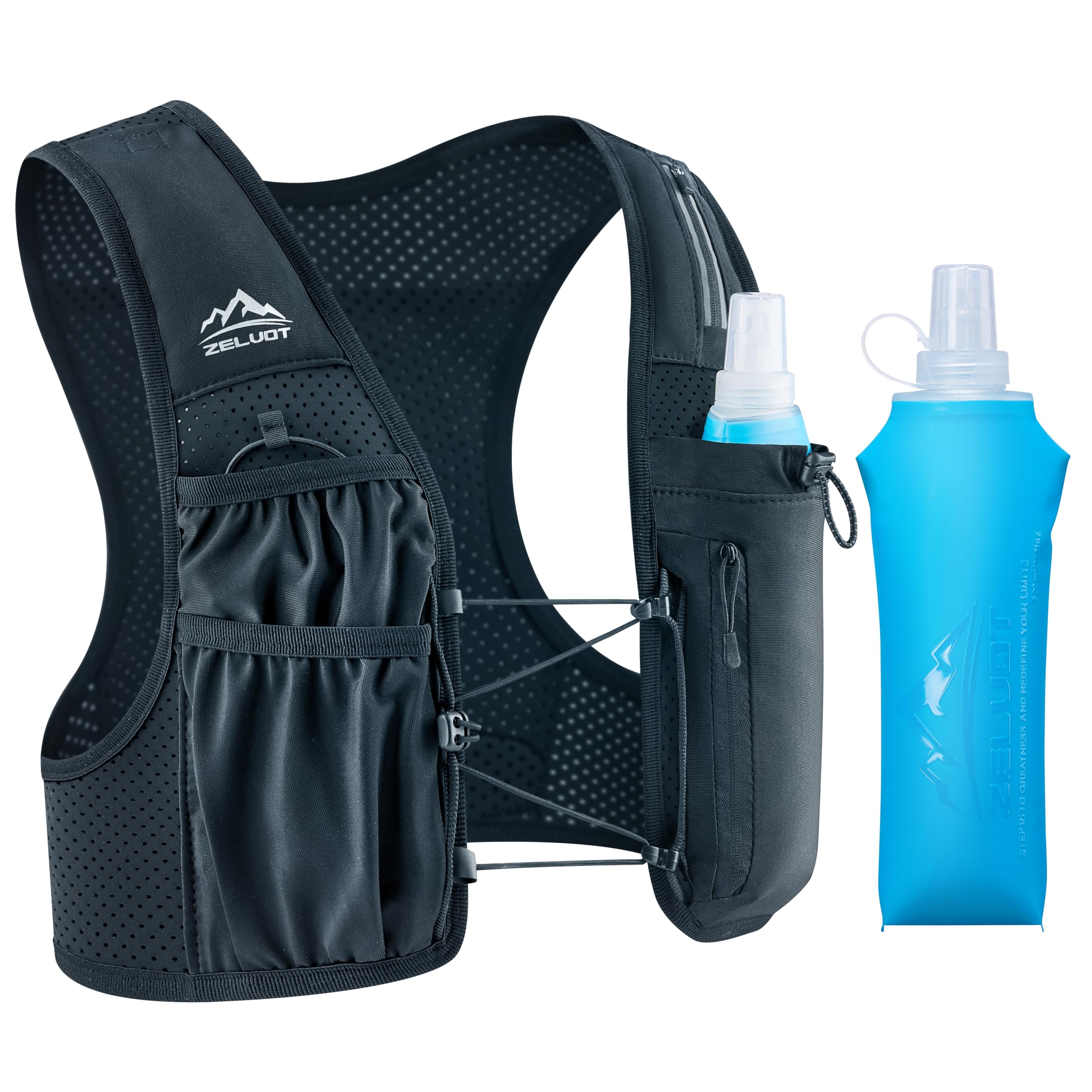
It is a solid choice for runners who want a lightweight, well-ventilated vest with roomy pockets and steady hydration.
Pros
- Very light and breathable, so it feels barely there on runs.
- Lots of front and back pockets for gels, phone, and small gear.
- Soft 500ml flask that shrinks to cut sloshing and lets hands-free sipping.
Cons
- Sizing can be tricky; some may need to size up for a comfortable fit.
- Only one soft flask included, which may be small for long outings.
- Neoprene fit may feel warm on very hot days.
The vest focuses on keeping weight down and airflow up. Many users praise the fit and the way it stays snug without bouncing.
Storage stands out. Multiple pockets and a zippered phone slot make it easy to organize essentials for training and race day.
The soft flask and bungee bottle pockets give quick access to water, though ultrarunners might want larger capacity or a second bottle. Reflective details add a simple safety boost for low-light runs.
Buying Guide
They should start by checking fit and comfort. A vest must sit snug without chafing. Adjustable straps and stretchy fabric help fit different body shapes.
They should consider hydration capacity next. Look for the number of liters the bladder or bottle pockets hold. Consider how long the run will be and how often water stops occur.
They should inspect storage options. Pockets for phones, gels, and keys matter. Elastic front pockets are useful for quick access.
They should weigh the vest and check breathability. Lighter materials reduce strain on long runs. Mesh panels improve airflow and lower sweat buildup.
They should evaluate stability and bounce control. Compression straps and close fit reduce movement. Test while running if possible.
They should look at durability and weather resistance. Tough seams and water-resistant fabric extend life. Replaceable parts like bladders add value.
They should review ease of cleaning and maintenance. Removable bladders and machine-washable fabrics save time. Quick-dry materials prevent odors.
They should compare price against features. A higher price may add useful extras, but basic function matters most. Balance budget with the must-have features for the runner.
Quick feature checklist
| Feature | Why it matters |
|---|---|
| Fit & adjustability | Reduces chafe and bounce |
| Hydration capacity | Matches run distance |
| Storage layout | Holds essentials securely |
| Weight & breathability | Comfort on long runs |
| Stability | Keeps vest steady while moving |
| Durability | Lasts through frequent use |
| Maintenance | Easy to clean and dry |
Editor’s Choice
The editor selects the Salomon ADV Skin 12 as the top pick. It balances carry capacity, comfort, and breathability for most runners.
It fits snugly without bouncing and offers easy access to two soft flasks and a rear reservoir. The stretch front pockets hold gels, phone, and a light jacket.
Materials stay breathable on long runs and dry quickly after washes. Adjustable straps let runners fine-tune the fit for different torso lengths.
Key features at a glance:
- Capacity: 10–12 L total with 1.5–2 L bladder or dual soft flasks
- Weight: Lightweight for the class, around 300–400 g
- Pockets: Multiple front and rear pockets for gear organization
It suits trail and road runners who want a single vest for day and longer training runs. The price is mid-to-high, but the durability and comfort justify the cost for regular users.
FAQS
What is a hydration vest?
A hydration vest is a lightweight pack that holds water and gear for runners. It lets them drink hands-free and carry essentials like gels, keys, and a phone.
How much water should it hold?
Most running vests hold 1–2 liters of water. Choose more if running long distances or in hot weather.
Should it fit tightly?
Yes. A snug fit prevents bouncing and chafing. Adjustable straps help customize the fit for different body shapes.
What materials are best?
Look for breathable mesh and durable nylon or polyester. These materials dry fast and resist wear.
Can it carry other items?
Yes. Many vests have multiple pockets for nutrition, layers, and electronics. Check pocket size if carrying a phone or jacket.
How to clean a hydration bladder?
Rinse after every use and let it air dry. Use a brush and mild soap for deeper cleaning, and store it open to prevent mold.
Is weight important?
Yes. Lighter vests reduce fatigue but may carry less gear. Balance weight with the gear and water needed for the run.
Are vests unisex?
Some are unisex; others have men’s and women’s fits. Women’s vests usually offer different strap and chest placement for comfort.
How to choose the right size?
Measure chest circumference and check the brand’s sizing chart. Try different models to find the best fit and comfort.
Conclusion
Choosing a hydration vest comes down to fit, capacity, and purpose. Runners should match vest size to torso length and look for adjustable straps to prevent bounce.
Lightweight vests work well for fast runs and short races. For long runs, pick a vest with larger water capacity and extra pockets for food and gear.
Comfort matters as much as features. Breathable fabric, padded shoulder straps, and a snug fit reduce chafing and fatigue.
Budget and durability are linked. Higher-priced vests often use tougher materials and better zippers, while budget options can suit casual runners or beginners.
Quick checklist:
- Fit and adjustability
- Water capacity and bottle type
- Storage space for essentials
- Comfort features (padding, breathability)
- Weight and build quality
They should try a vest with the load they plan to carry before committing. A short test run reveals fit issues faster than reading specs.