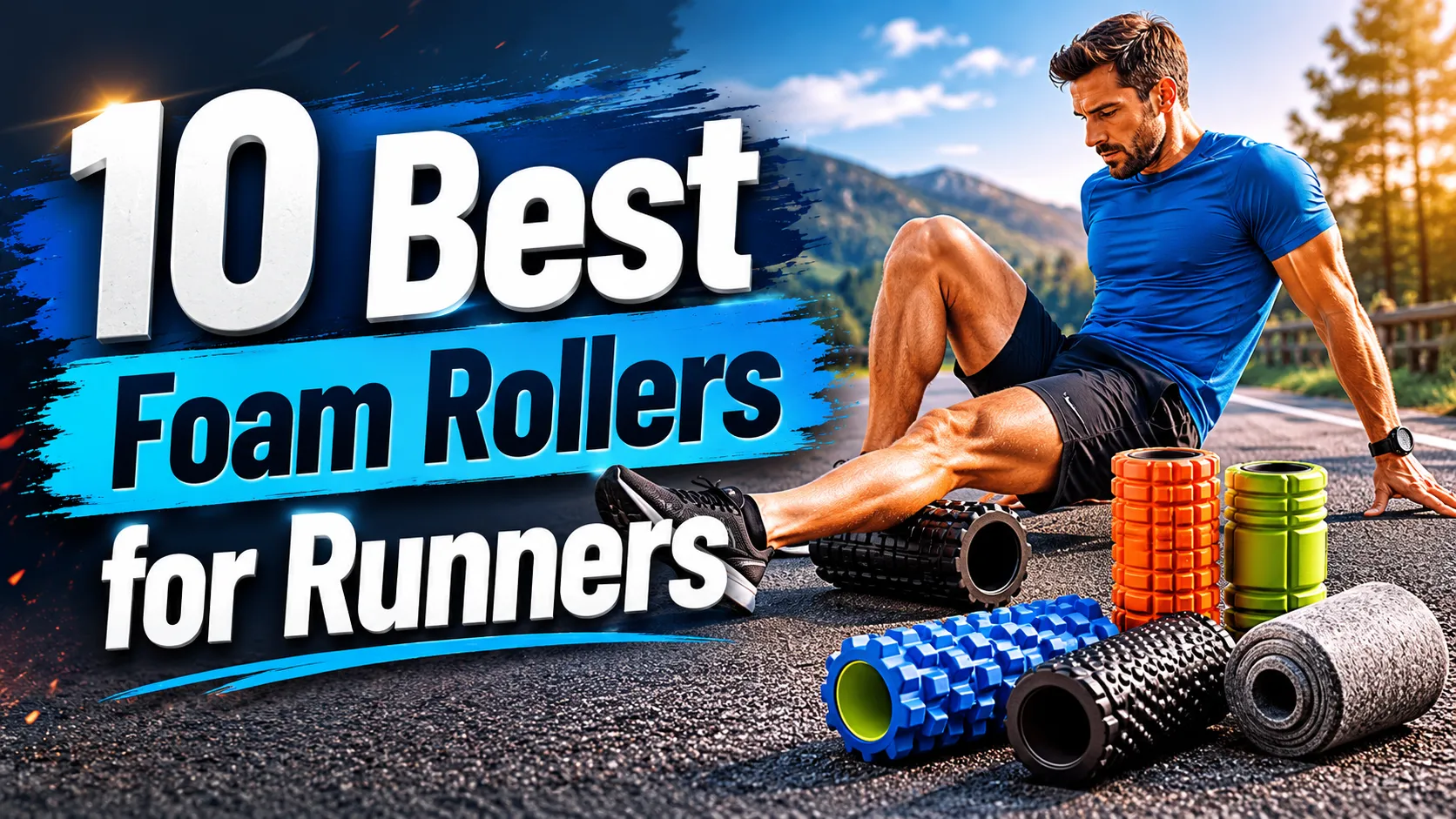
Foam rollers help runners loosen tight muscles, improve blood flow, and speed recovery after hard runs. They come in many shapes and densities, from soft smooth tubes for gentle massage to firm, textured rollers that dig into knots. Runners often use them for calves, quads, hamstrings, IT bands, and glutes, and a good roller can cut soreness and lower injury risk when used correctly.
Choosing the right foam roller means balancing firmness, length, and surface texture for your needs and body size. Short rollers are portable but may not reach all muscle groups; longer, firmer rollers offer full-back support and deeper pressure; textured rollers give targeted release but can feel intense. The most important thing is to pick a roller with the right firmness and length for the runner’s body and pain tolerance, because the wrong choice makes recovery harder, not better. This guide tests popular models and explains which rollers work best for different kinds of runners.
10 Best Foam Rollers for Runners
Below is a concise list of the best foam rollers for runners, chosen for recovery, muscle relief, and durability. Each option suits different needs like deep tissue work, travel, or gentle massage so readers can pick what fits their routine.
TriggerPoint GRID 1.0 (13″)

It is a solid choice for runners who want a firm, durable roller that targets tight muscles and aids recovery.
Pros
- Firm, multi-density surface reaches deep tissue.
- Durable construction keeps shape over time.
- Patterned grid mimics hands for targeted work.
Cons
- Firmer feel may be uncomfortable for very sensitive areas.
- Smaller 13″ length can limit back coverage for some users.
- Higher price than basic smooth rollers.
The GRID uses a hollow core with EVA foam and a raised pattern to give a deeper, more targeted roll than smooth foam rollers. It aims to simulate a therapist’s hands so runners can work knots and tight calves, quads, and glutes with more focus.
It holds its shape after repeated use, which helps maintain consistent pressure and technique. The firm feel helps break up tight spots and may speed muscle recovery by improving blood flow in sore areas.
Some runners who prefer gentler pressure may find it too intense at first. The 13″ size is handy for travel but can feel short for full back sessions, so larger users might want a longer option.
321 Strong Foam Roller (Medium)

It is a solid mid‑firm roller that many runners will buy for easy, effective muscle relief and stretching.
Pros
- Good balance of firm pressure and comfort for sore muscles.
- Textured surface offers targeted massage options.
- Lightweight and durable for home or gym use.
Cons
- Not perfectly round; some find the seams noticeable.
- May feel small for taller users or wide muscle groups.
- Medium firmness might be too gentle for those wanting very deep work.
The patterned surface mimics fingers and thumbs, so it can hit tight spots like calves, glutes, and hamstrings without being harsh. Runners often use it before and after runs to loosen muscles and increase blood flow.
It comes with an eBook guide to show basic routines and techniques. That can help beginners learn safe rolling methods and build a short recovery routine.
Some buyers note the build holds up well over time, while a few say the size and seam marks are drawbacks. Overall, it suits runners who want a practical, easy-to-use roller for regular recovery.
TriggerPoint CORE Foam Roller (12″)

It is a solid, mild-pressure foam roller that works well for runners who want gentle, steady muscle release and easier recovery.
Pros
- Softer outer layer feels comfortable on tender muscles.
- Firm inner core keeps shape and lasts longer than hollow rollers.
- Compact 12″ size fits gym bags and targets many muscle groups.
Cons
- Short length can make back rolling feel less stable for some people.
- Not as aggressive for deep tissue work compared with ridged rollers.
- Lighter weight may slip on slick floors during use.
The roller uses a multi-density grid to give focused pressure without being harsh. Runners with sore calves, quads, and hips often find it easier to use after runs because it feels gentler than very firm models.
Its 12-inch length suits travel and quick warm-ups, but taller users may prefer longer rollers for smoother spine work. The foam stays firm thanks to a solid core, so it keeps working over time instead of softening quickly.
This model fits beginners and people who want a balanced mix of comfort and effectiveness. They can carry it to the gym, use it for pre-run mobility, or add it to cool-down routines to help with circulation and muscle tightness.
RumbleRoller Original (Midsize 22″)
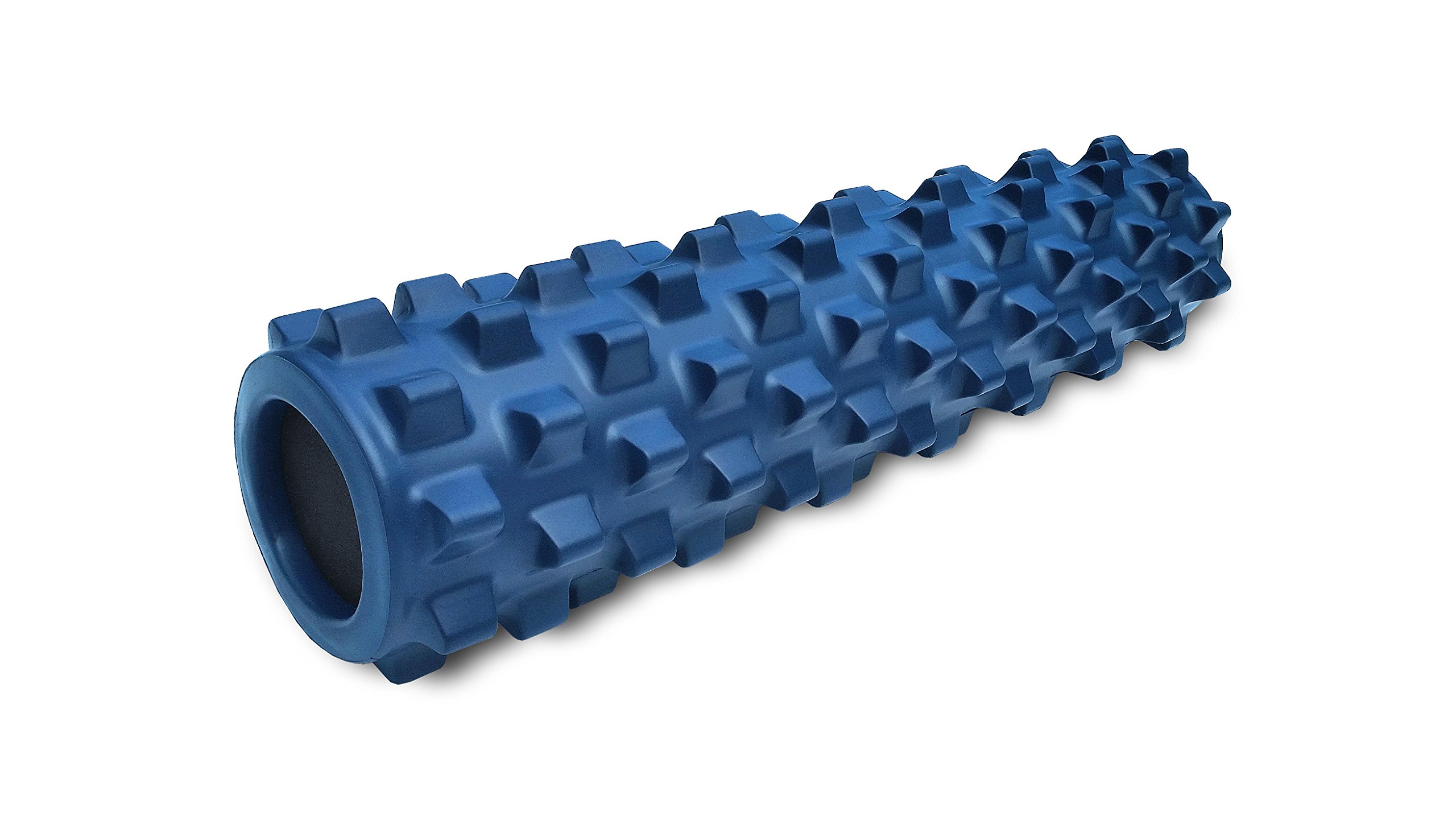
It is a solid choice for runners who want stronger, targeted muscle relief thanks to its textured bumps and medium firmness.
Pros
- Targets tight spots better than smooth rollers
- Comes in sizes for travel or full-body use
- Firm texture can help loosen knots quickly
Cons
- Feels quite intense for sensitive users
- Firmness may take time to get used to
- Pricier than basic foam rollers
The textured knobs aim to dig into sore spots and help free knots left from long runs. Runners looking for deep pressure often find it effective at reaching tight calves, IT bands, and glutes.
Its midsize shape fits most post-run routines and can work for both focused spots and larger muscle groups. The material feels durable, so it should hold up to regular use.
Some people may find the bumps too painful at first and prefer a smoother roller. A gentler approach or a softer model might suit beginners better.
Krightlink Foam Roller (Tangerine)

It is a compact, firm roller that suits runners who want deep pressure and easy transport.
Pros
- Packs firm, targeted pressure for tight muscles.
- Small size makes it easy to carry and store.
- Comes with a mesh bag for travel.
Cons
- Some users report cracking after months of light use.
- Narrow length can make back work less convenient.
- Firmness may feel too intense for sensitive users.
The roller’s triple-grid pattern aims to mimic fingers and thumbs for deeper myofascial release. Runners can use it on calves, quads, hamstrings, and glutes for quick post-run relief.
Its 13-inch length and 5.1-inch diameter keep the device portable. That compact shape works well for legs but may require more repositioning for full back use.
Materials are described as high-density PVC and EVA, which gives firm feel and easy cleaning. A few buyers found the firmness helpful, while others called it too hard or said it cracked after limited use.
The product often fits runners who like intense pressure and need something travel-ready. Those who prefer gentler rolling or wider coverage might choose a longer or softer option instead.
Amazon Basics Foam Roller (24″)

It is a solid, firm foam roller that suits runners who want durable, basic recovery and stretching support at a low price.
Pros
- Very firm and holds shape under pressure
- Lightweight and easy to carry
- Simple to clean and maintain
Cons
- May feel too hard for sensitive or injured muscles
- Narrow diameter can make some moves feel unstable
- No textured surface for deep-tissue massage
The roller gives steady, firm pressure that helps with tight calves, quads, and IT bands after runs. It is best for people who like a hard surface for deep rolling rather than a soft, cushioned feel.
Runners will like the 24-inch length because it covers long muscle groups and works well for back rolling. The smooth surface keeps use straightforward, though it lacks knobs or grooves for targeted pressure.
Buyers who prefer gentler massage or need a softer option for pain should consider a softer or textured roller instead. For a low-cost, durable foam roller that keeps its shape, this Amazon Basics option is a practical choice.
Krightlink 5-in-1 Foam Roller Set

This set is a budget-friendly option for runners who want a compact, varied kit to help with recovery and tight muscles.
Pros
- Offers multiple tools for different muscle needs.
- High-density materials that hold shape.
- Comes with a carry bag for easy transport.
Cons
- Some pieces feel very firm and may be uncomfortable for sensitive areas.
- Durability varies by item; small parts can wear faster.
- Not ideal for users who need softer or extra-wide rollers.
The set includes a hollow foam roller, a massage stick, a massage ball, a stretching strap, and a storage bag. Runners will like the range of tools for calves, quads, hamstrings, and feet.
It uses dense PVC and EVA materials so the main roller keeps its shape under pressure. That firmness helps reach deep knots, though it can be sharp on sore spots.
Portability makes it easy to bring to the gym or a race. The strap and ball add useful options for targeted release, but some pieces may feel too hard or less durable for long-term heavy use.
BORNEW Foam Roller Set

This set is a good buy for runners who want a compact, extra-firm kit to help with recovery and stretching.
Pros
- Offers a full kit for whole-body recovery.
- Extra-firm roller for deep pressure.
- Includes a carry bag for easy transport.
Cons
- Roller is small and very firm for some users.
- Spike ball and foam pieces may feel softer than advertised.
- Some pieces might be smaller than expected.
The kit bundles a 12″ high-density roller with a massage stick, a peanut and spike ball, a plantar ball, strap, guide, and bag. It fits in a gym tote and works for basic warm-ups and post-run cooldowns.
Runners who like strong pressure will appreciate the extra-firm roller and the dense stick for tight calves and IT bands. Those who prefer gentler pressure may find parts too hard or the spike ball too mild.
The set aims to boost blood flow, ease stiffness, and support mobility work. It offers a lot of value for the price, but buyers should expect compact sizes and mixed firmness across items.
Day 1 Fitness Foam Roller (12″)

It is a solid, firm roller that works well for runners who want a compact tool for deep tissue relief and basic mobility work.
Pros
- Very firm for deep pressure on tight muscles
- Lightweight and easy to carry to the gym or travel
- Multiple size and color options to fit different routines
Cons
- Firmness can feel too intense for beginners or sore spots
- Small 12″ length limits use for full-back rolling
- Surface is plain; not ideal for targeted trigger-point textures
Runners who need firm pressure to break up tight calves, shins, and hamstrings will find this roller useful. It gives a strong, consistent feel that helps reach deep tissue without compressing under body weight.
Physical therapists and athletes often prefer denser foam for myofascial release, and this model fits that need. Its light weight and 12″ size make it simple to toss in a bag, but the short length means it won’t cover the whole spine in one pass.
People new to foam rolling might want a softer option or a larger roller for back work. Still, for targeted leg work and travel use, it serves as a durable, straightforward choice.
Buy on Amazon: Day 1 Fitness High Density Muscle Foam Roller – 12″ Blue Speckled
ProsourceFit 36″ High-Density Foam Roller

This roller is a good buy for runners who want a firm, travel-friendly tool to loosen tight muscles and aid recovery.
Pros
- Very firm for deep pressure on tight spots
- Lightweight and easy to carry
- Multiple sizes and colors available
Cons
- Too hard for anyone who prefers gentle pressure
- Not textured for targeted trigger-point work
- 300 lb weight limit may concern some heavier users
The high-density foam gives strong, steady support for rolling quads, calves, and the IT band. It helps runners reach deep knots and can feel more effective than softer rollers.
Smaller sizes make it simple to take to races or training trips. The firm surface also keeps shape after regular use, so it should last a long time.
Some users may find the intensity uncomfortable at first. Runners seeking gentler release should look for softer foam or a textured roller for varied pressure.
Buying Guide
Choose the roller by matching it to the runner’s needs. Consider experience level first. Beginners often prefer softer, smooth rollers for gentle pressure. Experienced runners may want firmer or textured rollers for deeper work.
Look at size and shape. Longer rollers work well for back and full-leg use. Shorter rollers are easier to carry and target calves and glutes. Diameter affects intensity: larger diameters give gentler pressure, smaller ones increase intensity.
Check firmness and surface texture. Firm foam or hollow-core rollers give stronger pressure. Soft foam reduces pain during initial use. Textured surfaces can help break up knots, but they may be painful on sore muscles.
Assess material and durability. EVA and high-density polyethylene last longer than low-density foams. A hollow core can add durability and extra intensity. Make sure seams are smooth to avoid discomfort.
Consider portability and weight. Runners who travel need lighter, compact rollers. Heavier, sturdier rollers are fine for home use. Some rollers fit into gym bags; others are bulky but more stable.
Evaluate additional features. Options like vibration, removable covers, or dual-density layers change how it feels. Vibration adds a massage effect; covers protect the foam. Decide which features will actually get used.
Use this quick checklist:
- Purpose: recovery, pre-run warm-up, deep tissue work
- Firmness: soft, medium, firm
- Size: length and diameter
- Material: density and core type
- Portability: weight and shape
- Extra features: vibration, covers, textures
Editor’s Choice
The top pick is the TriggerPoint GRID Foam Roller. It balances firm support and surface texture to reach tight muscles without causing excess pain. Many runners find it effective for calves, quads, and IT band work.
It measures about 13 inches, so it works well for travel and home use. The hollow core keeps it lightweight while staying firm for deep pressure.
Key features:
- Firmness: Medium-firm for deep massage without being overly harsh.
- Texture: Multi-density surface mimics thumbs and palms for targeted release.
- Durability: High-density shell resists cracking and keeps shape over time.
They recommend it for runners who want a single roller that handles warm-ups, cool-downs, and post-run soreness. It pairs well with short mobility routines and focused self-massage on problem spots.
If someone needs a softer option, a smooth low-density roller suits beginners better. For heavier runners or those needing very deep pressure, a solid foam or PVC roller may work better.
FAQS
What is a foam roller good for?
It helps ease muscle tightness, improve blood flow, and speed recovery after runs. Runners often use it for calves, quads, hamstrings, and IT band care.
How often should a runner use a foam roller?
They can roll after most runs or at least 3 times a week. Short sessions of 5–10 minutes work well.
Which density should they choose?
Softer rollers suit beginners or sore muscles. Firmer rollers give deeper pressure for those used to self-massage.
How long should each roll last?
Spend 30–60 seconds per spot and repeat 2–3 times if needed. Avoid rolling directly on painful joints or recent injuries.
Can foam rolling replace stretching?
No. Rolling complements stretching and mobility work but does not replace them. Both help flexibility and performance.
Any safety tips?
They should avoid sharp pain and hold off if swelling or acute injury is present. If unsure, consult a physical therapist.
What about textured rollers vs smooth rollers?
Textured rollers target knots more precisely. Smooth rollers give even pressure. Choice depends on comfort and treatment goals.
Will foam rolling prevent injuries?
It can reduce tightness and help recovery, which may lower injury risk. It does not guarantee prevention on its own.
Conclusion
Runners should pick a foam roller that matches their needs and comfort. Firmer rollers work well for deep muscle work, while softer rollers suit beginners or sore muscles.
A textured roller can target knots better, but it may feel intense at first. A smooth high-density roller offers steady pressure and lasts longer.
Consider size and weight for travel and storage. A short roller helps with calves and glutes; a long roller covers the full back.
Use a simple routine: roll slowly, pause on tight spots, and limit each area to about 1–2 minutes. Consistent use aids recovery and keeps muscles flexible.
Top picks often include a firm high-density roller, a medium-density textured roller, and a soft travel roller. Each has strengths depending on experience, pain tolerance, and goals.
They should replace a roller if it loses shape or the foam cracks. Proper care extends life: keep it clean and store it flat.
Trust personal feedback when choosing. What feels effective and safe for one runner may not suit another.